Living in a rageful culture has its upsides, at least for the connoisseur of language. Take, for instance, the abundance of terms we have developed for an explosive episode of anger. The discerning storyteller can peruse the aisles of our great lexical supermarket, picking up “flying off the handle” before deciding that it’s a touch too old-fashioned; pausing thoughtfully at the shelf of “going”s — “going postal,” “going bananas” — before finally settling on something fresh, a nice juicy “crashing out.” For the anxious, optimization-obsessed side of our culture, there’s a similar buffet of obscure terms for the feeling of performing suboptimally. In baseball, players are said to come down with acute conditions, getting the “yips” or the “Steve Blass disease”; in hip-hop, artists find themselves on a slower decline, gradually “falling off” or becoming “washed.”
But what if you wanted to describe the cyclical experience of freaking out because you’re freaking out, where you fly into a rage after losing your ability to perform some task — which just causes your performance to tank further but in turn makes you reluctant to quit? In that case, you might need to special-order a particular word: “tilt.” If you’ve ever felt trapped in this kind of self-defeating loop, you’ve been “on tilt.” The word “tilt” is often associated with gambling, but lately it’s turning up seemingly everywhere. Gamers and chess players report struggling with tilt. (Riot Games, the studio behind the infamously tilt-inducing multiplayer online game League of Legends, even ran a tongue-in-cheek personality test for determining a player’s “tilt type.”) Journalists regularly describe anyone caught in a destructive spiral, from athletes to government officials, as “on tilt”: a city councilman refusing to cooperate with an ethics investigation, a Supreme Court justice berating a colleague, a once and future president making rambling and vindictive speeches on the campaign trail.
In a moment when it can seem like “everything is gambling,” as a popular phrase has it, it’s not surprising that this bit of gambling terminology has exited the card room and diffused throughout our sports-betting-saturated, crypto-arbitraging culture. “Tilt,” maybe unexpectedly, is in part a word about the seductions of such a culture. “Lost a significant amount,” one user writes on a gambling subreddit, “and I can feel the classic ‘tilt’ setting in — that urge to immediately try and win it back.” Tilt is not simply a matter of being off your game; it is a powerful compulsion to keep playing. “Why is the urge to tilt so strong,” asks a user in another subreddit, “stronger than any drug?” Tilt’s mechanical metaphor leans both ways: To be “on tilt” is to be bent or askew from your normal state, but it is also to tilt toward something, to be drawn further into the game.
That mechanical metaphor can be traced back to pinball. Since the 1930s, most pinball machines have come equipped with a mechanism that detects signs of bumping, jostling or lifting. Manhandling a machine can be an expression of frustration, but it’s also, within reason, a strategic part of normal gameplay. Hitting the machine too hard or lifting it too high, though, constitutes something like a foul. Once tripped, the tilt mechanism usually ends the round, often with an announcement of the player’s fault in flashing letters: TILT. It’s this sense of “tilt” — as judgment delivered — that first entered the broader lexicon. By the 1950s, to “light up and say ‘tilt’” was a recognized expression indicating that something was wrong. This version of tilt was a clear signal from the objective machine to the irrational human: Go no further.
It didn’t take terribly long for the world of gambling to seize on the word. By the mid-1980s, when the sociologist Basil R. Browne was conducting field research on poker players’ experiences of tilt, the meaning had been reversed: “Tilt” had been nudged from a word about machines stopping humans from playing to one about humans not being able to stop themselves. There’s something tragically heroic or mock-heroic about this image of tilt, in which the lone combatant struggles against an illusion of his own making. A tilt, in some of the word’s older meanings, is also a joust, or a thrust with a lance. It’s in this sense that Don Quixote, imagining himself to be a chivalrous knight, tilts at windmills. The gambler on tilt also lashes out impotently, laboring under the delusion that he can make up his losses.
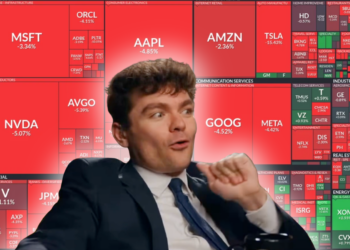
Today this quixotic pull emanates most strongly from the devices in our pockets. The whole digital world seems tilt-inducing by design. Pick up your phone, and you risk becoming stuck in a doomscroll spiral or sinking into the morass of so-called rage-bait content on Elon Musk’s X. You might end up arguing with a robot. You might also, depending on your taste, get locked into a bidding war on a livestream shopping app and need to hop over to a cash-advance app to replenish your funds, before blowing them all again. (Naturally, the two apps in question are named Tilt.) Maybe “tilt” isn’t a deviation from the norm anymore; maybe it is something like our default state, the hedonic cul-de-sac we’re all circling.
The exaggerated anger that dominated the internet of the 2010s — rage comics, rant videos — was often a social anger, a burlesque overreaction meant to highlight a set of “relatable” common experiences. But tilt is an asocial anger: It blocks out the world and encloses the self in a poisonous bubble. This, maybe, is what Browne meant when he described tilt as a “dissociative state” in which players float outside themselves, as if in a trance. It’s maybe also what the novelist Haruki Murakami meant when he wrote about pinball. “The goal of pinball is self-transformation, not self-expression,” he wrote. “It involves not the expansion of the ego but its diminution. Not analysis but all-embracing acceptance.” Anything else will lead to tilt. “It makes you think the whole aim of the game is to achieve a form of eternity.”
We’re used to hearing about positive dissociative states, in which we lose ourselves in fulfilling work or exercise. “Tilt” shows us a darker version of dissociation, the negative image of a concept like “flow” or “the zone.” Its vision of eternity isn’t the timeless flow of creative energy but the endless loop of failure, one you enter by tilting over the edge.
Mitch Therieau is a writer and an assistant professor of English at West Virginia University. He often writes about literature, music and digital culture.
The post You Don’t Need to Be a Gambler to Be on ’Tilt’ appeared first on New York Times.