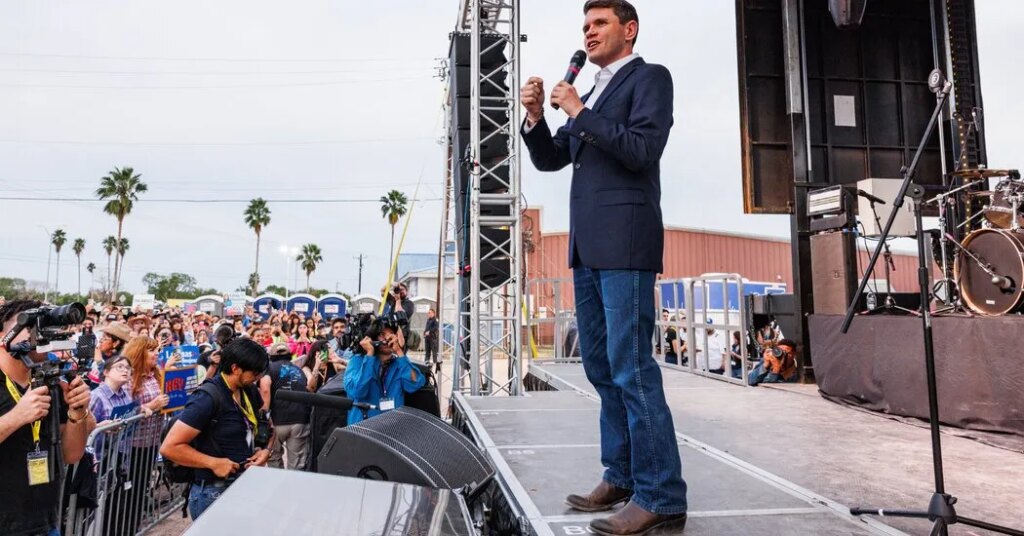
This has been a notably image-centric midterm election. Maybe it’s the relentless harping on appearance promoted by the president, which called the attention of those who would oppose him to the subject. Maybe it’s the rise of a social-media-fluent generation of candidates who understand that pictures can be worth a host of stump speeches. Increasingly, though, the lawmakers whose campaigns broke through seemed to have appropriated the tools of self-branding for their own ends.
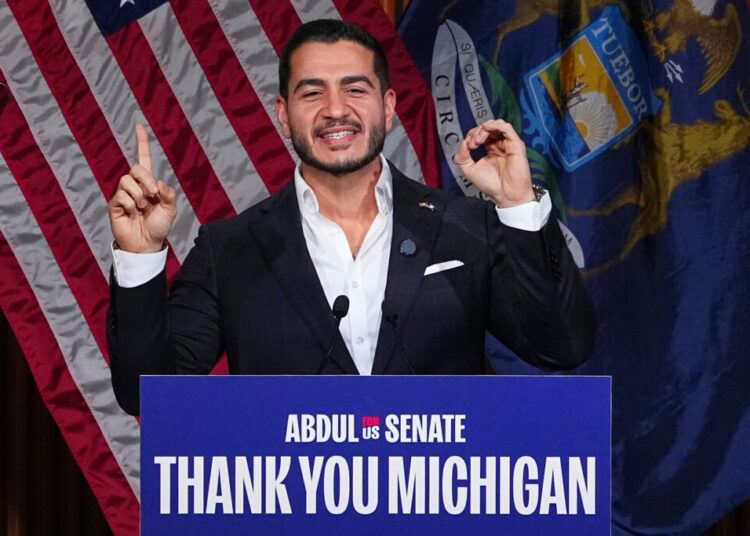
Consider, for example, Senator-elect Abdul El-Sayed whose signature black T-shirt, jeans and slogan — “Minimal look, maximal politics” — helped propel him to national prominence and then to the election as a progressive senator from Michigan.
And then cast an eye toward James Talarico, the first Democrat to win a Senate race in Texas in 33 years. As much as anyone, he understood the role of clothing in political messaging and how that could be used as a form of voter outreach. Of course, the race turned on more than image — it had to do with the economy, the war in Iraq, unhappiness with President Trump and the baggage of Talarico’s opponent, Ken Paxton — but, nevertheless, image played an important part. Indeed, his upset campaign was practically a case study for the power of the personal prop.
Or, rather, his cowboy boots were.
He wore them pretty much everywhere: in the State Capitol during his years in the Texas House of Representatives, on the campaign trail in both city and outback, to debates, when being interviewed. He wore them so much that in nearly every article written about him, the boots were part of the story.
“Not only does the state lawmaker drive a Chevy Colorado truck and own Lucchese cowboy boots engraved with the Texas state seal,” wrote The Economist, “but he invokes so many Bible teachings in conversation that you may get Sunday-school flashbacks.”
“He barnstormed the state for months in his signature Lucchese cowboy boots,” wrote The Guardian.
They even made it into his Britannica bio.
Lucchese cowboy boots haven’t played such a prominent supporting role in a Texas campaign since Senator Ted Cruz made them part of his story in 2013. Even though Paxton was also known to wear cowboy boots — a custom-made kangaroo-top pair from Olsen Stelzer and his own Luccheses — his footwear never became as ubiquitous a part of his personal semiology. Which raises the question: Why did Talarico’s boots matter so much?
In part, because of what they represent: a certain mythology of manliness having to do with the frontier and wide-open spaces, where wind-toughened men carve a life for themselves out of the land, which was one of the subtexts of the election in general. Talarico may look like a choirboy and talk like the seminarian he is, but his boots added a layer of machismo to his image that spoke to an entirely different audience.
They are, according to Texas Monthly, “perhaps the purest, most basic element of Texas style.” If Talarico was going to persuade voters to “Take back Texas,” looking like a proper son of the state was part of the sell.
Lucchese has been something of a Texas landmark since 1883, up there with Neiman Marcus as a brand that is synonymous with made-in-Texas style, and its main factory is still in El Paso. Its boots have been worn by Lyndon B. Johnson, Ronald Reagan, George W. Bush, Rick Perry — and the Dallas Cowboy cheerleaders. Also John Wayne, Johnny Cash, Miranda Lambert and Alix Earle. They cross political and cultural categories.
For someone who argued that he could represent both sides of the aisle, wearing the sort of boots that appeal to both sides was a smart sleight of hand. Or foot.
Talarico’s Luccheses were both relatively pricey — the brand’s boots start at $300 and can cost up to a few thousand for a custom-made pair — and so beat-up that in a TikTok interview just before the primary, the then-candidate not only announced that they were his favorite boots, but also revealed, probably not accidentally, that he wore them so often he had to get them resoled. Their semiology stretched from urban businessmen through oil moguls and workingmen. Whether or not potential voters actually took the time to consciously consider the choice, the boots still slipped into their subconscious minds and rendered Talarico familiar. Relatable, even.
Though Talarico largely avoided talking about the boots while on the trail, he did strategically drop the occasional reference, as when he called them out on X five years ago. “Yes, I wore my boots on CNN,” he posted. “You can take the boy out of Texas, but you can’t take the Texas out of the boy.”
A Texas Monthly profile from late 2025 included a snap of a young Talarico trying on his adopted father’s cowboy boots. According to a campaign spokesman, Talarico started wearing cowboy boots full time at the University of Texas. (His go-to pair at the time were Lucchese longhorns, which he still has.) Today he has about six pairs, though not all are Luccheses.
His relationship to his boots did not escape his opponents, who tried to paint him as “low-T Talarico” throughout the campaign. The boots belied that characterization without acknowledging it, enough so that Republicans finally began attacking the boots directly, dismissing them as common in the Statehouse and thus nothing special. Gov. Greg Abbott even described Talarico on Fox News as someone who “hides behind a preacher-boy grin with a pair of boots that don’t fit.”
Apparently, however, they did — at least their purpose. Now they will presumably continue to make their case in Washington, D.C. And any candidate following in Talarico’s … well, footsteps, should take note.
Michael Kruse contributed reporting.
The post The Many Meanings of James Talarico’s Cowboy Boots appeared first on New York Times.