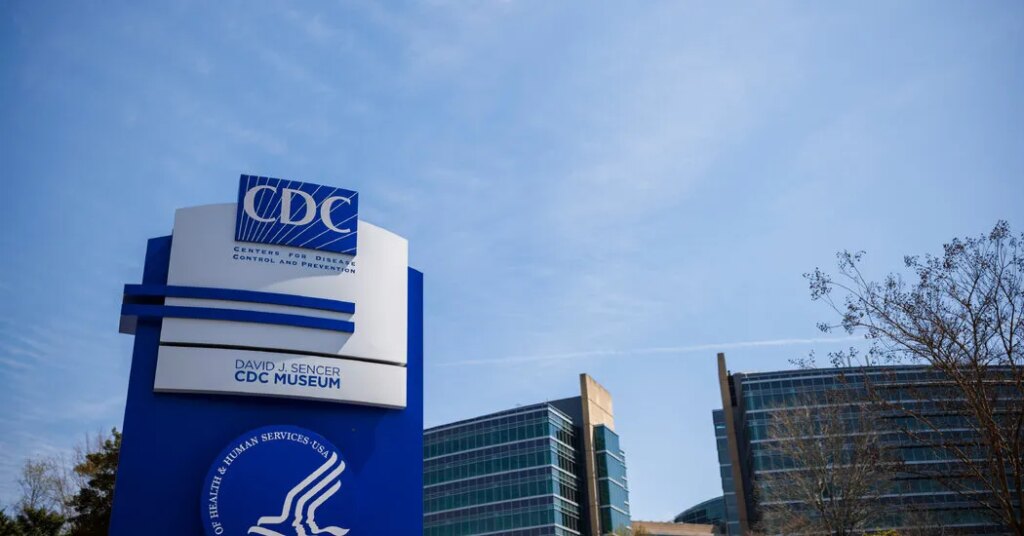
A resident of Washington State died this week after a severe case of bird flu, a new and worrying sign that the virus continues to be a threat in the United States.
The news followed reports that the bird flu virus had been detected in dairy cattle on dozens of farms across the country over the past month. It has also been spreading unchecked for months at a mink farm in Utah.
The death, in Yakima County, Wash., is the first related to bird flu in the country this year, and the third since 2024. But it was only on Thursday, one day after an inquiry from The New York Times, that the Centers for Disease Control and Prevention updated its website. It still has not made any statements to the public about the death.
Documents obtained by the Animal Welfare Institute, an advocacy group, showed that federal and state officials also have done little to stem the outbreak at the mink farm, where the virus, called H5N1, had been circulating for weeks before it was detected.
Letting the virus spread on a crowded mink farm gives the virus unlimited opportunities to evolve into a version that could trigger a pandemic, some experts warned.
“No one has ever done something as silly as letting this thing happen,” Thomas Peacock, a virologist at the Pirbright Institute in England, said of the lack of control measures.
“You could have a virus with heightened pandemic potential brewing there,” he said.
Bird flu is not yet a threat to most humans, but it does pose a significant risk to the millions of agricultural workers and veterinarians in the country, said Kristen Coleman, an expert on airborne infections at the University of Maryland’s School of Public Health.
She and others said they were alarmed by the lack of response from federal and state officials, denouncing it as risky and irresponsible.
“Here we have something that is an obvious danger and we’re not doing anything about it,” said Gigi Gronvall, a biosecurity expert at the Johns Hopkins Bloomberg School of Public Health.
“It’s very sad to play with fire like this,” she said.
Belsie González, a spokeswoman for the C.D.C., said the agency was “saddened” to hear of the death in Washington. She did not answer questions about why the C.D.C. had not held a public briefing about the cases and whether the agency had tested any workers at the Utah farm. Genetic analysis of virus samples taken from the patient found no changes that would make the virus more transmissible or result in more severe illness, she said.
The Agriculture Department, which manages outbreaks in animals, said that it did not have a disease control program for mink, and that the Utah outbreak response was being managed by the state. A spokesperson for the department pointed to recommendations from 2023 on how to prevent respiratory infections in mink farms.
Bird flu often flares in the fall, when wild birds migrate, giving them opportunities to infect each other and other animals. Since the virus began circulating in the United States in 2022, it has affected nearly 212 million poultry and more than 1,200 herds of cattle. It has also expanded its repertoire of animal hosts, infecting a range of species from domestic cats and polar bears to sea lions and fruit bats.
Its move into farmed mink, the first documented in the United States, is particularly worrying because mink have respiratory tracts similar to those of people, she said: “These mink can act as mixing vessels to create novel influenza viruses that could spark a pandemic.”
Likewise, a farmworker who becomes infected with bird flu and with seasonal flu at the same time could allow the viruses to swap genes, potentially producing a new one that is as severe as bird flu, but spreads as easily among humans as seasonal flu.
“I don’t understand why we aren’t prioritizing these people getting flu shots, at least for the seasonal flu,” Dr. Gronvall said, referring to farmworkers.
H5N1 has been detected in dairy cattle in 21 states since March 2024, including some that have endured repeat rounds of infection. Routine testing of bulk milk from farms, conducted before the milk enters the commercial supply, identified a case last week in Colorado, the state’s first since August 2024, and this week in Indiana, which had not previously reported any cases.
In Washington State, where bird flu was first detected in cattle in October, the virus has sped through 40 herds, and it has jumped from diseased cattle to at least three people.
“I’m not surprised that we’re seeing it emerge again in other dairy cattle farms, simply because there’s nothing really in place to stop it from spreading,” Dr. Coleman said.
The person who died had underlying health conditions, according to Yakima County officials, but they did not disclose any details about those conditions or the person’s name, gender or age. The two others infected are mildly ill, the officials said.
Even less is known about workers at the Utah mink farm. According to a ProPublica report last month, farm workers with potential exposures were not tested for the virus, even if they had symptoms consistent with those of bird flu. The animals on the farm, too, have continued to be exposed to the virus, instead of being culled before they can spread it.
By contrast, during a 2022 outbreak at a mink farm in Spain, officials there ordered the farm to cull all the animals. Scientists found that the virus had acquired a mutation that allowed it to thrive in mink and other mammals.
In the United States, poultry and dairy farmers are required to report outbreaks to state and federal officials, and poultry farms are required cull their flocks. They are compensated for their losses, giving them some incentive to report infections.
But there are no federal requirements or compensation programs for mink farmers. “Congress would need to establish and fund such a program,” the U.S.D.A. spokesperson said. There are fewer than 100 mink farms in the United States.
The virus had circulated at the Utah mink farm for at least five weeks before it was detected in early August. Analysis of 10 genetic sequences suggests that the virus has not changed significantly from a version seen at a Texas dairy farm.
“Right now there’s no evidence to suggest these viruses are getting worse,” said Troy Sutton, a principal scientist at the University of Saskatchewan’s Vaccine and Infectious Disease Organization. But the samples date back to early August, he cautioned, “so we don’t know if they’re evolving in a way that might be more alarming.”
The U.S.D.A. said its national lab had offered to test more samples for the virus, but had not yet received them from the state.
There is also no explanation for how the virus might have arrived at the mink farm, or spread as rapidly through the Washington herds as it has. “I am worried about airborne transmission from farm to farm at this point,” Dr. Coleman said. And yet, she added, budget cuts in the past two years have diminished opportunities for scientists to study how the virus spreads.
The post Bird Flu Death in Washington State Renews Concern Over the Virus appeared first on New York Times.