Moving the New York City Marathon out of Central Park and into all five boroughs was imagined as a one-time event to commemorate America’s bicentennial.
The organizers weren’t even sure it was possible to pull off, said George Hirsch, the only original organizer still living. On Sunday, more than two million spectators and 60,000 runners will fill the streets for the 50th anniversary of the citywide race.
“It turned out to be such a thing for the people of New York, for New York City,” said Bill Rodgers, who won the men’s race that year. “It was the birth of modern-era marathoning, big-city marathoning.”
Since that first race, much has changed in the sport, the city and the race itself.
The Start
Mile 0
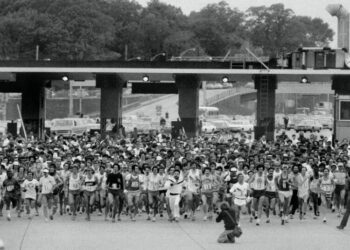
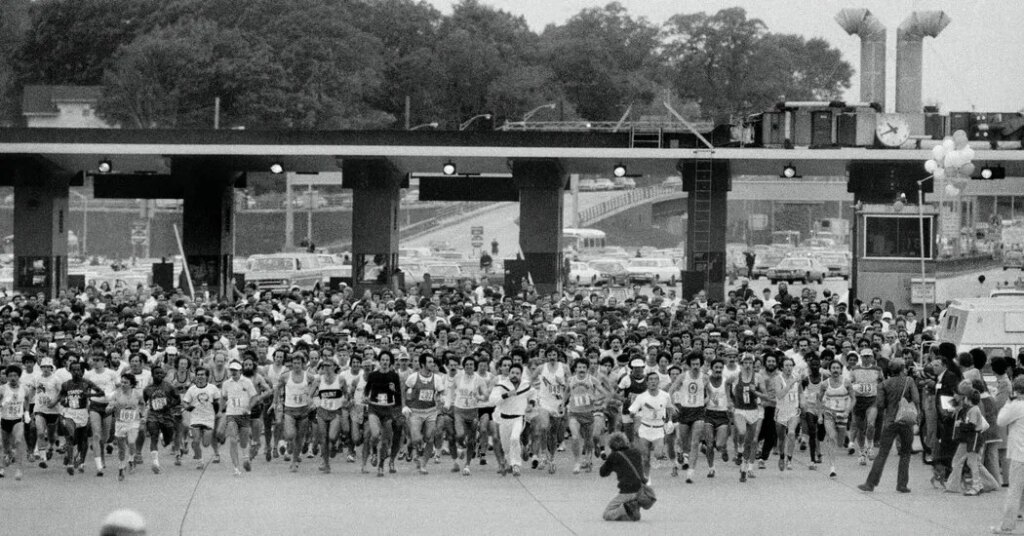
The effect of moving the race from loops around Central Park to a citywide format was immediate: An event that had topped out at about 300 finishers grew to 2,000 sign-ups in its first year. Only about 200 of the entrants were women.
But it was still far more casual than it is today. “Registration was in the gym,” said Joanne Navarro, who has volunteered at the start every year since that first race. “You could sign up that morning.”
The course was somewhat makeshift, too. Organizers had to cut away fencing to the Verrazzano-Narrows Bridge so runners could begin the race, then wire it back together afterward.
The marathon had another major growth spurt after the 2006 race when organizers began using the Staten Island Ferry to get runners to the starting line. Since then, the race has grown from about 37,000 runners to its current size of about 60,000. Women now account for about half of the entrants.
Miles 1-3
The start uses the entire top level of the Verrazano and one side of the lower level. All three routes have different ramps off the bridge, so the first few miles of the course vary. Despite that, the runners all cover precisely 26.2 miles. That’s because of Ted Corbitt, who first had the idea of a five-borough marathon. He created a method of accurately measuring road race courses that is still used today.
Gary Corbitt, Mr. Corbitt’s son, said that before his father created the method, which involves a calibrated bicycle riding over the entire course, runners might sign up for a 10-mile race and the actual distance could be anywhere from 9.5 to 10.5 miles.
“You can’t have a legitimate sport if you can’t verify the records” of the runners, Gary Corbitt said.
Up Through Brooklyn
Miles 4-7
When the marathon returned in 2021, the pandemic had changed the city streetscape with outdoor dining, the Open Streets program and new bike lanes. That narrowed the road in key places, including Fourth Avenue in Brooklyn, which is lined with restaurants and shops.
Ted Metellus, the New York Road Runners’ chief event production officer and race director, had to find a way to deal with the bottlenecks. The solution was to reorder the release of each corral and to add a fifth wave of runners so they would be more spaced out in the early miles. When the three sections of the course merge near Mile 4, there still is enough room for all the runners along the course.
Mile 8
The course cuts through Flatbush Avenue, just north of Atlantic Avenue by the Barclays Center, shutting down a major artery of Brooklyn. It forces many buses and cars to reroute and poses a lot of logistical challenges. Before 1976, such an idea seemed impossible.
“The idea of closing down the city, and not just any city, but the largest city in the United States to stage a footrace was really quite new and quite different,” Mr. Hirsch said.
And New York needed something new and different. George Spitz, who was involved in city politics and ran unsuccessfully for several offices, knew whom to call to try to get the city on board. But it was Percy Sutton, the Manhattan borough president, who pitched the idea to Mayor Abe Beame as a way to show the world that New York City wasn’t the crime-ridden metropolis they had often see on TV.
Chris Brasher, who was English, learned of the race in 1978 from other British runners who had competed in it and ran it in 1979. Mr. Brasher was so moved by the experience that he wrote a column in The Observer after he returned, ending with a challenge: for London to stage a similar event and demonstrate “we have the heart and hospitality to welcome the world.” He went on to co-found the London Marathon in 1981. New York showed major cities that an urban road race was possible.
Mile 9
Runners often say that the cheering crowds are what make this race different. A stretch of Lafayette Avenue in Fort Greene, Brooklyn, is one such example.
This section has bands, choirs and people lining the streets. It feels like a giant block party. In 2021, the first marathon after the Covid lockdowns, the block party went on long after the last runners passed.
City Sights
Miles 10-11
When Harry Murphy, a co-founder of the Prospect Park Track Club, and Ted Corbitt were setting the course, they made sure to go through neighborhoods that represented the entire city, including this section through Bedford-Stuyvesant and South Williamsburg.
In the 1970s, the image of the sport was largely white, male and fast. But racial and religious inclusivity was part of the DNA of the New York Road Runners, which grew out of the New York Pioneer Club. That group became the first integrated road racing club in the United States in 1936. The marathon course, and the five men who founded it, reflected those values.
“A lot of the city is so brown and Black in terms of all the boroughs,” Gary Corbitt said. And for many of the runners, this was the first time they had been through those neighborhoods.
Dave Obelkevich is the only person to complete every race on the five-borough course. He has lived on the Upper West Side since 1961 but had never visited several of the neighborhoods along the route before racing it.
“Much of the city I was completely unfamiliar with,” he said, “and so I thought, Gee, I’ve never seen this part. What is that avenue?”
Miles 12-14
The race continues north through northern Williamsburg and Greenpoint, and then into Long Island City, Queens, neighborhoods that were almost all industrial developments in the 1970s. Over time, they have become much more residential, with bars and apartments replacing factories and warehouses.
Runners hit the halfway point of the race while crossing the Pulaski Bridge from Brooklyn to Queens, across Newtown Creek, a waterway contaminated by decades of industrial waste. By Mile 15 they’re leaving the borough.
Miles 15-16
New York is a city of islands, which means running lots of bridges. The Queensboro Bridge isn’t the longest — that’s the Verrazano — but it comes late in the race and is mostly quiet: just footsteps and breaths for more than a mile.
Then runners approach the offramp and First Avenue and there’s a wall of sound from the spectators waiting for them to enter Manhattan. In 1976, there was no cacophony because the race didn’t go up First Avenue. Instead, it used the East River Esplanade.
“It’s very tight in there, and it meant basically no spectators whatsoever,” Mr. Hirsch said. “We were all running kind of by ourselves at that point because 2,000 runners spreads out after 16 miles.”
Rerouting the race to First Avenue was one of two changes the organizers made to the course after that first year. And one of the most iconic sections of the course was born.
Improving the Race
Miles 17–19
Over the years, the race has also become more welcoming to runners with disabilities. The marathon and many major races now have wheelchair and handcycle divisions, and they often make other accommodations for those with disabilities. Fifty years ago, Dick Traum, whose right leg had been amputated above the knee, became the first person with a prosthetic leg to finish a marathon. He was allowed to start the race at 6 a.m. to give him more time.
Bill Rodgers, who was leading the men’s field at this point in the race, passed him running along the East River and shouted “Attaboy, Dick.”
“To me I thought, This guy has guts in spades.” Mr. Rodgers said recently. “Just to run a marathon, I think it’s a pretty good achievement. To run one with one leg and a fake leg, it was kind of shocking.”
Mr. Traum, who died in 2024, went on to found the Achilles Track Club, now Achilles International, which is one of the biggest organizations for athletes with disabilities.
Almost 200 Achilles runners are registered for this year’s race.
Miles 20-21
The first year of the race, the course went over the bridge into the Bronx, around a light pole and right back out.
“We grabbed the lamppost and swung around it so you would keep your momentum,” Mr. Hirsch said.
But the Bronx borough president, Robert Abrams, complained that the course didn’t include enough of the Bronx, so they adjusted it for the second year. The South Bronx is another section of the city that has changed over the years from industrial to residential, and the Road Runners continue to modify the course as needed.
Miles 22-24
As the runners re-enter Manhattan, they run through Harlem and down to Central Park. The race used to enter the park at 102nd Street, which has a steep hill and a tight turn onto the loop. In 2001, the Road Runners moved the course to enter the park at 90th Street, through Engineers Gate.
On any other week, runners there would pass a statue of Fred Lebow, one of the five co-founders of the race. It is relocated to the finish line for the race.
Mr. Lebow “had a vision that running was way underdeveloped, that running could become something big,” Mr. Hirsch said.
Mr. Lebow was the race director for many years before he died of cancer in 1994.
Mile 25-Finish
The day stretches out after dark for the slowest runners, who have the latest start time.
After running boomed during the pandemic, the Road Runners realized those participants needed support in the later stages of the race because aid stations shut down as the roads started to reopen during the midafternoon.
Now the events team has support vans and volunteers along the course during those later hours to support the marathoners who have moved to the sidewalk. And Project Finish Line has for years organized to make sure the final finishers have people cheering when they cross the line.
“I think it makes it more of an event for the city than just a pure sporting event, a pure high-level elite competition,” Mr. Hirsch said of the increased participation by people of all paces. “And I think that means much more to the city.”
The post The Five-Borough Route: The Beating Heart of the New York Marathon appeared first on New York Times.