Ryan Zickgraf is a columnist for UnHerd.
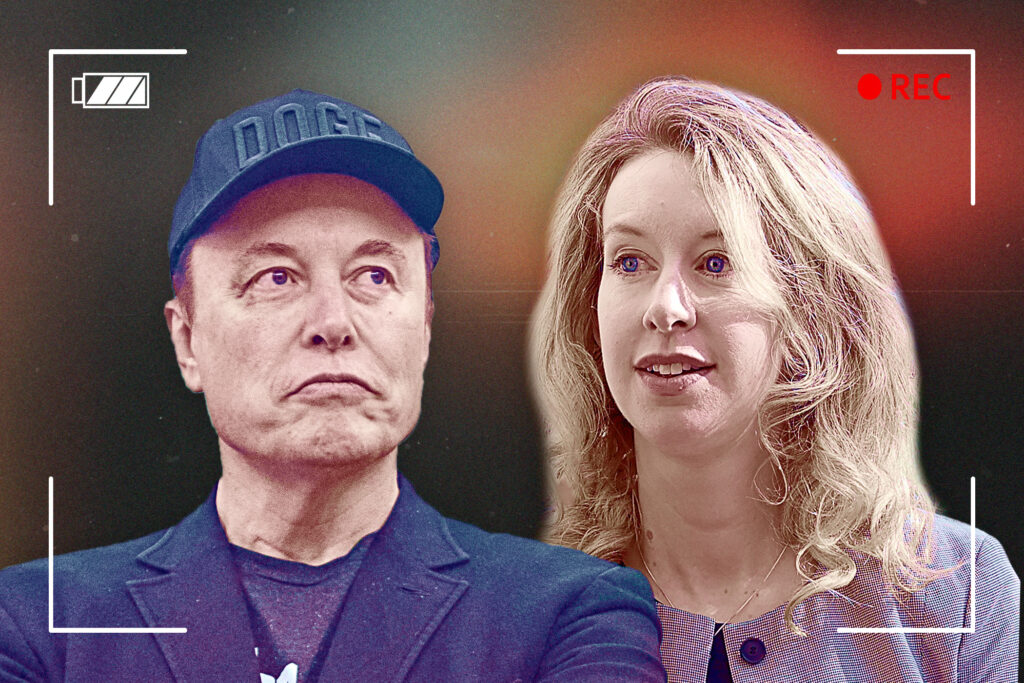
In Alex Gibney’s nearly four-hour documentary, “Musk,” the evidence against Elon keeps piling up: aggrieved ex-wives and partners, unfulfilled promises about self-driving cars, the hostile Twitter takeover and the slide into MAGA — all narrated by a sinister-looking artificial intelligence version of the SpaceX and Tesla CEO.
Gibney ends the documentary by turning the once-proclaimed real-life Iron Man into a tech-bro version of the ultimate bad guy from “The Avengers”: Thanos. In the final scene, Earth explodes, and a lone ship carrying Musk slips away into space, hurtling toward Mars. As the ship approaches the Red Planet, we hear the man himself say: “I would like to die on Mars, just not on impact.” Musk has been using this quippy line for more than a decade. Here, it becomes the punch line to the apocalypse.
In 2026, Hollywood has found a fresh supply of supervillains, and for once it doesn’t need to pay Marvel for the rights. “Musk” is only one of a new batch of movies that might be described as techlash cinema — a new front in a messy civil war between the owners of the creative economy and the group of professionals that urban theorist Richard Florida defined as “the creative class.”
In “You Can See Everything,” Nathan Fielder and Lance Oppenheim train their cameras on the inscrutable sphinx that is disgraced former Theranos founder Elizabeth Holmes, who invited a film crew to follow her during her last 34 days of freedom before prison. “The Social Reckoning” sees director Aaron Sorkin returning to Mark Zuckerberg after his 2010 success, “The Social Network.” This Zuckerberg is played by Jeremy Strong as an emotionless automaton who is attempting to conceal Facebook’s harmful impact on social-media-obsessed teens and American democracy itself. And on Christmas Day comes “Artificial,” in which Andrew Garfield plays Sam Altman as the sociopathic genius behind OpenAI (with whom The Washington Post has a content partnership). Tech CEOs are getting the treatment once reserved for cigarette executives.
Not long ago this would have been unthinkable. Rabble-rouser Thomas Frank’s book “The Creativity Con,” which came out this week, explains how the dual forces of “creativity” and “innovation” were sold as the precious metals of the new economy for decades, but especially during the 21st century.
Frank writes that the worldview that united the Democratic Party, the tech press and the college-educated professional-managerial class was that Silicon Valley was the cradle of a new, enlightened civilization that would usher in an era of American prosperity thanks to globalized free trade and a free internet. Everyone got something out of the arrangement. The founders got money and glory, the coders and copywriters got to feel like visionary artists, and the press got a story about smart people saving the world.
The evidence was everywhere: In 2016, Silicon Valley gave Hillary Clinton 60 times what it gave Trump; that same year, the tech magazine Wired made its first presidential endorsement — Clinton — then handed its November issue to Barack Obama to guest-edit. In his column, the president insisted that it was the best time in human history to be alive and that “science and technology is the warp drive that accelerates that kind of change for everybody.”
But as the 2010s continued, a backlash against the bosses brewed in the valley, and the workforce became a constituency CEOs could no longer control. It brought progressivism into the workplace, insisting companies become engines of social change, and it emerged from the covid pandemic with remote work and greater bargaining power. The rank and file also had friends in Washington: The Biden administration and Lina Khan’s Federal Trade Commission looked to break up monopolies that grew in power and sued Meta and Amazon. (Amazon Executive Chairman Jeff Bezos owns The Washington Post.)
So the CEOs defected to Donald Trump in 2024. Musk — once a liberal darling — tried to deliver the election to the GOP through his America PAC. The following year, the lords of Silicon Valley lined up at a White House dinner to praise the president, with Altman thanking Trump for being “such a pro-business, pro-innovation president” — the kind of compliment that used to be reserved for Obama.
Now the creative class is striking back. This is partly because of politics, but it’s also because they see AI companies such as OpenAI and Anthropic as heralding the old postindustrial nightmare, only this time aimed at the winners.
For decades, the educated told factory towns their jobs were obsolete. Now many see de-skilling, automation and layoffs coming for the copywriter, the paralegal, the junior coder and the screenwriter. Hollywood’s writers went on strike over AI in 2023. Techlash cinema represents the rebellion’s culture war, released right before the midterms.
These movies tend to have a self-flattering angle. The heroes of “The Social Reckoning” are Frances Haugen, the engineer who leaked the Facebook Files, and Jeff Horwitz, the reporter who published them. The moral center of “Artificial” appears to be Ilya Sutskever, the soulful scientist who led the boardroom coup against Altman in 2023. In “Musk,” Alex Gibney himself is the bold truth-teller standing up to Elon and MAGA.
“You Can See Everything” is the outlier. Fielder and Oppenheim’s documentary doesn’t fall on either side of the battle lines, or inside any lines at all. It treats Holmes as an enigmatic puzzle box that may or may not be unlocked by Fielder, himself the trickster god of documentary filmmaking.
Perhaps that’s why it’s been the most successful techlash film so far. “You Can See Everything” took home $15 million from 855 screens, the second biggest nonmusic documentary debut ever, behind Michael Moore’s “Fahrenheit 9/11” in 2004. But “The Social Reckoning” opened to $5.5 million on more than 2,600 screens — a quarter of the debut of “The Social Network” — and “Musk” has flopped at the box office. Perhaps if audiences want to watch Iron Man become a supervillain, they will find that Robert Downey Jr. playing Doctor Doom in the next “Avengers” sounds considerably more fun than four hours of Elon Musk.
The post The Silicon Valley civil war is playing out on film appeared first on Washington Post.