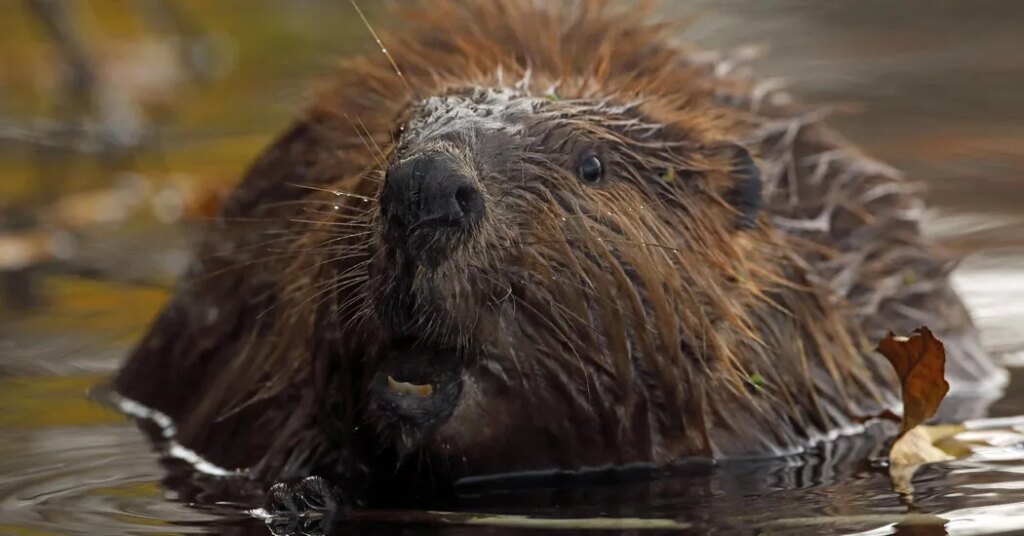
In the United States, rabies can seem like a disease of the past, a remote risk caused by a mostly vanquished virus. But in recent months, this ancient foe has returned to the spotlight.
A handful of unusual outbreaks have made headlines: rabid beavers at a Maryland state park, a cluster of goat cases at a North Carolina petting zoo. Officials in several states, including Idaho and Alabama, flagged surges in animal cases; California set an annual record for rabid bats.
And last month, the Centers for Disease Control and Prevention issued a national health advisory, citing reports of “local increases in human rabies exposures.” The agency reported an uptick in the use of medical interventions — antibody treatments and vaccines — designed to protect people exposed to potentially rabid animals.
So far, no human rabies cases have been reported in 2026. And it’s unclear whether the reported surges reflect a real increase in rabies risk. But they are worth keeping a close eye on, experts said, and highlight the persistence of rabies as a complex, ever-evolving threat.
“There’s no way to know for sure what’s leading to these incidents,” said Dr. Millicent Eidson, a public health veterinarian and emeritus professor at the University of Albany. “Certainly, with social media, there’s more general awareness and communication when these things are happening. But there’s also evidence that rabies risk may be increasing.”
She also noted “challenges in resources to respond.”
The C.D.C. has lost about 30 percent of its staff since last year, including many members of the rabies team, which no longer has the capacity to advise state officials after hours, according to an official with knowledge of the situation. The agency also temporarily suspended rabies testing this spring, a pause that lasted for months.
“All paused rabies tests came back online by August 2026,” Dr. Ryan Wallace, a veterinary epidemiologist at the agency’s rabies and poxvirus branch, said in an email.
Dr. Wallace did not directly answer questions about the current size of the rabies team but said that it was “fully equipped to respond to rabies questions and requests for technical assistance.”
A shifting threat
In many parts of the world, rabies is a disease that is spread primarily by dogs. That was once true in the United States, too; in the late 19th and early 20th centuries, the virus circulated widely among dogs and often spilled over from dogs into people. In some years, more than 100 human deaths were recorded, most likely a substantial undercount.
After the advent of vaccines, mass dog vaccination campaigns and other public health measures led to significant declines in both dog and human cases. In 2007, the C.D.C. announced that the nation had fully eliminated the canine version of the rabies virus. (Dogs in the United States can still get rabies from wildlife, and imported dogs may be infected with canine rabies acquired abroad.)
Today, the United States typically reports just a few human cases per year. Most are caused by bats. Although the disease is almost universally fatal once symptoms appear, the swift administration of antibody treatments and vaccines — known as post-exposure prophylaxis — can protect people who have had close encounters with potentially rabid animals.
But the public health victory has been incomplete. In two recent studies, scientists estimated that dozens of additional human rabies deaths may go undetected in the United States every year.
And multiple rabies variants circulate in wild animals. Raccoon rabies is common along the East Coast, for instance, while skunk rabies stalks the central states; bat rabies is a threat in every state except Hawaii. These variants can spill over into new species — including livestock, pets and people — and sometimes adapt to new hosts. For example, a bat variant began circulating in skunks in Flagstaff, Ariz., in 2001 and again in 2021.
Officials have used oral vaccines to stamp out or contain some wildlife variants, but the landscape is constantly shifting, with outbreaks that can flare up suddenly in new places.
“Rabies is successful at adapting and, I think, capitalizing on opportunity,” said Amy Gilbert, a research biologist and rabies expert at the United States Department of Agriculture.
The U.S.D.A., which distributes oral wildlife vaccines, does some proactive rabies testing of wild animals. But the nation’s rabies surveillance system is mostly passive, relying on veterinarians, animal control officers and members of the public to report suspicious animals and submit specimens for testing. (Because the most accurate tests require brain tissue, the process involves euthanizing the animals and, often, shipping their heads to a lab.)
Nationwide, about 100,000 animals are tested each year, according to the C.D.C., which manages the National Rabies Surveillance System. From 2021 to 2024, roughly 4,000 animals tested positive each year.
But the agency has not finalized its tally for 2025 or 2026, so it’s not yet clear whether the number of animal cases rose nationally. Local increases may not translate to a national surge.
“There’s always going to be normal peaks and troughs,” said Dr. Charles Rupprecht, the former chief of the C.D.C. rabies program, who now works as an independent biomedical consultant.
Reported rises in animal cases could also be driven, in part, by increased awareness or media coverage of unusual outbreaks, experts said. Ohio is detecting more rabies-positive bats this year than usual — but it is also receiving more bats for testing, said Dr. Sara Margrey, the state’s public health veterinarian.
“As we’re finding more cases, there’s more coverage,” said Dr. Margrey, who added that the percentage of bats testing positive had not increased. “It’s kind of a positive feedback loop sometimes.”
Another possibility is that the national rabies burden has not changed but that cases have surged in some new areas and species while falling in others. That can pose distinct challenges, experts said.
“That means you have a big population of susceptible animals that are ready to get the disease,” said Daniel Streicker, a viral ecologist and rabies expert at the University of Glasgow. “And you also have health systems that aren’t accustomed to having the human exposures.”
That may be what’s unfolding in central Texas, where a skunk-associated rabies variant has been causing what the Texas Department of State Health Services characterized as “an evolving outbreak” of rabies among foxes. Since 2023, the department said, there has been a spike in the number of humans exposed to rabid foxes in parts of the outbreak area, which stretches from San Antonio north toward Austin.
“It’s a heavily populated corridor,” Dr. Gilbert said, and one where foxes may not yet be recognized as a significant rabies threat.
Real risks
A number of factors could be driving a true increase in rabies risk, experts said. For example, as humans increasingly encroach upon and disrupt habitats used by wild animals, we may find ourselves coming into contact with rabid animals more often.
“We’re building subdivisions into former wildlife areas,” said Dr. Jonathan Sleeman, a wildlife veterinarian at the University of Minnesota and subject matter expert for Beacon, an infectious disease surveillance program based at Boston University. “Wildlife are increasingly adapting to human habitation, and we’re encountering the wildlife more frequently.”
Climate change could play a role, too, experts said. Milder winters and longer summers could increase animal populations and extend outdoor recreation seasons. Droughts and wildfires could also stress wild animals or destroy their natural habitats, forcing creatures like bats to seek refuge in more human-dominated environments.
“At some point, they have to roost in buildings, in bridges, in urban environments, in urban structures, increasing the contact between bats and humans,” said Dr. Ricardo Castillo, a veterinary epidemiologist at the University of Pennsylvania.
Veterinarians and public health officials have also grown alarmed about an apparent increase in vaccine skepticism among pet owners. Last month, Alabama’s Department of Public Health warned about an increase in rabies cases in domestic animals. In the news release, the state’s public health veterinarian attributed the rise in cases among cats and dogs to “animals not being kept current on their rabies vaccinations.”
It will require more time and data to determine whether and how the national rabies landscape is changing. But the rise of animal vaccine hesitancy, combined with the loss of public health capacity and expertise, could compound the risks, experts said.
“It’s worrisome as you go into the future,” said Rodney Rohde, a microbiologist and rabies expert at Texas State University. “If you let your guard down just for two or three years, you’re just so far behind the effort to control it that it can be hard to catch up.”
Apoorva Mandavilli contributed reporting.
The post Is Rabies Making a Comeback? appeared first on New York Times.