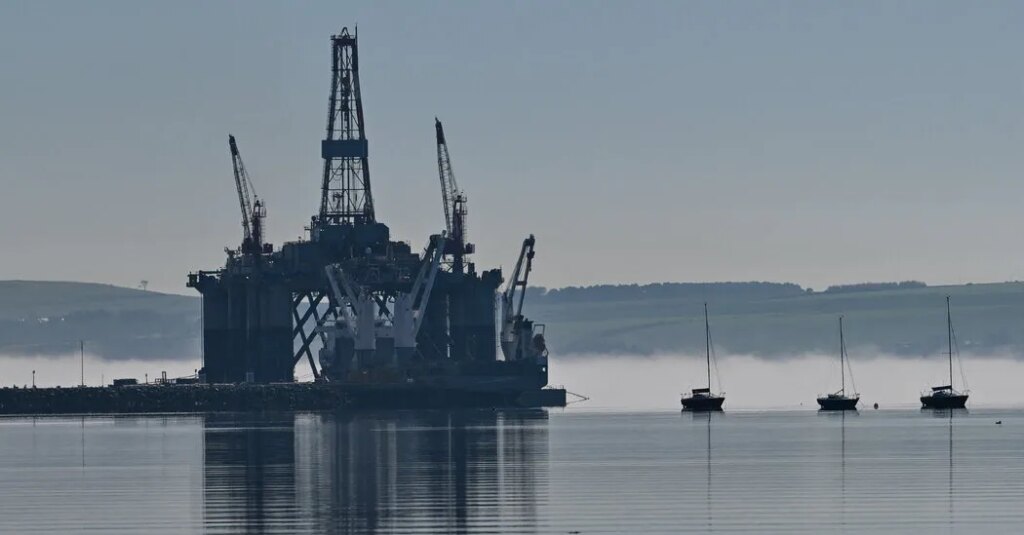
The British government is set announce on Wednesday the approval of a major new natural gas drilling project in the North Sea, according to two people briefed on the announcement.
The gas field, known as Jackdaw and located off the coast of Scotland, would be the site of the first gas extraction in the North Sea since a government moratorium on new drilling was imposed in 2024. The approval is expected to face criticism from environmental groups, which have said any new fossil fuel production would undermine Britain’s climate change pledges.
An application to drill for oil at a separate field known as Rosebank, off the Shetland coast of Scotland, was still under consideration, according to the two people, who requested anonymity because they were not authorized to discuss the announcement.
A spokesman for Andy Burnham, the prime minister, declined to comment. A spokeswoman for Britain’s Department of Energy Security and Net Zero said the agency intended to make an announcement on Wednesday but declined to provide details.
A spokesman for Adura, a joint venture between Shell, the British oil giant, and the Norwegian energy company Equinor, declined to comment on Tuesday. Equinor wants to develop both Jackdaw and Rosebank.
The Jackdaw gas field holds an estimated 200 million barrels of oil equivalent, which would be used in Britain and fed into the gas network. The approval of the project would represent a recognition of Britain’s continued reliance on natural gas even as it moves toward greater use of renewable energy.
Mr. Burnham, who took office in July, built his reputation as a populist champion for a green industrial transition, and approving major new oil and gas fields is expected to create significant friction with his supporters. He has faced pressure from the oil and gas industry and from President Trump to approve drilling at both Jackdaw and Rosebank.
The war in Iran has disrupted global energy markets, pushing up the cost of imported oil and gas. Britain imports most of its oil and gas. Supporters of new drilling in the North Sea argue that expanding domestic production is essential to safeguarding Britain’s energy security and shielding households from price volatility.
Adura estimated that Jackdaw’s gas could meet roughly 6 percent of Britain’s total gas needs and heat 1.4 million homes.
Supporters of new drilling argue that even as Britain transitions to clean energy, the nation will remain dependent on natural gas for decades. After all, 85 percent of Britain’s homes and businesses still use boilers for hot water and central heating, and 30 million vehicles still run on petroleum. New domestic sources will help ease Britain’s reliance on imports.
John Underhill, director for energy transition at Aberdeen University, said approval of drilling at Jackdaw would be “a timely and welcome boost for the oil and gas sector and the U.K. as the country faces a challenging winter.”
Environmental groups have estimated Jackdaw’s gas will serve closer to 2 percent of the country’s needs and noted that Britain will still require imports. They also maintained that new oil and gas extraction takes money and momentum away from renewable power.
Michael D. Shear contributed reporting.
The post Britain Is Said to Approve New Gas Drilling in the North Sea appeared first on New York Times.