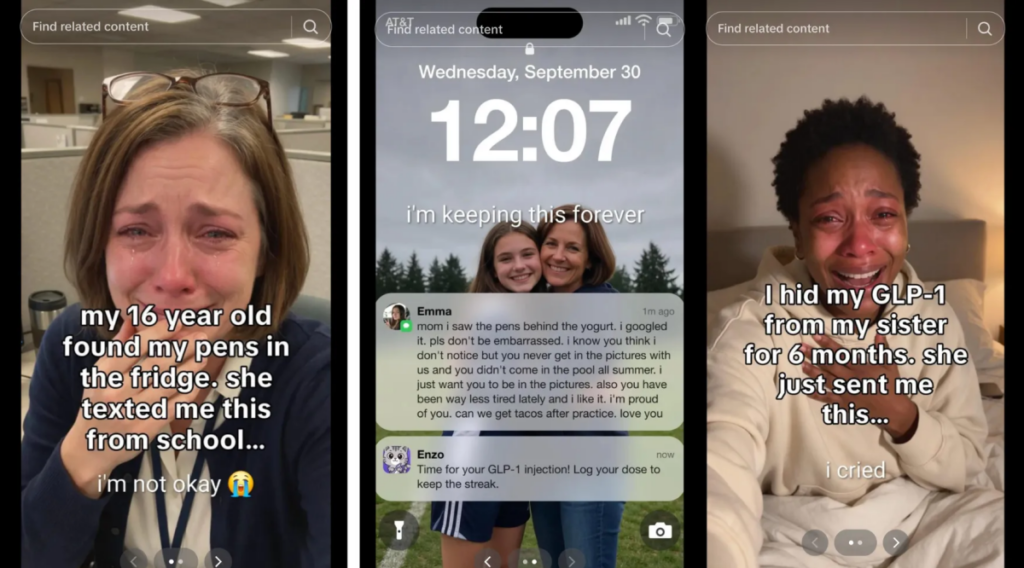
An image published by a TikTok account called “WellWithHer” shows a selfie of an obviously AI-generated woman sitting in her bed, weeping. According to the image’s caption, which is written in the first-person, the woman spent six months “hiding” her GLP-1 “pens in her bag,” only for her secret use of the meds to be discovered by her sister.
“I hid my GLP-1 from my sister for 6 months… she just sent me this,” reads text overlaying the image. “I cried.”
The next image in the carousel is a screenshot of a locked iPhone screen, which shows a lengthy text from a sender saved as “Sis.”
“I saw the pens in your bag on Sunday and i didn’t say anything because i didn’t want you to feel judged. I’ve watched you hate yourself in photos since we were teenagers. If something is finally making you feel okay in your own body, i’m not going to be the person who makes you feel bad about it,” reads the text. “I’m so proud of you. And i’m sorry it took me this long to say it.”
Beneath the purported text message is another notification: a reminder from a mobile app called Enzo instructing the poster to take their GLP-1 shot.
“Time for your GLP-1 injection!” reads the notification, which features a cutesy cartoon cat as its mascot. “Log your dose to keep the streak.”
The same WellWithHer TikTok account is loaded with similar images crying AI-generated women sharing personal family stories about secretly taking GLP-1 weight loss injections like semaglutide and tirzepatide. Another post, for instance, shows an AI lady crying in her cubicle after purportedly receiving a text from daughter, “Emma,” who claims to have found her mom’s GLP-1 medicine “in the fridge” and is urging her to “pls don’t be embarrassed.”
“i know you think i don’t notice but you never get in the pictures with us and you didn’t come in the pool all summer,” the text continues. “i just want you to be in the pictures. also you have been way less tired lately and i like it. i’m proud of you. can we get tacos after practice. love you”
Below the text is another notification for Enzo, reminding the sobbing AI woman to take her GLP-1 shot.
“Time for your GLP-1 injection!” the notification chirps. “Log your dose to keep the streak.”
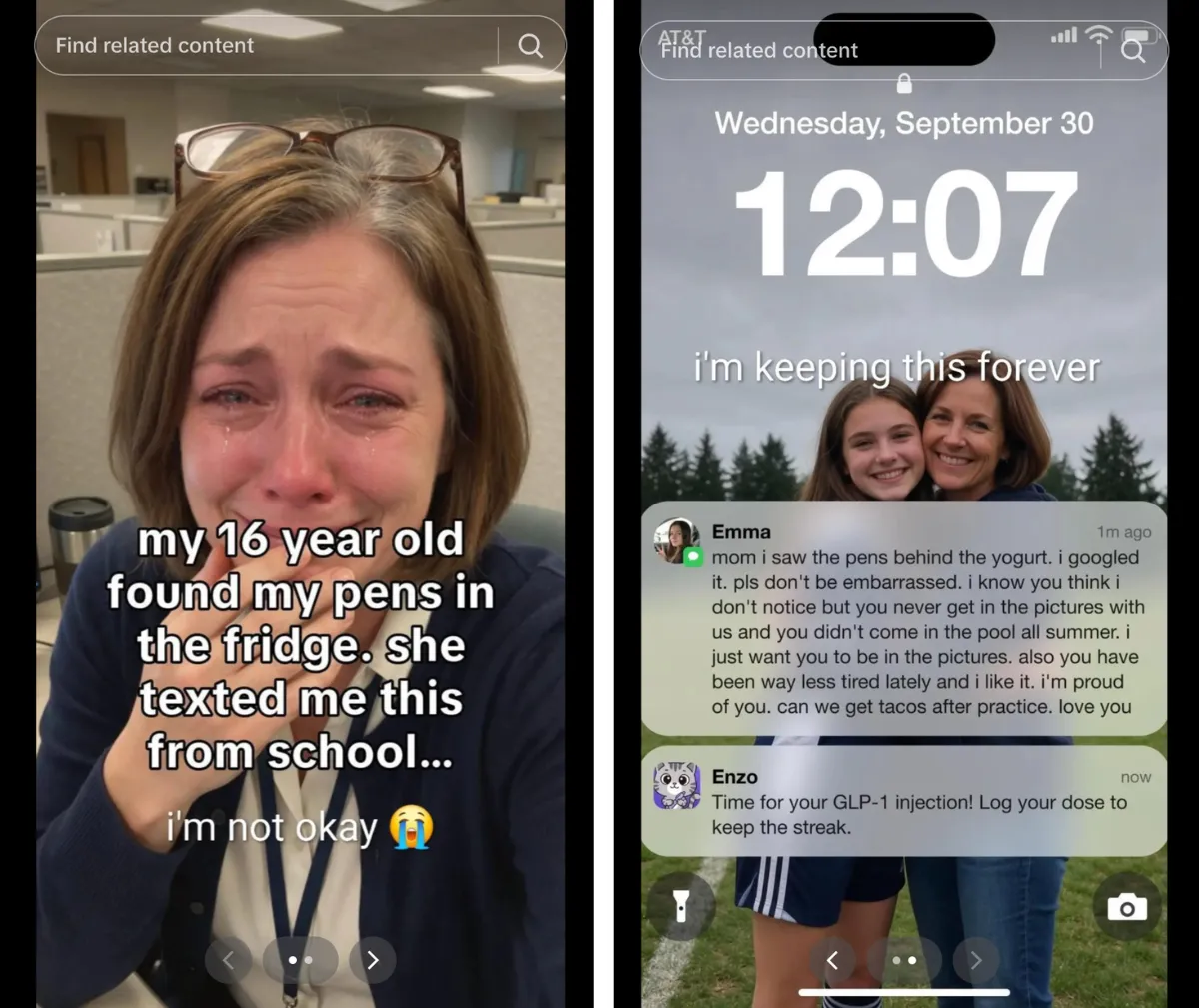
The psychology of the undisclosed ads is obvious and manipulative. The texts in the posts all offer variations of an emotional validation fantasy, in which loved ones of a GLP-1 taker, who may be feeling shameful or embarrassed, surprise them with love and support when they discover they’ve been taking the drugs. The messages, and the alleged GLP-1 users claiming to have received them, are clearly fake, and are designed to promote GLP-1-focused apps — yet aren’t being disclosed as advertisements, nor as AI-generated synthetic content.
Unfortunately, Enzo isn’t the only GLP-1 app being marketed through this style of manipulative synthetic content.
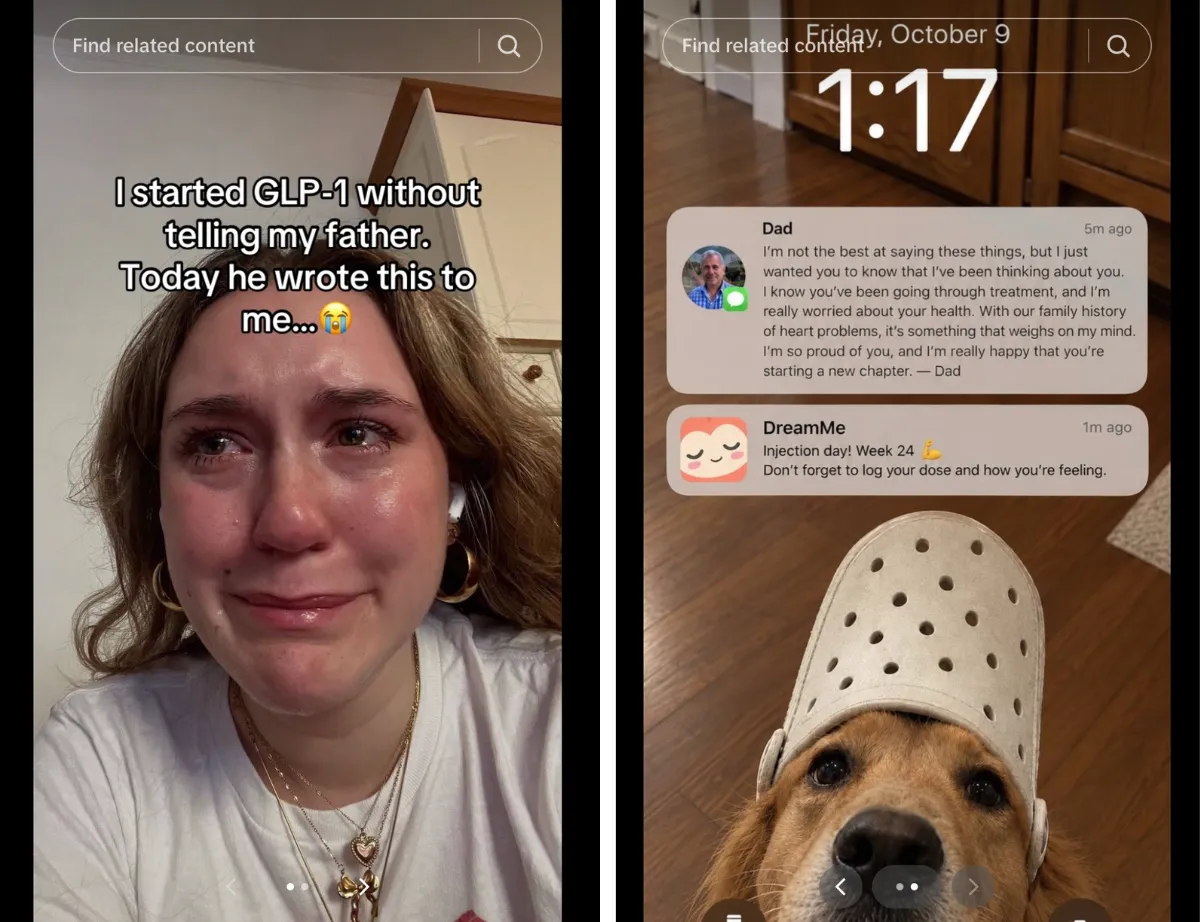
Over on another TikTok account, for example, a poster going by the name “Lara” uses a mix of stolen images of real influencers and AI-generated images — always of young women, some of whom are pictured crying — to market a completely different GLP-1 tracker called “DreamMe.”
In some posts, like “WellWithHer,” the account promotes a GLP-1 app called “DreamMe” by coupling weepy selfies with fake phony texts from family members offering words of support and understanding.
“I started GLP-1s without telling my father. Today he wrote this to me…” reads text overlaid on a selfie of a crying young woman.
On the next slide, sitting above a notification from DreamMe, is a text from “Dad.” His profile picture also appears to be AI-generated.
“I know you’ve been going through treatment, and I’m really worried about your health,” says the text. “With our family history of heart problems, it’s something that weighs on my mind. I’m so proud of you, and I’m really happy that you’re starting a new chapter.”
According to its website, “DreamMe” claims to provide users with their “new GLP-1 best friend” in the form of “Sushi,” a cartoon fish that helps keep track of GLP-1 meds. Its landing page features a handful of AI-generated women that the site bills as real customers who have shed weight with Sushi’s support.
Enzo’s unreality, in other words, doesn’t end with the TikTok content.
“Real journeys. Real members,” the page reads. “The numbers are theirs. The words are theirs. We just built the fish.”
The strange, heartstring-tugging posts used to promote Enzo and DreamMe are part of a larger trend on TikTok using fake AI-generated women to promote a range of dubious wellness apps. (In fact, some posts across accounts are so alike that different fake women have different-but-strikingly-similar images of dogs with Crocs on their heads as their phone wallpapers.)
Take “Lauren<3,” a TikTok poster portrayed as a young woman publicly posting through her sudden breakup. Blonde and clearly AI-generated, the account published slideshow after slideshow of “Lauren” — in a bathtub, in a bed, in a car – with mascara running down her tear-covered cheeks as she recounted the process of going no-contact with her ex after a horrible breakup.
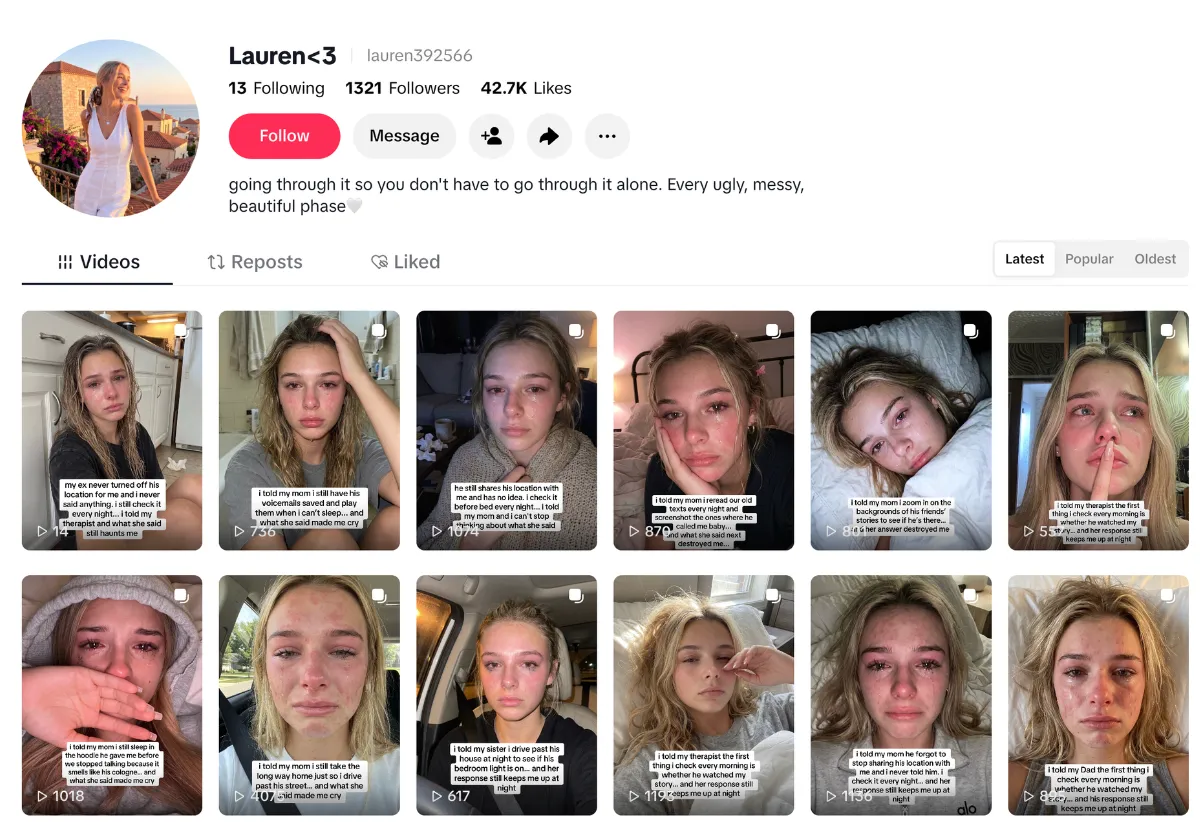
Photo carousels published to the account were interspersed with sobbing selfies and alleged screenshots of texts from her toxic ex — as well as screenshots of conversations with an AI companion app called “Daimon,” which Lauren claimed was helping her go no-contact with her former boyfriend.
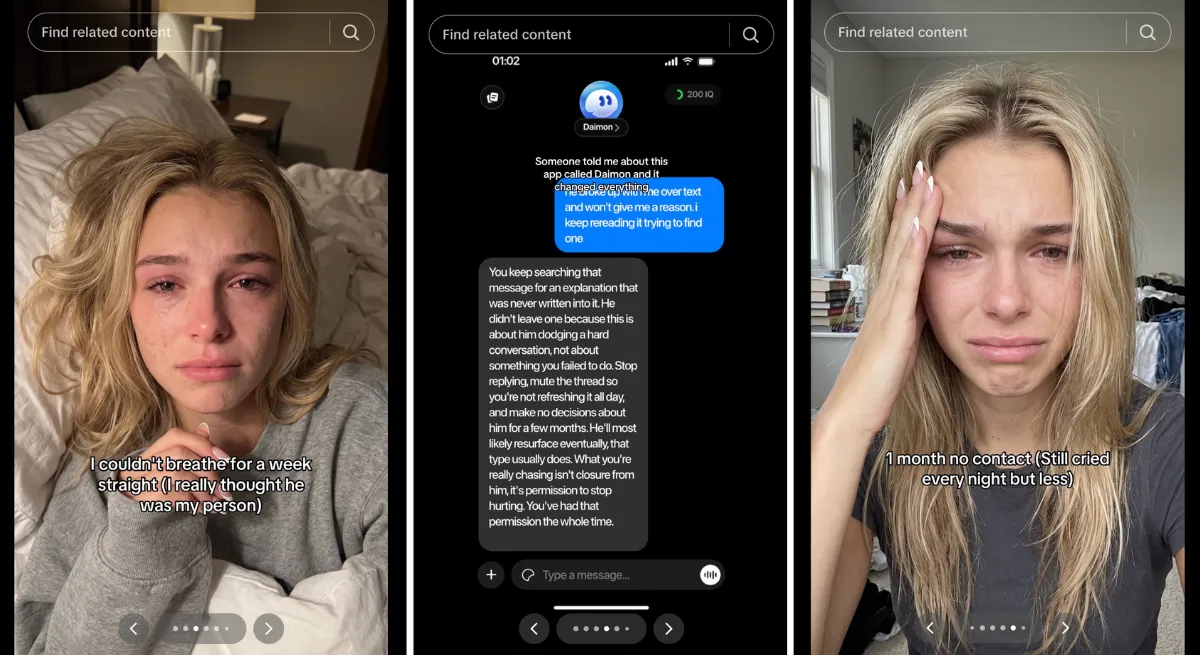
“Someone told me about this app called Daimon and it changed everything,” the poster declared in one post’s caption. In another post, “Lauren” described Daimon as the “one app that wouldn’t judge me and give me the best advice.”
“(Daimon in the app store),” she added, for good measure.
Elsewhere a TikTok account identified as “Ashley Miller” posted AI selfie after AI selfie of a fake woman who was pictured crying as she shared sob stories about her divorce, tales of getting cheated on or abandoned by her partner, or confessions about regretting her recent engagement. Images posted on the Ashley account are accompanied by purported screenshots showing text messages from her parents or, in the account’s most viral posts, texts from her partner’s parents urging her to leave her new fiancé due to his abusive behavior or confessing to their son’s infidelities.
These posts were created to market a completely different app: a “wellness” service called Zenit, which is described on the App Store as a tool to help users “take care” of their “mental well-being with guided support, daily check-ins, and emotional growth tracking — all in one calm and safe space.” Its mascot is a kiddish-looking owl in a scarf.
“He proposed in Paris last night,” the “Ashley Miller” account claimed in a viral post that garnered more than 240,000 likes and over 1,000 comments. The post featured an AI-generated selfie of “Ashley” in front of a shimmering Eiffel Tower, holding an engagement ring up to her phone camera as she wept. “This morning his mom sent me this…”
The next image in the slideshow showed a text message, in which the sender — a woman named “Diane” whose face also appears to be AI-generated — told the fake AI selfie-taker that “I watched you say yes last night and I cried, but not for the reason everyone thought.”
“I’ve been quiet for two years because he’s my son and I love him. But I was you, thirty years ago, in front of that same tower, with his father,” the text continues. “The charm, the big gestures, the temper he shows you only in small flashes and and then apologizes for, I know the pattern because I married it. Ask him about his last relationship and why it really ended. Ask him in a public place. If I’m wrong about my own boy, no one will be happier than me. But if you feel a knot in your stomach reading this, that knot is the answer.”
Beneath the text is a notification for Zenit.
“Your heart’s been racing,” read the notification beneath the dramatic text. “I’m here whenever you need me.”
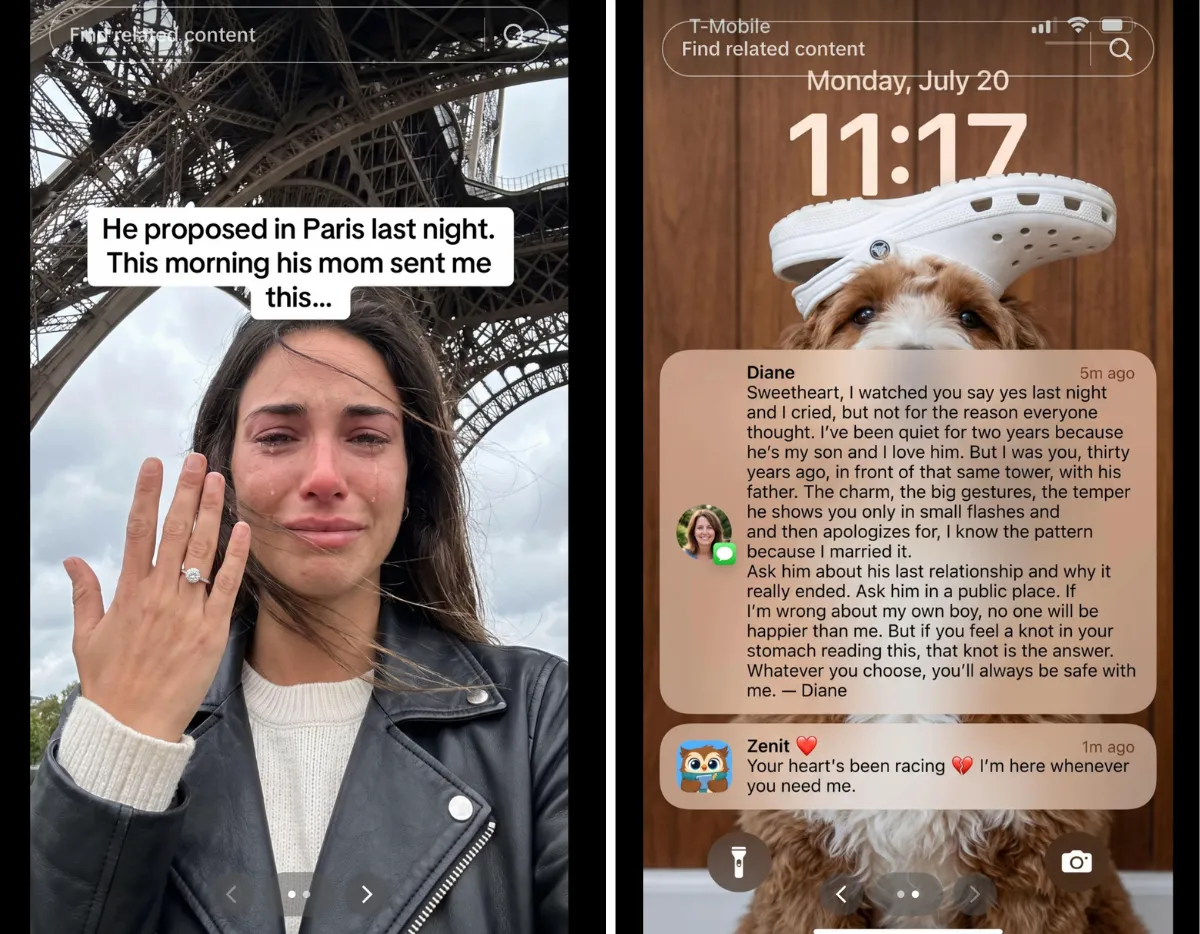
Indeed, all of the account’s posts showed Zenit notifications, making it clear that the fake woman and her sob stories were a fabricated marketing gimmick. Many of the account’s commenters, however, were duped.
“If the mama says this to you. Run,” remarked one commenter who was taken in by the false narrative. “She’s trying to protect you girl. I’m sorry.”
***
We reached out to the TikTok accounts we found publishing the manipulative AI-generated marketing content, as well as to the companies being promoted in the posts.
Very quickly after we reached out, the TikTok account associated with Zenit, the wellness app, was deactivated. The developer of Zenit, who identified himself as an independent developer named Pedro Pérez, told Futurism that he personally ran the account and that “no third party of marketing agency” was involved.
“I built Zenit to help people who struggle with overthinking, everyday stress or anxiety, or loneliness. The videos were based on realistic situations many people go through, with the goal of helping viewers feel understood and showing them a tool that could help them deal with those moments,” Pérez said. “The visuals were AI-generated and the posts promoted my app, so they should have been labeled as such.”
“After receiving your email, I tried to add TikTok’s AI-generated and commercial content labels, but the platform doesn’t allow adding them to videos that are already published, so I’ve deleted the account,” he added. “I think transparency matters, especially for a wellness app, which is why I’ve made this change.”
The account associated with Daimon, the AI companion, was abruptly scrubbed of all content after we reached out. The account owner also changed the handle from “Lauren<3” to simply “yooo.” When we reached out to Prospinity, the company behind the companion chatbot, it told us that the account was “absolutely not operated by our internal marketing team, and the content was neither created nor approved by us.”
“We’ve worked with external affiliate programs, and unfortunately, some affiliates were publishing content independently through accounts we didn’t directly manage. As soon as we became aware of this, we immediately looked into it, identified those responsible, and took action to shut down these activities,” the company said. “This kind of content is completely against our guidelines and is absolutely not how we want Daimon to be represented. We’re a small team that genuinely cares about what we’re building, and we take how Daimon is represented very seriously. While this content wasn’t created or authorized by us, we recognize the importance of making sure anyone promoting Daimon follows our standards.”
DreamMe didn’t responded to questions sent to email addresses listed on its website, and our email to Enzo bounced back. We also didn’t hear back from the TikTok accounts associated with their products.
They’re also continuing to post. The most recent post from the account promoting Enzo is now advertising a different app designed to track peptide consumption; the DreamMe account, meanwhile, has been promoting a phone-locking app.
More on fake people online: How Three Brothers Built an AI Slop Empire by Buying Legitimate News Sites and Turning Them Into Zombie Content Farms That They Say Get 50 Million Page Views per Month
The post GLP-1 Apps are Using Sobbing AI-Generated Women To Market Their Products appeared first on Futurism.