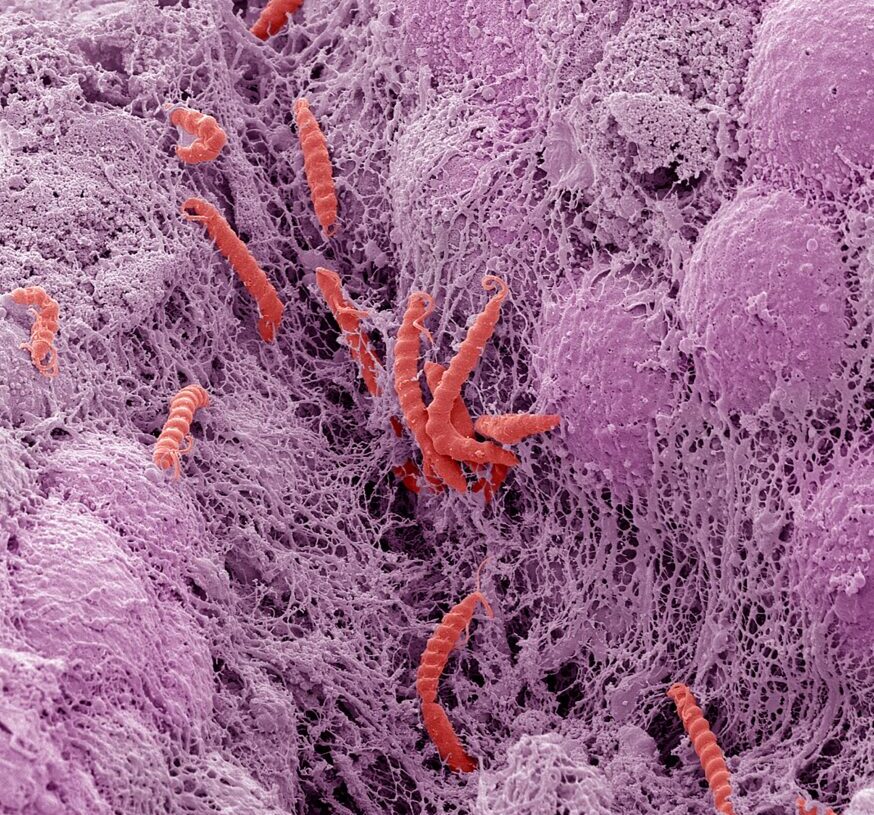
About 12 percent of new cancer cases worldwide in 2024 were caused by infectious agents such as viruses and bacteria, according to a recent study by the International Agency for Research on Cancer.
That means a sizable share of the cancer burden around the world is preventable with tools we already have, including vaccines and other preventative measures, researchers said.
“We have very actionable targets,” said Gary Clifford, a cancer epidemiologist and one of the authors of the study that published in the Lancet Oncology. “We have very many tools against these viruses already.”
Several infectious diseases, like the human papillomavirus and Epstein-Barr viruses, have known links to cancer. Viruses and other infectious diseases can cause cancer several ways: by causing mutations in cells’ ability to reproduce, inducing chronic inflammation and weakening the immune system.
“Viruses are not designed or evolved to cause cancer,” Clifford said. “But it can be a side effect.”
What infections were most often connected with cancer?
Recent research has expanded the range of cancers associated with some infectious diseases and microorganisms, experts said. The recent study incorporated cancers associated with HIV, which has been linked to a rare eye cancer and heightens the cancer risk from other infections. The Epstein-Barr virus, once mostly linked to a rare type of head and neck cancer, has also been associated with stomach cancer.
Most of the time, it is rare for these diseases to cause cancer, and other factors can inform a person’s cancer risk, experts said.
In the current study, the leading infectious causes of cancer included:
- HPV, which can cause cervical cancer and other cancers. The World Health Organization says cervical cancer is the fifth-most-common form of cancer among women globally.
- Helicobacter pylori, a bacteria usually spread through poor hygiene or contaminated food that causes stomach infections and can lead to stomach cancer.
- Epstein-Barr virus, a common but often asymptomatic infection spread through saliva and other bodily fluids, which can cause nasopharyngeal cancer and other cancers.
- Hepatitis B, which can cause liver cancer and is contracted through sexual contact, needles and during childbirth. It passes through blood, semen or other bodily fluids.
Together, the diseases contributed to around 2.3 million new cases of cancer in 2024, 12 percent of the 20 million new cancer cases for that year.
That proportion is similar to 2018, when the International Agency for Research on Cancer last conducted a similar study. Researchers estimated then that around 13 percent of new cancer cases were due to infection.
Lorelei Mucci, a professor of epidemiology at Harvard University who was not involved in the study, said it was “alarming” that the proportion of cases hasn’t changed in six years.
“That’s really a failure of public health,” Mucci said. “We really know how to prevent a lot of these cancers from happening by preventing the infection.”
Harriet Rumgay, an epidemiologist at the International Agency for Research on Cancer and another author of the study, cautioned against directly comparing the two studies as the newest one incorporated a larger range of cancers associated with infectious diseases, but agreed that trends have largely stayed similar.
How can you lower risk?
Existing measures like condoms, vaccines for HPV and cervical cancer screening can prevent infection and cancers associated with infectious diseases, experts said.
- The HPV vaccine: The American Academy of Pediatrics (AAP) recommends “starting the HPV vaccine series between 9 and 12 years.” The vaccine can be given to those who are older who didn’t start it during those ages but its effectiveness decreases as people get older.
- The hepatitis B vaccine is recommended for all infants, beginning with a dose within 24 hours of birth and followed by two additional doses for long-term immunity, according to the AAP.
Clifford said that much of the burden of infection-associated cancers is driven by disparities across countries in access to vaccinations and cancer screenings. Uptake of the HPV vaccine has increased in recent years, he added, which could reduce rates of cancers associated with the virus in the future.
“The impact is coming,” Clifford said. “The vaccinated cohorts are already protected, but we haven’t yet seen it in the cancer rates, but we will.”
Mucci warned that progress could be threatened by vaccine hesitancy and the Trump administration’s drawback of foreign aid and support for global health programs.
Both the HPV and hepatitis B vaccines have been part of the Trump administration’s overhaul of childhood immunization recommendations, which has challenged long-standing guidance for the two cancer-preventing vaccines.
Federal health officials moved to end the universal hepatitis B birth-dose recommendation and reduce the recommended number of HPV vaccine doses. But a federal judge suspended those changes in March, restoring the Centers for Disease Control and Prevention’s previous childhood vaccination schedule while the legal challenge proceeds.
The post These common infections can cause cancer. Here’s what can lower your risk. appeared first on Washington Post.