Zachary Karabell, who writes “The Edgy Optimist” on Substack, is a Post Opinions contributor.
Not a day goes by without a new story about the coming dangers of artificial intelligence. In the past week, we’ve had Bill Gates warn that AI is “the most dangerous technology humans ever invented,” the publication the Lancet write that AI could have “extinction potential” and Bloomberg publish an interview titled “Nate Soares on How AI Really Could Kill Us All.”
The potential risks of AI are neither unknown nor unaddressed. To be sure, there is no regulatory framework anywhere in the world that has kept pace with the speed of AI innovation, especially from the frontier labs such as OpenAI and Anthropic. But even those companies are routinely touting not the wonders of their products but the perils of what they are creating. Anthropic, which is preparing what may be a multitrillion-dollar initial public offering, is represented by its loquacious CEO, Dario Amodei, who is more likely to emphasize AI’s “risk to humanity” than to highlight its promise.
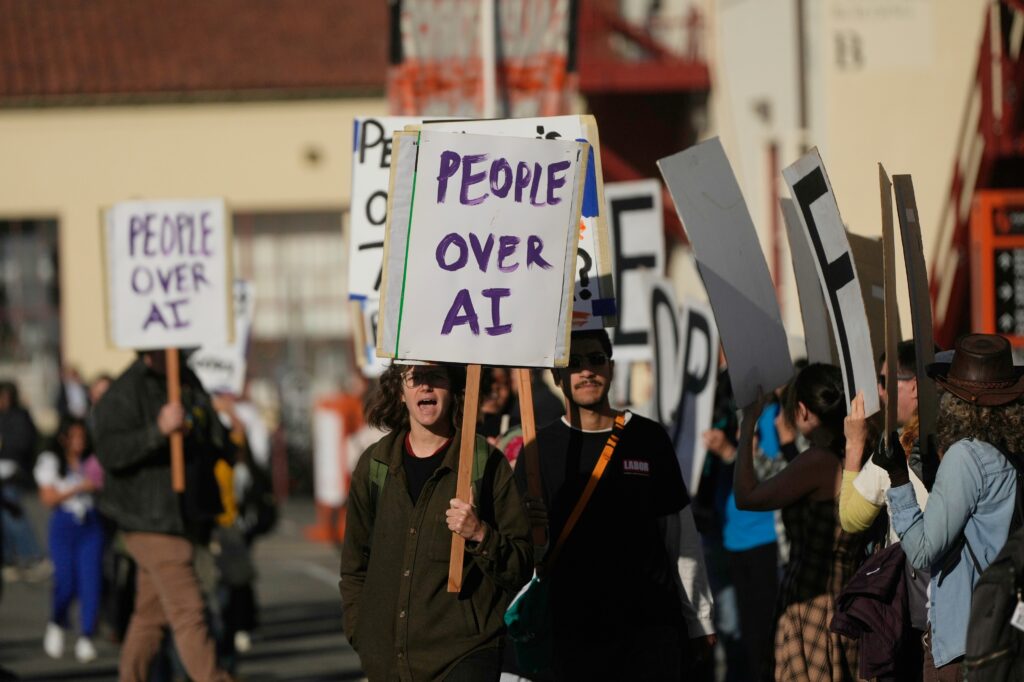
It’s bizarre for a technology so transformative, ubiquitous and, for many, profitable to have so much negativity surrounding it. That’s more than just bad PR for an industry; it’s a message that conditions consumers to expect the worst from AI. It’s also a recipe for politicians to stoke the climate of fear and use it to their political advantage. The result will be reactive regulations that satisfy the impulses of today but do not steer the world toward a more productive future. Indeed, just this week, the Democratic Senate candidate in Michigan, Abdul El-Sayed, called for a ban on all work on “Artificial Superintelligence.”
One AI giant has been noticeably quiet: Alphabet (Google). With its AI tools now embedded in search, Google is every bit an AI behemoth, but it has avoided the opprobrium directed at the frontier labs and data center companies. That may suit Google’s leadership — the lack of negative attention boosts its stock price and helps the company avoid the regulatory scrutiny that it has faced over the past decade because of supposed monopolistic practices.
But Google’s silence does not suit the public interest. Google does attempt, in a subtle way, to highlight the many benefits that AI can and will bestow. A recent blog post by James Manyika, a Google senior vice president, said that the company was focused on “making disease detectable, treatable, and preventable, predicting natural disasters, expanding learning, and unlocking economic opportunities for more people.” The company has also tried to highlight just how AI is being integrated into work and economic life not simply as a disrupter of traditional jobs but as a powerful enhancer of individual and collective productivity.
No matter how many blogs and white papers Google posts, however, its mild efforts stand no chance against the nattering chorus of negativity that dominates the public sphere. Reasonableness is no defense against hyperbole, especially in the social media world. That does not mean that such efforts shouldn’t be made, only that they need to be articulated more forcefully and continually to make a dent.
The point isn’t that AI is without its existential risks. It is that the future here is, as futures are, unknown, and the decisions made today will shape what happens next. If false certainty of impending doom determines those actions, the ability of this new technology to help solve core human challenges — such as disease, climate change, population decline and the nature of work — will be constrained.
There is a past lesson in how nuclear power was managed in most countries. Because nuclear weapons threaten human existence and nuclear power plant accidents can be catastrophic, the nuclear regulatory framework was constructed primarily to mitigate harm. That may have helped prevent nuclear war, but it also constrained the deployment of and innovation in nuclear energy, which is both cleaner and cheaper than oil and gas. Cultural fear created a deep animus that never dissipated.
AI is even more transformative and affects more areas of life, which makes the nuclear lesson that much more important. If the world treats AI mostly as a threat, it risks blocking immeasurable benefits to humankind. Harm prevention is not without costs, and the assumption that AI is a lethal genie out of its bottle will close off avenues that, looking back, people may wish they had kept open.
Admittedly, in today’s highly skeptical, low-trust culture, AI companies aren’t convincing when they tout the benefits of AI. But public perception won’t change if those companies — and anyone who sees value in this technology — don’t try, even in the face of deep cultural unease. AI may be a double-edged sword, but for now, the worst edge is getting all the attention.
The post AI doomers are getting all the attention appeared first on Washington Post.