In the right light, the two statewide races at the top of the Florida ballot could look like a victory for democracy. The contest for governor pits U.S. Rep. Byron Donalds (R) against centrist Democrat David Jolly. In a special election for a seat in the U.S. Senate, state Rep. Angie Nixon (D) is taking on Sen. Ashley Moody (R), who was appointed last year to fill the seat vacated by Marco Rubio. That both races in the Sunshine State feature Black candidates — Donalds from the MAGA wing of his party and Nixon from the progressive wing of hers — is evidence of the republic’s progress and its limits.
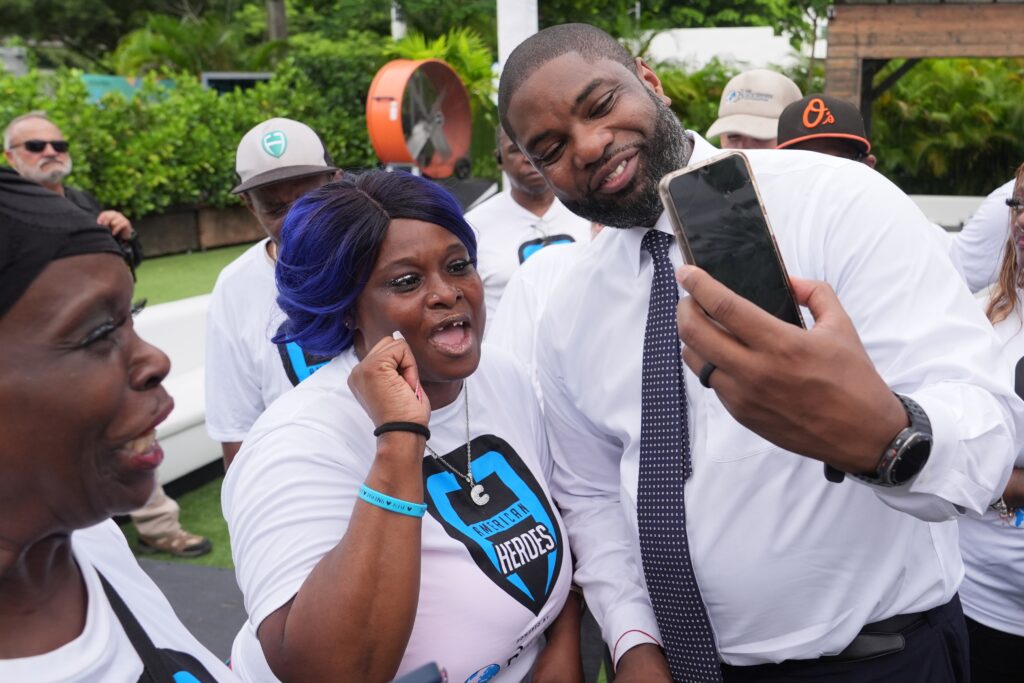
Though polls and recent elections suggest the Republican candidates have the inside track, the races have begun to tighten. As it happens, Donalds and Nixon are stepping up their appeals to Black voters, who make up nearly 14 percent of Florida’s eligible voters. Donalds has spent more time visiting barbershops and churches, appearing on celebrity podcasts and holding town halls at Florida A&M University, his alma mater and a historically Black institution. Nixon has long made similar visits and expanded mobilization efforts, relying on her volunteers and grassroots ground game to increase turnout. The presence of Black candidates on both sides of the partisan divide, however, does not guarantee that government will be more responsive to Black Floridians.
The general idea behind a democratic republic is that equal citizenship is protected by the rights to vote and hold public office. For groups historically denied access to either, having one of their own in the halls of power — a concept known as descriptive representation — is seen as essential. In this way, the candidacies of Donalds and Nixon are products of hard-won access to political power. But most of this electorate is neither MAGA nor democratic socialist, making substantive representation — having policy priorities reflected in government — an ongoing challenge.
The approaches of both campaigns reflect this thinking. As a Democrat, Nixon has an overwhelming initial advantage with Black voters given their long-standing partisan allegiance; a recent YouGov poll of likely voters in Florida found Nixon leading Moody by 76 percentage points among Black respondents. Studies suggest that when Black Democrats run for office, the bloc’s turnout increases — as in 2018, when progressive Andrew Gillum’s gubernatorial run in Florida was nearly successful. Nixon’s aim, then, is less to increase her margin of victory than to increase Black voters’ share of the electorate. To do this, she is calling out racial inequality and confronting dog whistles while also speaking to the economic anxieties of working-class voters that cut across race and region.
Unlike Democrats, Black Republicans on the ballot do not mobilize these voters. Given how poorly the party fares with them, it can work to their advantage — fewer Black voters means fewer voting for Democrats. Florida’s GOP candidates in the 2018 and 2022 gubernatorial elections lost the bloc by more than 70 points. In close elections, however, ignoring these voters isn’t a winning strategy. The Donalds campaign would likely hope for low Black turnout while persuading some voters who do turn out to take a chance on him. The pitch is less focused on policy — MAGA and the Trump economy are too unpopular with the Black electorate. Instead, his outreach is grounded in a shared identity. Each engagement with Black media and institutions is meant to convey pride in his identity in hopes that it earns voters’ trust.
Ultimately, voters want representatives who will look out for people like them and address issues they care about most. Ideally, elections are filled with candidates who do both. Often they aren’t, which sometimes forces voters to choose one over the other — descriptive or substantive representation. When Black voters face this dilemma, the choice hinges on a candidate’s commitment to their interests. In his book “We Choose You,” political scientist Julian J. Wamble finds that they “prefer politicians who show a history of prioritizing the group’s needs above their own prestige and personal interest.” Importantly, any committed politician can benefit, from Republican governors in blue states to White Democrats, such as Rep. Steve Cohen (Tennessee), in historically Black congressional districts.
Nixon and Donalds have their work cut out for them. Black voters’ share of Florida’s midterm electorate dropped from 13 percent in 2018 to 10 percent in 2022 — Nixon cannot afford that. With just 9 percent of Black voters supporting him, Donalds is not doing much better than Moody with the group. But his race is tighter, which poses a greater problem for Donalds than for Moody.
Because most Black voters don’t share the policy views of Nixon or Donalds, the choices of whether to vote and how to vote come down to a question of trust: in the candidate, in the party and in the system — in that order. For all the progress in our republic, representativeness can still feel out of reach, especially for Black voters. For them, the candidates who show up when there isn’t an election are the ones who represent them best.
The post Florida’s Black candidates offer two visions of representation appeared first on Washington Post.