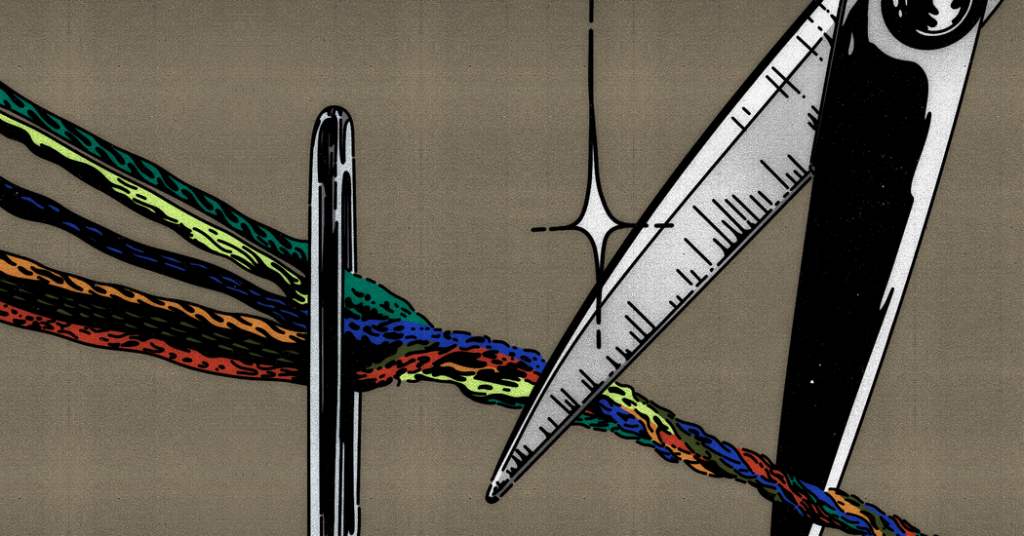
Earlier in the 21st century, nations embraced the idea that global economic integration was in everyone’s best interests. Today, there’s been a darker shift, with countries including the United States choosing to weaponize the interdependence of the global economy against one another, using whatever unique assets they control as a source of leverage.
The United States’ most potent version of this strategic tool, known as a choke point, is control over the U.S. dollar. It demonstrated as much when it denied Iran and Russia access to the dollar-based global payment and banking infrastructure over a decade ago. That decision helped bring Iran to the table in 2013 to negotiate over its nuclear program; Russia paid a cost for invading Crimea in 2014.
For China, the choke point is its centrality in global supply chains, most clearly demonstrated with rare-earth minerals and magnets. China converted its dominance in these industries — it processes 90 percent of the world’s rare earth elements — into leverage. In April 2025, China imposed sweeping export restrictions on critical minerals and magnets, which are used in everything from car seats to missile nose cones, and announced an expansion to the restrictions last October. The Chinese also imposed a licensing regime on the know-how and technology used to produce and process those materials.
Just the threat of deploying this choke point helped pressure the United States to back down from a 145 percent general tariff and to adopt a more tempered trade approach.
Today, Iran is using a choke point as old as time: geography. Sitting atop the Strait of Hormuz, the waterway that moved about 20 percent of the world’s oil and gas before the war, Iran is using its ability to shut the strait or impose tolls on the ships allowed to navigate it to exact a price and disrupt the global economy. Despite being overmatched militarily, Iran has been able to shift the primary focus of negotiations with the United States from its nuclear, missile and regional aspirations to the reopening of the strait itself — back to square one, the status quo ante.
We are already seeing, however, that Iran has overplayed its hand. That’s because international relations in all forms follow a key law of physics: Every action produces a reaction. If your nation weaponizes a choke point, mine will accelerate efforts to shift away from that dependency.
In the case of the Strait of Hormuz, countries are rapidly rerouting oil flows to reduce their dependence on that waterway. On the demand side, China has cut oil imports as it electrifies its economy. On the supply side, Saudi Arabia, the United Arab Emirates and other states in the region are quickly expanding their network of pipelines and alternative ports.
About 40 percent of the region’s crude is already being transported without transiting the strait, compared with just 17 percent before the war, according to the data-analytics platform Kpler. Of course, pipelines and ports could be vulnerable to Iranian missiles and drones, as we have seen, and more than oil gets exported through the strait, but Iran might well find that its leverage is now a wasting and transitory asset.
The resistance to China’s choke points is also building, after Beijing’s actions last year prompted many countries to begin working furiously to reduce their dependence on its critical minerals and magnets. The Trump administration says it has approved critical minerals deals totaling more than $40 billion since January 2025. The administration has also launched a multilateral forum to build a durable and efficient critical minerals supply chain that’s insulated from China’s reach. There’s technological innovation, too: The U.S. is making progress developing high-powered magnets that don’t rely on such minerals.
Minerals and magnets are only a few of the products that China could turn into a choke point. It also controls production of pharmaceutical ingredients needed to produce many common drugs. That, too, is driving a meaningful effort to reduce risk and selectively decouple from China’s economy. As a result, China could see its choke point strategies lose some of their potency over time as well.
Economic statecraft, then, could learn a few things from nuclear statecraft: Choke points are most potent as deterrents.
The dollar may prove a more durable choke point than supply chains or geography. Most international transactions of oil, grains, metals and other vital commodities are still conducted in dollars, and targets of U.S. sanctions have struggled to settle their trading without using the U.S. currency. After the United States sanctioned Russia for its invasion of Crimea in 2014, Russia developed its own domestic payment system, but still found itself stymied in international transactions with its access to dollar-based institutions restricted.
Nevertheless, even nations on good terms with the United States have been trying to diversify away from their dollar holdings. The dollar’s share of global foreign exchange reserves is gradually diminishing, from more than 70 percent in 2000 to 57 percent today; meanwhile, China has been buying a lot of gold and is increasingly settling its bilateral goods trade in renminbi, to roughly 28 percent in 2025 from 11 percent in 2017.
Still, there’s no viable alternative to the dollar. European capital markets are too fragmented for the euro to play a central role as a reserve currency. And the renminbi can’t supplant the dollar unless China adopts a series of reforms, including lifting capital controls, something that would run counter to the leadership’s inclination to keep a tight rein. As a result, while Iran and China might well see their leverage wane over time, the dollar could endure.
That is, if the United States doesn’t undermine its own advantage.
The Trump administration has used access to the U.S. market as a cudgel, in the form of tariffs. But its tariffs have persuaded trading partners such as Canada to rewire their relationships and explore alternative markets. Significant further erosion of dollar holdings by central banks, or a meaningful increase in trade in other currencies, could raise the interest rates the United States has to pay on its Treasury bonds, making repayment of that debt more expensive.
The United States would also undermine the dollar if it continues to run up unsustainable deficits and debt. Already at $40 trillion, or more than 120 percent of our G.D.P., our debt is the greatest threat to dollar centrality and, by extension, to America’s ability to use the dollar as leverage.
But the United States remains the world’s largest, most resilient and most innovative economy, and the most important step it can take to prevail in the choke point chess game is to do no harm — especially self-harm.
Michael Froman is the president of the Council on Foreign Relations and a former deputy national security adviser and U.S. trade representative.
The Times is committed to publishing a diversity of letters to the editor. We’d like to hear what you think about this or any of our articles. Here are some tips. And here’s our email: [email protected].
Follow the New York Times Opinion section on Facebook, Instagram, TikTok, Bluesky, WhatsApp and Threads.
The post The Diminishing Returns of Choke-Point Diplomacy appeared first on New York Times.