The Nobel Peace Prize is no stranger to scrutiny, with the choice of laureate sometimes inviting hard questions.
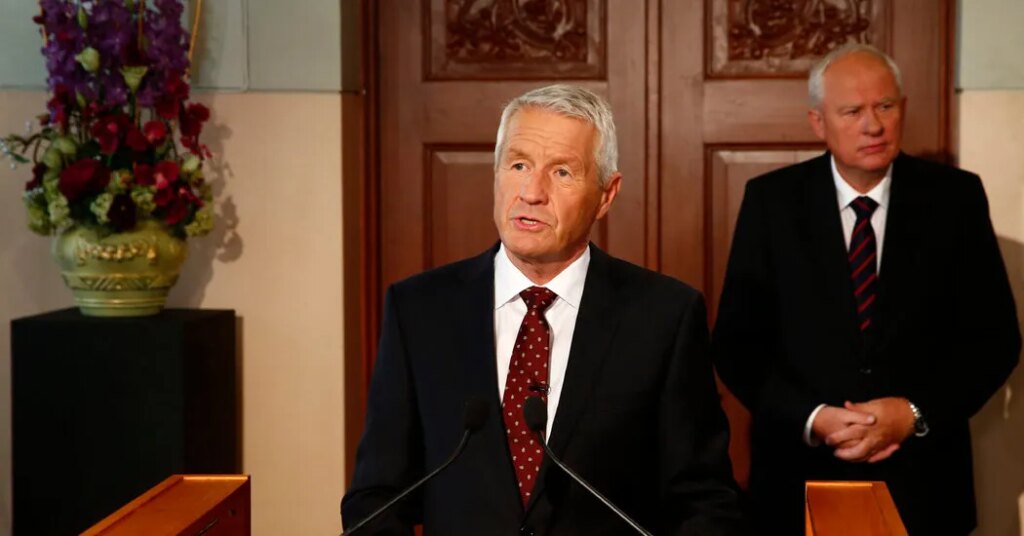
This year, the Norwegian committee that awards the prize came under scrutiny itself after a tranche of emails revealed ties between the convicted sex offender Jeffrey Epstein and Thorbjorn Jagland, a former head of the committee.
The messages raised concerns about the impartiality of the group’s members — often former Norwegian diplomats and officials — and led to the adoption, for the first time in 125 years, of ethics rules.
The Norwegian Nobel Committee consists of five members chosen by the Norwegian Parliament for a term of six years. Sitting lawmakers are not eligible, and nominees are often drawn from politics and diplomacy. Deliberations for the prize are shrouded in secrecy and, “in the past, verbal clarifications and mutual trust carried a great deal of weight,” the committee said this year.
After the revelations of the ties between Mr. Jagland and Mr. Epstein, who died in prison in 2019, the committee acknowledged change was needed.
“It is no longer enough to point to tradition, history and good intentions,” Jorgen Watne Frydnes, current chairman of the Norwegian Nobel Committee, said when announcing the rules in March.
Committee members are now required to declare their professional affiliations to an internal audit, and they are prohibited from accepting gifts or travel that could be deemed as trying to curry favor.
Haakon Gjerlow, acting director of the Peace Research Institute in Oslo, said that ethical scandals “would erode the dignity of the prize if there were to be a lot of turmoil around the committee year after year.”
Norway has long taken pride in being the country that hands out the prestigious award. But that position has also made the committee’s members a target for lobbying. The committee’s internal deliberations remain confidential for 50 years, and even if a peace prize candidate approaches a committee member, that can only be reported internally.
The emails published this year showed that part of Mr. Epstein’s interest in Norwegian diplomats stemmed from their connection to the Nobel Prize, particularly Mr. Jagland, who is also a former prime minister of Norway. Mr. Jagland is now under investigation by the Norwegian police’s economic crimes unit.
Other prominent Norwegians have faced scrutiny for their ties to Mr. Epstein, including the current queen, Mette-Marit; Borge Brende, a former foreign minister; and Mona Juul, a diplomat.
Some Norwegian politicians believe the Nobel committee needs a wider overhaul. In 2024, the vice chair of the committee, Asle Toje, traveled to Ethiopia as part of a paid consultancy for an Ethiopian mining company, according to a report this year by Aftenposten, a Norwegian newspaper. The trip, disclosed under the committee’s new ethical rules, raised questions over Mr. Toje’s relationship with Prime Minister Abiy Ahmed of Ethiopia, who started a war soon after winning the Nobel Peace Prize in 2019.
Opposition lawmakers in the Green Party of Norway have called for selection criteria that would give more weight to professional expertise and would guard against political affiliation, but the Norwegian Parliament voted against the proposal in June.
Last week, Parliament began a public inquiry into how much influence Mr. Epstein had wielded with Norwegian political elites. Separately, an independent commission of inquiry was also looking into how Norway’s foreign service may have been affected by links to Mr. Epstein.
The post How the Epstein Files forced the Nobel Peace Prize to reckon with impartiality. appeared first on New York Times.