In 1991, members of Soundgarden and future members of Pearl Jam came together to honor their friend, Andrew Wood. He was the frontman of the Seattle-pioneering grunge band Mother Love Bone. In March 1990, Wood tragically died of an overdose. His roommate, Soundgarden frontman Chris Cornell, penned songs in tribute to and inspired by his friend. Under the name Temple Of The Dog, Cornell brought together guitarists Mike McCready and Stone Gossard, and bassist Jeff Ament.
Around the same time, they received a demo tape of a singer from Southern California named Eddie Vedder. Impressed with his vocals, they flew Vedder to Seattle to audition for the band. While there, Vedder lent vocals to the Temple Of The Dog track “Hunger Strike”, as the band was in the middle of recording the tribute album.
Soon after the recording sessions, Vedder, McCready, Gossard, and Ament formed Pearl Jam with drummer Dave Krusen. Together, they recorded the band’s debut album, Ten, released in August 1991. The debut was released just one month before grunge broke into the mainstream with Nirvana’s single “Smells Like Teen Spirit”. As a result, other Seattle grunge bands such as Pearl Jam, Soundgarden, and Alice In Chains garnered significant attention and fueled their new releases. Ten peaked at No. 2 on the US Billboard 200, generating four hit singles: “Alive”, “Even Flow”, “Jeremy”, and “Oceans”.
For their debut, the band released accompanying music videos that were on heavy rotation on MTV, as every other band had done. Despite these videos’ popularity, the band grew to resent music videos and decided to stray from this trend.
The Band Refused To Make a Music Video for ‘Black’
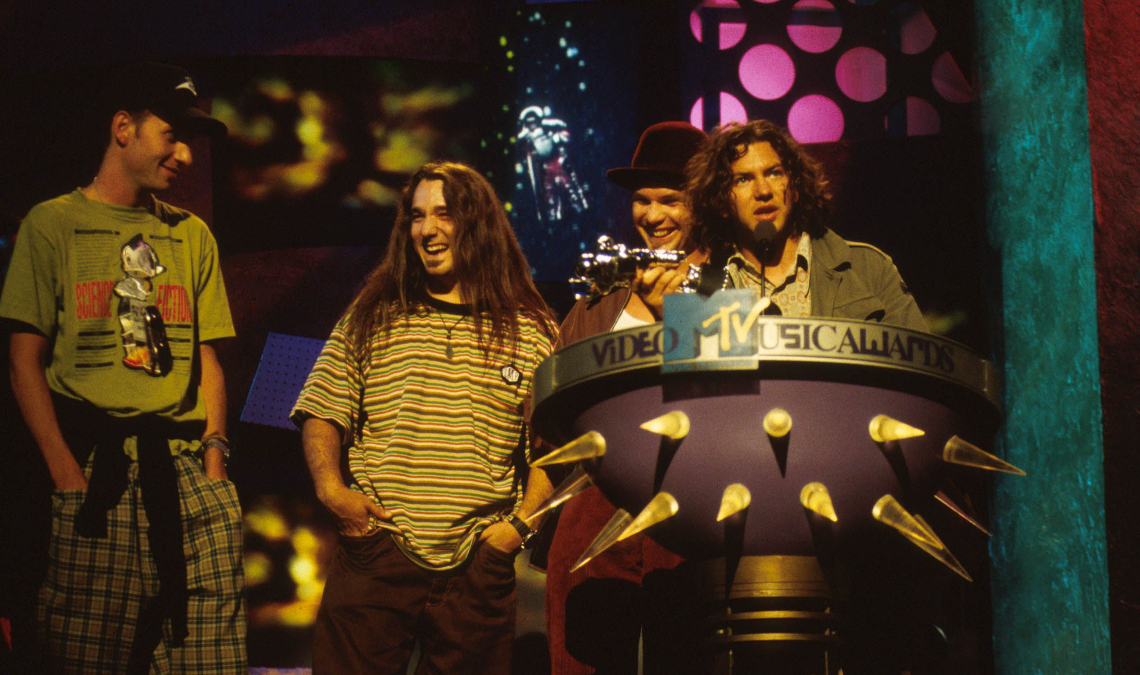
Despite winning awards at the 1993 MTV Video Music Awards, the band refused to record a music video for their song “Black”. With this, the band continued to refuse to make music videos for their songs. In the book Five Against One: The Pearl Jam Story by Kim Neely, Eddie Vedder explained the band’s decision. “Before music videos first came out, you’d listen to a song with headphones on, sitting in a beanbag chair with your eyes closed, and you’d come up with your own visions, these things that came from within. Then, all of a sudden, sometimes even the first time you heard a song, it was with these visual images attached, and it robbed you of any form of self-expression.”
Bassist Jeff Ament followed up on this in a 1993 interview with Rolling Stone. “Ten years from now, I don’t want people to remember our songs as videos.” After that, the band used visualizers and abstract videos as their music videos. This can be seen in the video for “Daughter” in 1993, the only music video released from their sophomore album, Vs. They continued this trend into the late 90s and 2000s, with animated videos and visualizers.
Photo by Frank Micelotta/ImageDirect
The post Why Pearl Jam Refused to Make Music Videos at the Height of Their Fame appeared first on VICE.