Photographer E. David Luria has spent almost every day of the past 27 years working with clients of his Washington Photo Safari business to help them see and capture D.C. in its most beautiful light.
He teaches them how to frame breathtaking sunrises from the steps of the Lincoln Memorial, capture sweeping vistas of the National Mall from the top of the Washington Monument and shoot the elegant north face of the White House from Lafayette Square.
“I’m probably the guy who knows more about taking pictures in D.C. than anyone else in town,” Luria, 90, said with a laugh while sitting in a coffee shop near the White House on a recent rainy afternoon.
Luria, who has shepherded tens of thousands of clients over the years, was hopeful his business might get a boost in 2026 as Washington celebrated America’s 250th anniversary. Instead, it has mostly been a bust.
And it isn’t just Luria feeling the pain. Tour guides across the District say their business has cratered this year, in some cases as much as 70 percent as a number of Washington’s iconic sites are closed, under construction or awaiting repairs. Adding to the downturn, guides say, is that many tourists, particularly international visitors, are angered by President Donald Trump’s attacks on longtime allies, the imposition of hard-hitting tariffs, and the administration’s visa and immigration policies.
“People just aren’t coming,” said Luria, a D.C. resident for 56 years, who estimates his bookings are down about 50 percent from last year. “They just don’t want to put up with it.”
He keeps a running list of must-sees that have become hard-to-sees or don’t-want-to-sees: The empty and fenced-off Reflecting Pool, most of Lafayette Square, the White House’s no longer standing East Wing (and the $900 million ballroom being built to replace it), the shuttered Kennedy Center and swaths of the National Mall.
It’s a bit like visiting London and finding Buckingham Palace blocked from view, Big Ben hidden behind scaffolding and London Bridge falling down.
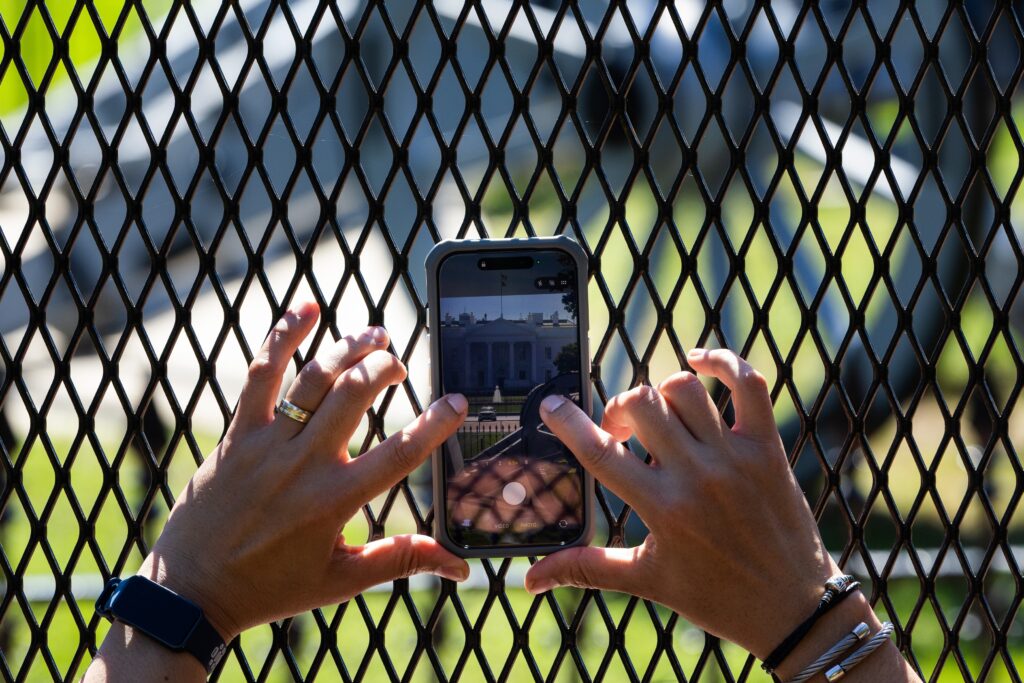
The District’s core, guides say, is also marred by the long stretches of chain-link fence that line the Potomac River, surround construction sites and section off portions of the Mall that are under repair.
“The biggest complaint we hear from visitors is we can’t get our pictures without fences,” said Canden Arciniega, who has been guiding visitors around D.C. for almost two decades and is the co-owner of DC by Foot Tours. Knowing how to navigate the District and get tourists from one spot to the next with a minimum of hassle is a point of pride for Arciniega, 42, but this year has been particularly challenging. She has had to tell numerous visitors who wanted a group shot taken in front of the White House that they were out of luck.
One of DC by Foot’s most popular tours is “White House at Night: Secrets, Scandals and Legends.” But that tour has been shelved indefinitely because most of the sites are inaccessible, Arciniega said. Attendance at other tours her business offers, she said, has also suffered.
“Our Capitol Hill tours used to be twice a day, Tuesday through Saturday,” she said. “Now they’re offered just four times a week and are rarely full.”
White House spokeswoman Lauren Bis rejected assertions by tour guides that the shutting down of key sites on or near the Mall has negatively impacted their business.
“This is a completely false narrative,” she wrote in an emailed response to a request for comment. “President Trump has transformed our nation’s capital from a crime-ridden city into a safe and beautiful haven for residents and visitors alike by removing violent criminals from the streets, cleaning up the parks, and making long-overdue renovations to public lands.”
The White House pointed to the repairs and cleaning done by the administration at dozens of fountains and memorials across Washington. It also noted the installation or refurbishing of more than 1,100 park benches, the installation of 134 rat-resistant trash cans and the removal of 154 homeless encampments.
Carolyn Crouch, a tour guide who founded Washington Walks in 1999, said this year has been the worst for her company outside of the pandemic in 2020. Revenue is down 70 percent for July and August and about 50 percent for the rest of the year, she said. “We are on track to conclude 2026 with a loss.”
Visitors are dismayed by the lengthy closures, incomplete repairs and fencing that blight so many locations, said Crouch, 63. But she and other tour guides in the city say politics and anger at the president is another part of the tourist disappearance equation.
“The current administration has not only created lots of obstructed views and made the National Mall look in some places like a work in progress, it has also made our city’s brand toxic,” she said. “And our experience is that people seem to be voting with their feet and not traveling to Washington, D.C.”
Arciniega says the drop-off in the number of international visitors has been especially notable. Her company typically hosts a large number of corporate and school groups from Canada, but that traffic has evaporated. Overall, the number of her company’s international clients has dropped more than 50 percent, she said.
“I do feel that a lot of international guests are not coming for political reasons and visa reasons and, you know, fear of deportation,” Arciniega said.
More than 27.2 million total visitors came to D.C. in 2025, up slightly over 2024, according to Destination DC, the nonprofit organization responsible for marketing the District to tourists and convention planners. But the number of international visitors in 2025 declined by 4 percent.
The White House rebutted claims that tourism to the District had been adversely impacted by the president’s policies toward immigrants or his treatment of countries that have long been U.S. allies.
“The President’s efforts along with his historic freedom 250 events including the UFC fight, Independence Day celebration, and the Grand Prix attracted a record number of Americans and foreign tourists across the globe,” Bis said in her email.
Destination DC said that it does not yet have updated information for 2026 but that the trend for domestic visitors is positive, driven in large part by attendance at events celebrating America’s 250th anniversary.
The organization says it does not have trend information specifically for international visitors to D.C. But according to Destination DC’s data partner, Tourism Economics, overall international travel to the U.S. is weaker than anticipated and was down nearly 6 percent through August.
The firm estimates the United States “will forgo $39.6 billion in inbound travel spending across 2025 and 2026 relative to what would have occurred if the country had maintained its 2024 share of global international travel spending.”
Rauf Shakir, co-owner of USA Guided Tours, has lived in Washington for 26 years. Two years ago, his company was taking 80,000 to 90,000 visitors a year on tours through D.C. Those numbers started dropping last year and have continued to plummet. Revenue is down 65 to 75 percent from two years ago, he said.
Shakir, 45, said the closing of some sites and limited access to others is partly responsible for the drop in visitors, but he attributes most of it to international tourists no longer wanting to come to the United States.
“Everything that happened with immigration and countries being put on lists by the administration really hurt us,” he said. “The other issue is the images people were seeing of the National Guard on the streets. I think that discouraged a lot of people from coming to D.C.”
“It has been hands down our worst year,” he said. And, he added, it’s not just business that’s being lost.
“When you’re giving a tour to people from all over the world and all walks of life, this may be the only time they visit your city,” he said. “You get an opportunity to showcase the city you love, and that becomes a core memory for that person.”
The post Tour guides lose business as D.C.’s reputation and landscape change under Trump appeared first on Washington Post.