Sander Gerber is founder and CEO of Hudson Bay Capital and a member of the President’s Intelligence Advisory Board. Eugene Kontorovich is a professor at George Mason University’s Antonin Scalia Law School and a senior legal fellow at Advancing American Freedom.
Meta recently agreed to pay up to $17 billion to settle claims brought by state attorneys general that it had deceived the public about the safety of its platforms. The case highlights the fact that the Constitution’s robust protections for free speech do not extend to deception, which even on internet platforms can be regulated by consumer protection law.
That lesson can be powerfully applied to the rampant problem of covert foreign influence operations using social media platforms to give users a false impression of public opinion.
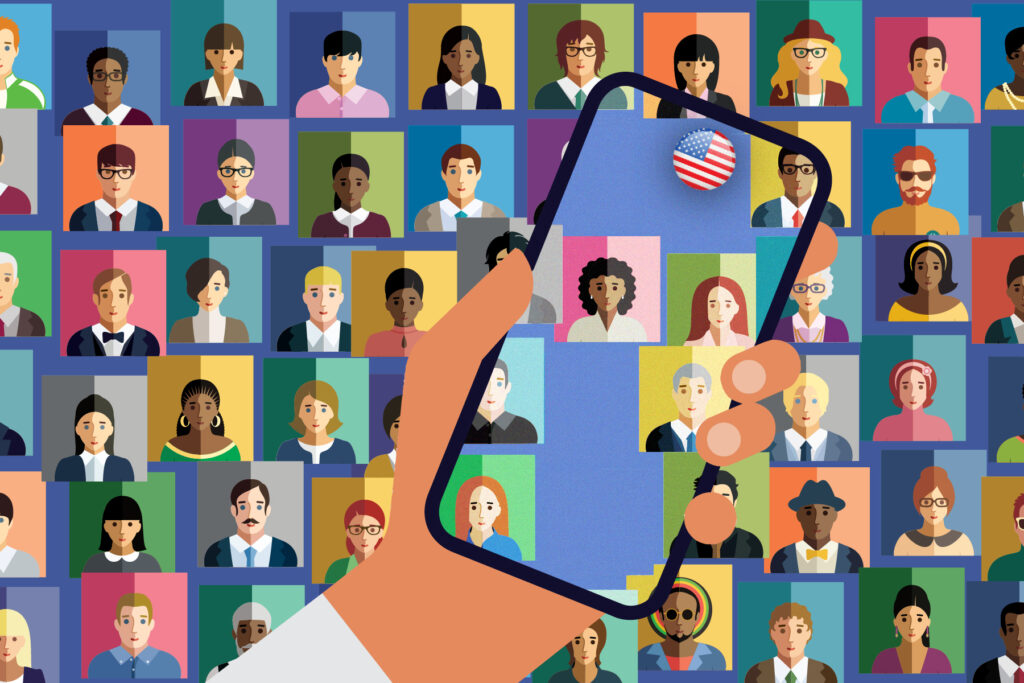
In June, OpenAI disclosed that it had banned a network of accounts, most likely run out of China, that posed as ordinary Americans and piled on to the debate over artificial intelligence data centers — churning out comments and cartoons blaming the centers for rising electricity bills. (The Washington Post has a content partnership with OpenAI.) To be sure, Americans were already arguing about data centers. The foreign operators amplified one side of the debate while masking themselves as American citizens, manufacturing the appearance of a groundswell of public sentiment.
Most of us calibrate our opinions at least in part by watching our neighbors. When a foreign government floods our Instagram feed with counterfeit neighbors, real citizens see a consensus that may not exist — and subconsciously adjust toward it. The deception lies in trying to pass off foreign (and often foreign-based) — and perhaps not even human — messages as apple-pie American.
Platforms can identify counterfeit users at scale when they choose to. X has purged inauthentic accounts by the millions this year — including 42,000 using AI to impersonate humans — and researchers have traced earlier bot networks on the platform to Chinese state-linked operations. But platforms have little incentive to reduce their own traffic, even by merely pruning info-op accounts.
Washington’s responses so far have been toothless or reckless. Pressuring platforms to remove “disinformation” invites government censorship of Americans. The Supreme Court last year upheld Congress’s severe restrictions on TikTok, but rested its decision largely on narrow data-security grounds and the involvement of China.
Existing law already provides at least a partial remedy. The Federal Trade Commission has authority to police “unfair or deceptive acts or practices.” A bot presented as a person is a misrepresentation. A foreign operative posing as a Pittsburgh housewife is a misrepresentation. Such deceptive practices mislead not only consumers about who is speaking to them, but also advertisers, who pay to reach human beings. The FTC already bans fake reviews; fake people are the same deception, but magnified.
The FTC should begin using its regulatory powers to investigate the scope of the problem, which platforms are naturally reluctant to do themselves. If it is as significant as many suspect, either in scale or in targeting key public discussions, the agency (or Congress) could craft effective remedies that do not infringe on free speech.
Although foreign nationals abroad have no First Amendment rights, Americans do have a right to listen to foreign speakers. In the 1965 case Lamont v. Postmaster General, the Supreme Court struck down a law requiring citizens to write to the post office within 20 days for every piece of foreign “communist political propaganda” they wished to receive. Americans have a right to receive foreign speech without jumping through hoops.
But freedom to hear is also freedom to not hear. In 1970’s Rowan v. Post Office, the court upheld a statute allowing any householder to order a mailer to stop sending material the householder finds objectionable. The FTC’s Do Not Call telephone registry rests on the same principle: The government may not block speech, but it may give you tools to block it.
One remedy the FTC or Congress could pursue would be to require major social media platforms to provide customers with the right to flip a switch to view only content posted by verified U.S. residents. This would not be a default setting — foreign or bot speech would not be blocked, nor would the user have to request it. Rather, the platform would be required to provide a filter the consumer could employ.
Platforms will object that a mandated toggle intrudes on the editorial discretion the court recognized two years ago in NetChoice v. Paxton. But Rowan does not tell platforms what to publish: It tells them to honor a citizen’s refusal to receive certain material.
Consumer use of the filter would be entirely optional. Some might object that identity verification by platforms threatens anonymity. It needn’t: Verification would confirm only that a real, unique citizen stands behind an account, not that the account bears his name.
The First Amendment forbids the government to choose citizens’ information diet. It has never prohibited it from giving Americans the tools to choose their own.
The post Here’s how to deal with all those fake foreign social media accounts appeared first on Washington Post.