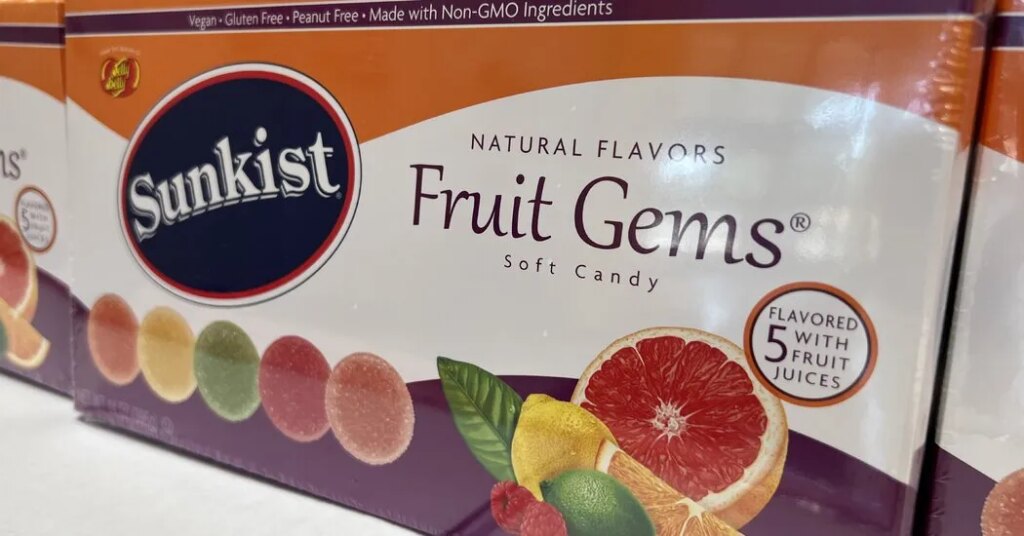
Sunkist Fruit Gems, a beloved kosher jelly candy, has been salvaged from discontinuation.
Candyrific of Louisville, Ky., will manufacture them, Sunkist told The New York Times in a statement late Monday. Earlier, Ferrara, a Chicago-based company that owns Jelly Belly, Brachs and Nerds, said that it would discontinue the candies that come in a rainbow of colors.
The candy became synonymous with some bar and bat mitzvahs as family, friends and congregants pelt young men and women with the Fruit Gems at the end of the ceremony in a final act signifying their journey to adulthood.
“We have been encouraged by the overwhelming support and enthusiasm shown by Sunkist Fruit Gems fans in recent days,” the company said in an emailed statement on Monday, adding that it had been trying to find the right manufacturer for Fruit Gems.
Other snacks have gotten a second chance at life when their demise prompted public disappointment. After saying it would wind down operations, Hostess Brands, the bankrupt maker of Twinkies, agreed in 2013 to sell its products to two investment firms. In 2020, General Mills brought back Dunkaroos several years after they vanished from store shelves.
Sunkist said the candy would be unchanged and still have kosher certification. But it did not disclose further details, including whether a recipe had been exchanged as a part of the deal. Ferrara referred any questions to Sunkist, and Candyrific did not immediately return a request for comment.
Sunkist said it was targeting 2027 to return Fruit Gems to market.
Ferrara had held the license to the name since 2023, but opted to let the line go as part of a product reduction.
Candyrific has licensed big candy brands and creating novelty editions, including a slew of gummy candies. In May, the company won an innovation award at the Sweets & Snacks Expo for its WarHeads Loud Mouth Bites.
Fruit Gems started out as a byproduct in the 1930s, when Sunkist citrus growers had a surplus of oranges, lemons and grapefruit. The company, one of the dominant citrus harvesters at the time, approached Christopher Candy Company of Los Angeles to develop a formula for a treat that could use orange oil, citric acid and pectin from citrus peels.
Christopher’s Fruit Gems were sold all over the country on roadside stands alongside the Sunkist fruit they were made from.
In 1955, the Ben Myerson Candy Company bought Christopher’s and, within a few years, the license to use the Sunkist name. The candy became the company’s best-selling product. Jelly Belly, which also uses pectin in its products, bought Myerson in 2006, then Ferrara acquired Jelly Belly in 2023.
Snack fans who keep kosher suffered another close call near the turn of the millennium, when Kraft Foods acquired the cookie maker Stella D’Oro and announced plans to make its classic Swiss Fudge Cookies with dairy to save money. The cookies were a staple of Orthodox Jewish Shabbat meals because eating milk with meat is prohibited.
Kraft eventually reversed course, and the cookies remain nondairy to this day.
The post Sunkist Fruit Gems Get a Second Chance After Discontinuation appeared first on New York Times.