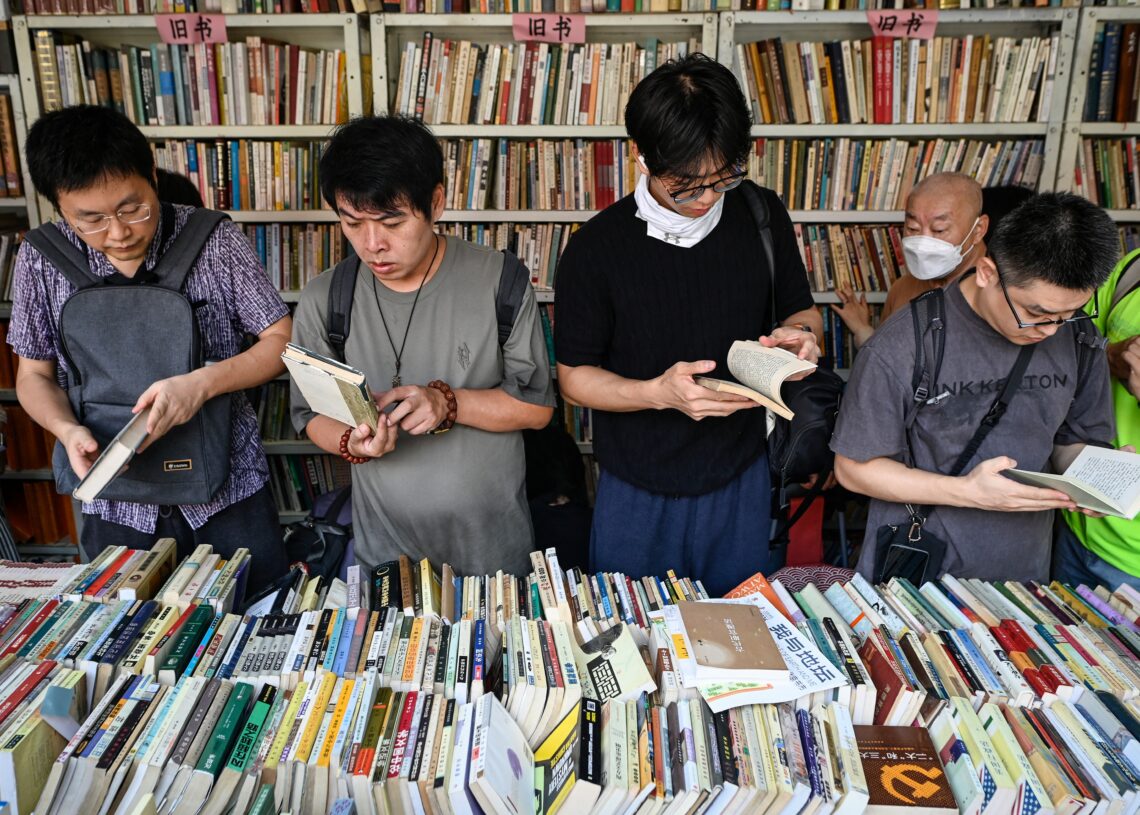
“Summer reading” may be the thing you do at the beach to relax, but it’s also what teachers assign students who have to show up in the autumn knowing their stuff. Well, the weather has broken, and summer reading has become fall reading — and here at Post Opinions, we read year-round anyway. Four writers share the best book they have read this year.
A hefty Victorian novel
The best book I’ve read this year is “Middlemarch” by George Eliot. It’s not the book I most enjoyed reading, but it’s clearly the best. It’s the sort of book you finish and think, “Wow, I didn’t understand most of that, but I’m glad I read it.”
Originally published as a serial in 1871-72, the book follows the lives of a group of English townspeople in the early 19th century. Eliot’s prose is so elegant that she (“George Eliot” being the pen name of Mary Ann Evans) made me feel slightly guilty as a writer for not being better to my readers. The Vincy family has conversations about debt and spending that are immediately relatable for modern readers. Nicholas Bulstrode — a religious man who lied to receive an inheritance because he believed he would spend it better, helping others, than the person to whom it rightly belonged — is a proto-effective altruist. The various romantic relationships are both comic and heartbreaking.
The best reason to read “Middlemarch” now is as a down payment for reading it again in the future, to appreciate it more fully. I anticipate that it will be the best book I read in 2046 or 2056, too. — Dominic Pino, editorial writer
Fresh perspectives
Reaching middle age has meant looking for insights into life everywhere. This penchant shaped my summer reading, and the two best books were reminders that the wisdom that comes with living can be either a lens or a veil.
In “A Second Sight,” published this year, media scholar and University of Pennsylvania professor Sarah J. Jackson traces how Black journalists and media-makers throughout American history chronicled the gap between the country they experienced and the one described in its founding documents. Their lens — a second sight — helped reveal where the country fell short and pushed it to be a better version of itself.
But experience can sometimes be a veil, obscuring the way forward. That lesson was central to “Always Ready” — also from 2026 — by Sean Brandes, a retired Navy captain who stepped in to help coach a winless girls’ soccer team. Finding his decades of military leadership insufficient to lead the team to victory, he embraced being a novice again. That humility and willingness to learn from his players and fellow coaches led them all to back-to-back state championships.
Lord willin’, there’s lots of life still to be lived — and it’ll require both wisdom and fresh eyes. — Theodore R. Johnson, contributing columnist
A dystopian journey
I can’t remember how or when I first heard of Jacqueline Harpman’s “I Who Have Never Known Men” — published in 1995 and translated from French by Ros Schwartz — but I do remember that it took me only a couple of pages to feel totally absorbed.
Written like one long journal entry, it’s chapterless yet doesn’t feel like an unyielding wall of text — no mean feat.
The narrator, who is also the protagonist, is nameless. She lives in a guarded bunker with a group of women. Unlike the other women, she was brought to the bunker as a very young child and has no memories from before. The others do, though. And they remember waking in the bunker one day, not knowing how they got there.
After many years, they escape. When they arrive on the surface, the women realize they are not on Earth. What follows is their journey through the foreign, uninhabited land.
The narrator tells this story with a degree of remove. She is a product of her environment and of the limited interaction she had with the women in the bunker. But the book isn’t clinical or sterile. It’s a beautiful meditation on what makes us human and how much of that is shaped by circumstance. — Jenna Portnoff, print editor
Dante mogs the maxxers
It’s becoming an old story that young men have lost their way. That “gnawing sense of purposelessness,” as one writer put it, is driving us to look for mountains to climb.
The climbs take many forms. Athletes pumped with steroids tried “musclemaxxing” at the Enhanced Games earlier this year and broke only one world record. One venture capitalist working to defy death said in an interview that falling in love with his girlfriend was equal to taking psilocybin. Clavicular, a “looksmaxxing” influencer, was “bone-smashing” his jawline before he was hospitalized after a suspected overdose during a live stream in April.
Not all efforts are so self-destructive, but even supplements and prediction markets seem like vanity projects aimed at wealth, power, pleasure and honor.
Dante offers another mountain in the “Purgatorio,” the second canticle of his epic poem “The Divine Comedy,” written in the early 1300s. At the base of his climb toward heaven, an angel scars Dante’s forehead with seven P’s — for the seven deadly sins. As he ascends the seven terraces with other souls, the marks fade while he sheds his vices. Maxxers, take note: The first terrace warns against vainglory.
Some might call this the morality of suckers. Judge for yourself. In my reading of his journey up the mountain, Dante mogs the maxxers. — Thomas McKenna, researcher
The post ‘Totally absorbed’: Four writers pick their favorite books this year appeared first on Washington Post.