Henry M. Paulson Jr., chairman of the Paulson Institute, was U.S. treasury secretary from 2006 to 2009.
The world is looking away while nature is vanishing. Against the currents of geopolitical, technological and economic upheaval, protecting the environment can seem like a luxury, a concern to be deferred until the world is finally at peace. But by then, it will be too late.
Wildlife species are disappearing at a pace that is difficult to fathom. Scientists estimate the planet is losing species at 1,000 times the natural rate. Nearly half of all animal species are in decline. Between 1970 and 2020, monitored vertebrate populations fell by an average of 73 percent and freshwater populations by 85 percent. Rising temperatures are accelerating nature’s collapse, which in turn accelerates climate change.
This is not just an environmental concern but also an economic one. An analysis by PwC found that more than half of global economic output, an estimated $58 trillion, is moderately or highly dependent on nature. The World Bank calculates that the collapse of just a few ecosystem services, such as pollination, fisheries and timber, could reduce global gross domestic product by $2.7 trillion per year by 2030.
Nature shouldn’t have to compete with other priorities. It underpins them through the food we grow, the water we drink and the air we breathe. Let ecosystems decline, and problems around food security, migration and fiscal stability become harder and more expensive to solve. Nature is critical infrastructure, not a free and inexhaustible good.
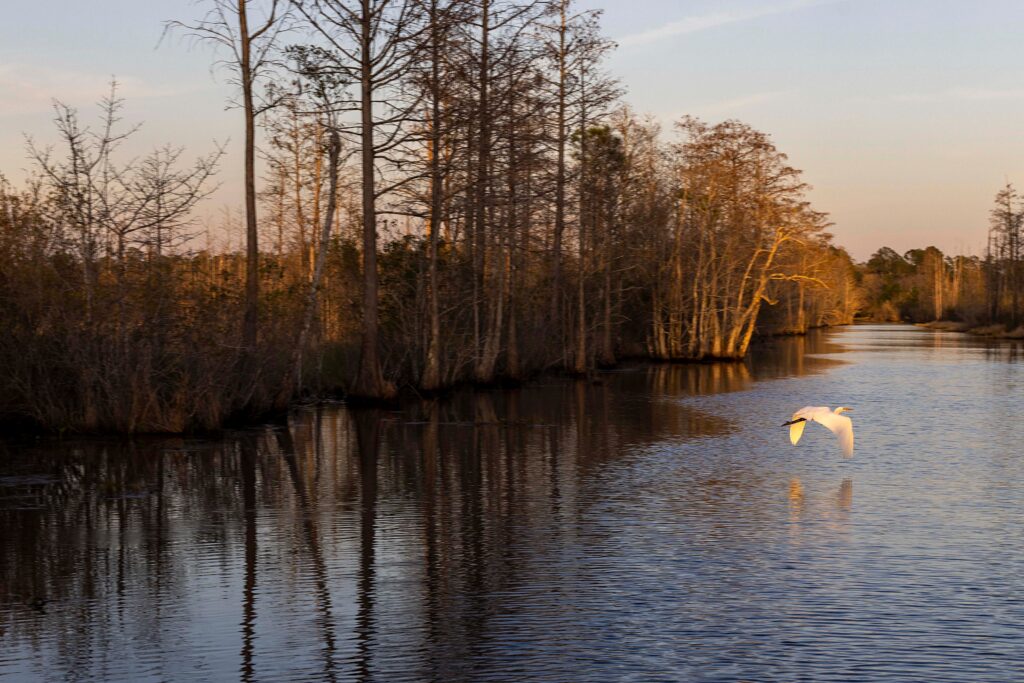
Yet nature is more than a resource to be managed or an asset to be valued. Loggerhead turtles crawling up a dark beach to nest, dolphins moving through the surf, egrets and wood storks filling a marsh at dusk: These are sources of beauty and inspiration. That alone is reason to preserve nature.
Here is what should give hope: Many of the tools to protect nature already exist. The Paulson Institute, with the Nature Conservancy and the World Wildlife Fund, has published a practical guide to financing the protection of nature, a record of what already works and must be scaled.
Debt-for-nature conversions are happening in countries such as Barbados, the Bahamas and Ecuador. These programs, which reduce or forgive a country’s debt in exchange for a commitment to conservation, are unlocking hundreds of millions of dollars for conservation while easing sovereign debt burdens. Ecuador’s $1 billion conversion in December 2024, for instance, is expected to save the country more than $800 million by 2035 while unlocking roughly $400 million to protect millions of acres of Amazon forest and wetlands.
Performance-based payments are rewarding farmers in Europe and forest communities in Africa and Asia for the public goods they protect. England now pays farmers for healthy soil, clean water and wildlife habitats.
Restored mangroves and reefs are shielding coastlines at a fraction of the cost of seawalls. Mangroves alone prevent more than $65 billion in property damage a year, and Indonesia is now restoring them at national scale with $400 million in World Bank financing.
In Cape Town, South Africa, a water fund cleared invasive trees from more than 150 square miles of land, returning tens of billions of liters of water a year to a drought-stricken city and creating hundreds of jobs. A bond has since launched that pays investors for verified results. Native shrubland is returning, and wildfire risk has fallen.
In Indonesia, coastal communities managing their own fishing grounds anchor the world’s first impact bond for small-scale fisheries, where investors are repaid as the fish and reefs recover. In England, most new development must now leave nature measurably better off: Developers must deliver at least a 10 percent gain in biodiversity, measured against the site’s predevelopment baseline. That one rule has created a regulated habitat market projected to reach about 3 billion pounds ($4 billion) by 2035.
Despite these successes, nature is still being destroyed faster than solutions can keep pace. Too many promising mechanisms remain pilots. Disclosure rules that would let capital move with confidence are still being written and differ across jurisdictions, and too few projects are built well enough for private investors to finance. The world does not lack the money or the mechanisms to protect nature. It lacks the right incentives, political will and urgency.
First, governments must stop making the problem worse. Today, governments globally spend more in a single month subsidizing nature’s destruction than they spend protecting it in an entire year. They do so through farm payments that reward clearing land and draining wetlands, fuel subsidies that push roads and mines into intact habitats, and fishery support that keeps too many boats chasing too few fish. Redirecting those funds is one of the greatest opportunities to change course.
Another opportunity lies in addressing where projects are built. Trillions of dollars of infrastructure will go up in this decade. Planners should be doing far more to avoid needless harm to biodiversity by integrating nature into spatial and economic processes. That means mapping critical habitats before capital is committed, drawing binding “no-go” and “go-to” zones for construction and making those maps available to investors.
Where the right policies meet the right financing and the right partners on the ground, the destruction can be reversed. Ecosystems recover. Species return. Nature, given even a modest chance, is remarkably resilient. Cape Town’s returning shrubland and Indonesia’s recovering reefs are not anomalies. This is what happens when rules, money and people on the ground align in purpose.
What is required now is strong leadership to expand these glimmers of hope into large-scale strategies adopted around the world — before ecological and economic losses reach a point that no amount of financing can reverse.
This is the rare crisis that countries have the tools, the capital and the understanding to solve. What they lack is attention, speed and a recognition that what they are trading away is priceless.
The post The policy tools to protect nature already exist appeared first on Washington Post.