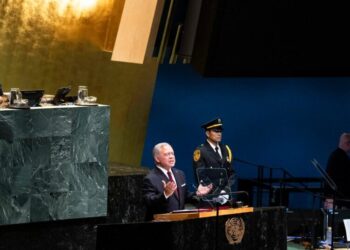
For Andy Burnham, who became Britain’s prime minister in July, the United Nations General Assembly is a chance to raise his profile on the global stage.
In the weeks since taking office, Mr. Burnham has made one major foreign visit — to Ukraine, where he voiced support for President Volodymyr Zelensky, just as his three recent predecessors did.
Mr. Burnham said his time in Kyiv, the Ukrainian capital, had influenced his decision to be part of the General Assembly, suggesting that he would use his speech there to try to drum up increased support for Ukraine.
While in Kyiv, Mr. Burnham was chair of a meeting of the so-called coalition of the willing, countries that support the Ukrainians. He urged those nations to do more to protect Ukraine against Russian attacks, including by providing more of the U.S.-made Patriot missiles that Kyiv has been clamoring for, to intercept the ballistic missiles Russia fires at Ukrainian cities.
Mr. Burnham, who replaced the unpopular Keir Starmer as prime minister, has prioritized a domestic political agenda, promising to ease financial burdens on hard-pressed voters. But the U.S.-Israeli war on Iran has raised energy costs and stoked inflationary pressures in the British economy.
Mr. Burnham’s visit to the United States raises the possibility that he could have his first face-to-face meeting with President Trump. On the phone, the two leaders appear to have a decent rapport. Mr. Starmer had also gotten along well with Mr. Trump until conflict surfaced over the initial U.S.-Israeli attack on Iran, which Mr. Starmer, like other European leaders, did not support.
In general, Britain’s foreign policy is unlikely to change significantly under Mr. Burnham. He has retained Mr. Starmer’s influential and deeply experienced national security adviser, Jonathan Powell.
The one exception has been a hardening of policy toward Israel over its program expanding settlements in the occupied West Bank.
This month, Britain, along with other Western nations, announced new economic sanctions against products from the settlements, provoking an angry response from Israel. The tougher stance toward Israel, including over Gaza, is popular within Mr. Burnham’s governing Labour Party, which will hold its annual conference soon after the prime minister’s appearance at the General Assembly.
So while in New York, Mr. Burnham is unlikely to soften his stance on the Israeli government or its leader, Benjamin Netanyahu.
The post Britain’s New Prime Minister Prepares for U.N. Spotlight appeared first on New York Times.