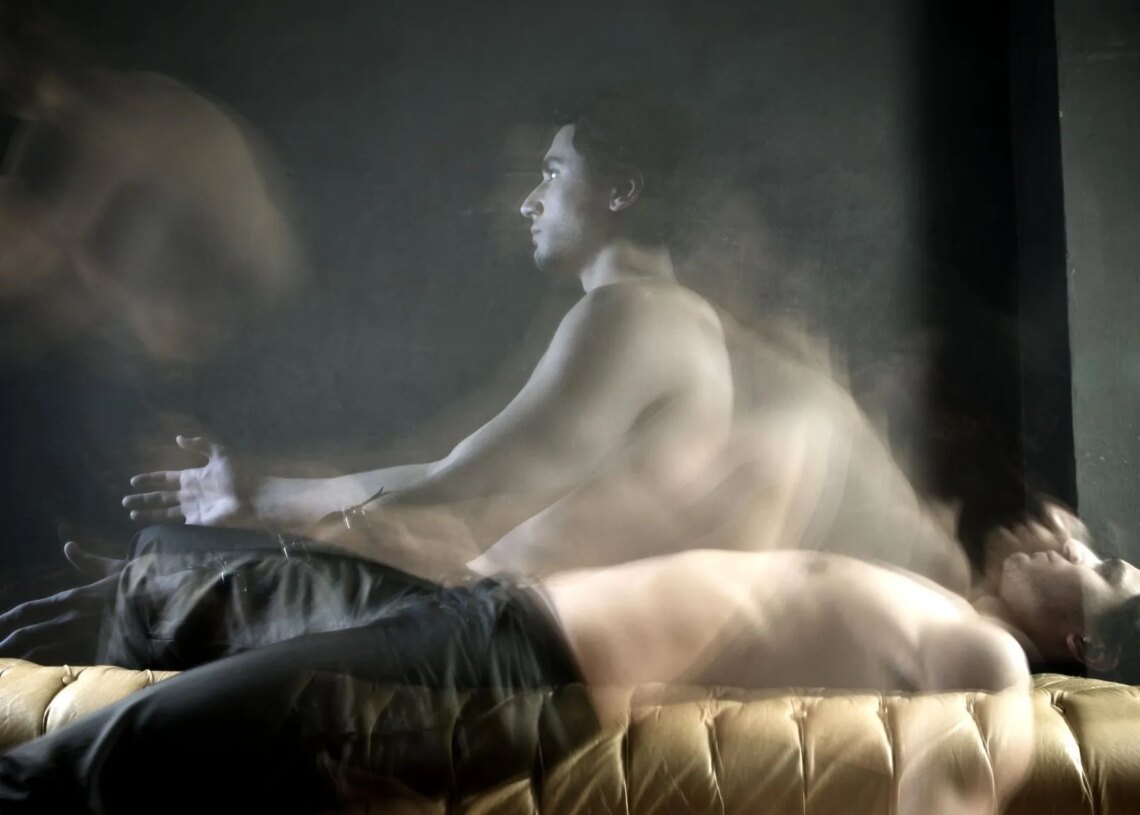
Out-of-body experiences are one of those things science can explain away until somebody reports seeing something they really shouldn’t have been able to see.
Back in 2002, neuroscientist Olaf Blanke found that stimulating the temporoparietal junction, an area involved in how the brain keeps track of where your body is, could trigger an out-of-body experience. His patient said she felt like she was floating above herself and looking down at her body on the table, and Blanke was able to trigger the experience more than once. That gave researchers a solid neurological explanation for what might be happening.
That brings us to neuroscientist Marina Weiler, who designed a three-room experiment, published in the journal Explore, to see whether people having OBEs could actually perceive something outside the room they were in. Twenty-one experienced practitioners sat in one room hooked up to EEG machines. Researchers waited in another room behind a closed door. A laptop 23 feet away displayed one randomly selected image from a pool of 100, with the screen turned toward the wall.
Participants were asked to leave their bodies, find the image, and report back.
No one got it right. The correct images landed anywhere from 16th to 92nd out of 100 in the scoring, which is basically what you’d expect from guessing. So far, nothing unusual.
Then two people started describing the researchers.
A New Study on Out-of-Body Experiences Produced Two Bizarre Results
Participant 7 said one researcher was sitting to the left at a computer and the other was in a corner reading a book. That happened to be exactly where they were during that session, even though they had been sitting differently before. Participant 13 described another unusual setup and also got it right. Neither person had been asked where the researchers were sitting.
The researchers aren’t claiming this proves anything paranormal. Those details were never part of the experiment, so there’s no proper statistical test for them. They’re anecdotes. Strange ones, but still anecdotes.
Something similar happened decades ago with Robert Monroe, another well-known out-of-body practitioner. He failed to identify a hidden target but described a technician’s husband standing outside the room, despite never having met him. The researcher noted that Monroe could have overheard the visitor during a break, so that one never went anywhere either.
The neurological explanation for OBEs is still standing. Problems with spatial processing and the vestibular system can produce them, and brain stimulation can trigger them. None of that changed here.
What changed is that two people, during a failed experiment, described things they hadn’t been asked to describe and apparently got them right. Weiler told UVA Health the study is really asking how much our current understanding of consciousness can explain.
That answer is still very much TBD.
The post Scientists Tried to Prove Out-of-Body Experiences Are Real. Here’s What Happened. appeared first on VICE.