A new lawsuit claims Anthropic, OpenAI, SpaceXAI and Google made an illegal deal to slow the pace of their respective AI development.
The lawsuit, which was filed Friday in the U.S. District Court for the Northern District of California, argues that the leading AI companies violated antitrust laws when they agreed to coordinate slowdown efforts, and that doing so would reduce the value consumers get for paid AI subscriptions.
“AI will quickly spin out of human control and could kill us all if we allow AI safety and protocol … to be controlled by private self-serving agreements between the world’s most powerful ‘for profit’ technology companies,” said Nick Rowley, the lead attorney for the plaintiffs.
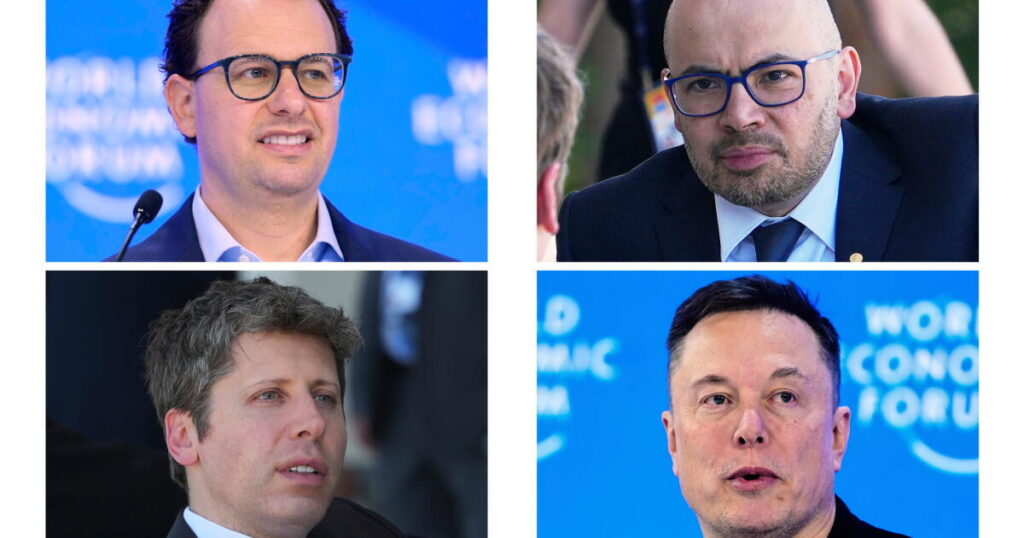
The coordination largely took place on Sept. 12, the lawsuit argues, when Anthropic Chief Executive Dario Amodei published an essay calling for industrywide cooperation on decelerating advancements in favor of enhanced safety measures. That same day, OpenAI’s Sam Altman, SpaceXAI’s Elon Musk and Google DeepMind’s Demis Hassabis each publicly responded to Amodei’s proposals in agreement.
It’s clear that an agreement among the chief rivals in AI that their progress “should be slower than competition would otherwise produce has an anticompetitive effect on consumers,” the plaintiffs argue.
Lawyers representing four named plaintiffs, who pay for subscriptions to OpenAI’s ChatGPT, Anthropic’s Claude, SpaceAI’s Grok or Google’s Gemini, are bringing the suit on behalf of a proposed nationwide class of other paid subscribers to those services.
Representatives for Anthropic, OpenAI, Google and SpaceXAI did not immediately respond to a request for comment Saturday.
In his initial essay proposing the slowdown, Amodei acknowledged potential antitrust challenges, writing that it would be helpful for the U.S. government to mediate “or at least enable” these cross-lab discussions. The government wouldn’t have to participate, he wrote, but would need to “issue a narrow waiver for certain kinds of safety conversations.”
In response, Altman said on social media that OpenAI welcomes the idea of a “federal framework that sets consistent safety requirements,” but said “we do not believe we need to wait for an anti-trust exemption or legislation to begin the work of providing this confidence.”
While the recent conversations about pacing development were spurred by increasing concerns about AI evading human control, several leaders in the AI space have long talked about developing a shared set of standards or otherwise coordinating to ensure safety efforts remained paramount.
Huamani writes for the Associated Press.
The post Lawsuit says Anthropic, OpenAI, SpaceXAI and Google made illegal agreement on AI slowdown appeared first on Los Angeles Times.