A new sanctions law giving President Trump broad authority to impose steep tariffs on countries that buy Russian oil adds a new layer of uncertainty to India’s already fraught trade relationship with the United States.
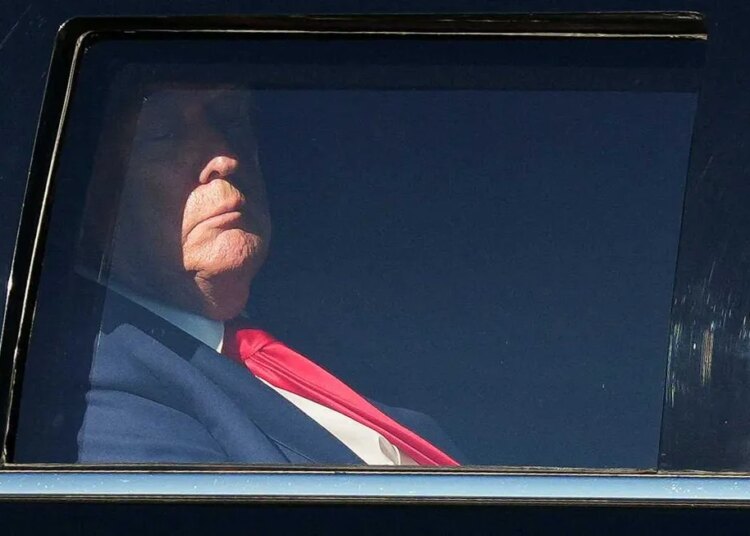
The bill, signed by President Trump on Friday, gives him the power to impose tariffs of up to 100 percent on goods from countries that continue to buy Russian energy. The aim of Congress was to choke off the revenue that finances Moscow’s war in Ukraine.
The law, however, gives Mr. Trump considerable discretion over when and how to wield those tariffs, and it’s not clear when — or even whether — he would impose tariffs that would raise the cost of American imports of Indian goods.
To India, the law is seen as a threat, potentially increasing Mr. Trump’s leverage even as he explores business deals with Russia.
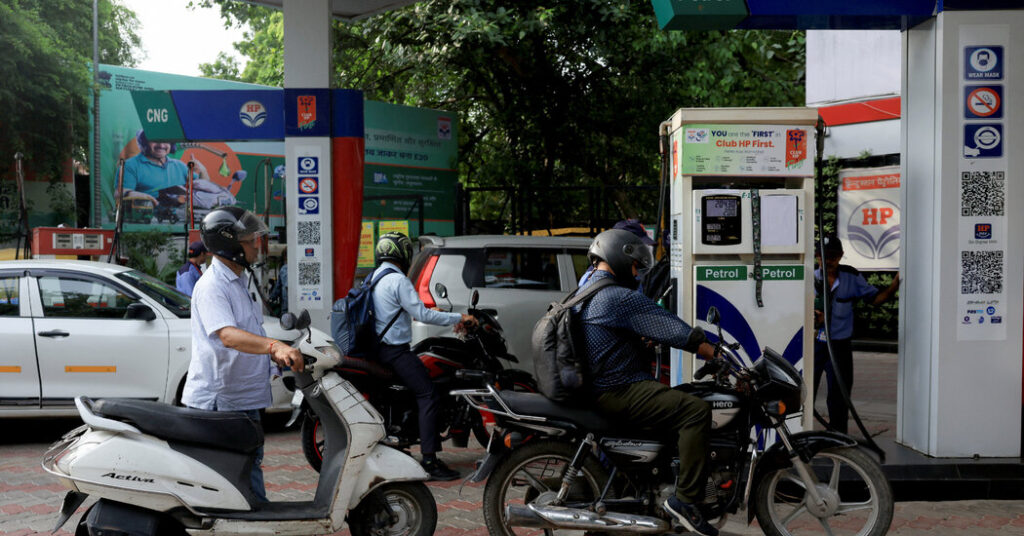
The timing puts the Indian prime minister, Narendra Modi, in a tight spot. India imports more than 90 percent of the crude oil it consumes, and its reliance on Russia has climbed again as the war in Iran has disrupted supplies from the Middle East. Russian crude accounted for roughly half of India’s imports this summer, according to Kpler, a global maritime data company.
The new law is the latest in a series of shifting American policies that have repeatedly forced India to adjust its Russian oil purchases.
In February, days before the war against Iran started, Washington and New Delhi struck a trade agreement under which the United States would lower tariffs and India would reduce its intake of Russian oil.
Then, in quick succession, the assumptions underlying that bargain fell apart. The Supreme Court curtailed Mr. Trump’s ability to use the tariff powers that had helped him negotiate with India. The war in Iran made it difficult to get oil from the Persian Gulf. And the Treasury Department allowed India and other countries to compensate by buying more Russian oil.
Now Washington is again threatening to punish India for buying oil that has become harder to replace.
India has responded forcefully.
“India remains firmly committed to ensuring energy security for its 1.4 billion people,” the country’s foreign ministry said on Thursday, adding that it would continue to diversify its suppliers according to market conditions. The ministry warned of “potential implications for not just the bilateral relationship” with the United States but also the international energy market.
India has faced a similar predicament before. Washington has pressed New Delhi to stop buying oil from Venezuela and Iran, only for American policy toward those suppliers to shift as diplomatic relations and energy prices changed.
This has forced India to balance two imperatives. It wants to preserve its relationship with the United States, while securing enough affordable energy for the world’s most populous country.
Complicating that balance, the United States is an increasingly important energy supplier to India even as it threatens penalties over New Delhi’s purchases elsewhere. Since the war began, India’s share of cooking gas imports from the United States rose to more than 50 percent, up from 8 percent in December.
Ajay Srivastava, a former Indian trade official who runs the Global Trade Research Initiative in New Delhi, said India should not be overly fixated on American tariffs. Tariffs can damage some Indian exporters, he argued, but they are collected from American importers and ultimately raise costs in the United States.
In Mr. Srivastava’s view, the new law restores some of the bargaining power Mr. Trump lost when the Supreme Court restricted his earlier tariff authority. The trade agreement negotiated with India has remained in limbo. But the new authority would give Washington something substantial to offer — a lower tariff in exchange for Indian concessions.
“My problem,” Mr. Srivastava said, “is that signing the trade deal does not buy you peace from any of this.”
India has watched the United States strike deals with major trading partners, only for disputes over tariffs and the terms of those agreements to re-emerge.
And India is not the only country trying to determine what the new law means for its relationship with Washington.
China buys more Russian oil than India and also falls within the new law’s reach. Indian officials and analysts are looking to see whether Washington applies the same pressure to Beijing that it does to New Delhi. The question carries weight because India has spent years drawing closer to the United States, partly as a counterweight to China.
Last weekend, Xi Jinping, China’s top leader, and President Vladimir V. Putin of Russia joined Mr. Modi in New Delhi for the BRICS summit, posing together in a conspicuous display of non-Western cooperation. Mr. Xi is expected to meet Mr. Trump in Washington in the coming days.
Among the major BRICS powers, India has had a strong strategic incentive to deepen its partnership with Washington. C. Raja Mohan, a professor at Jindal Global University, described India’s dilemma as a choice between two uncomfortable alternatives.
“Do you want to jump from the American frying pan into the Chinese fire?” Mr. Mohan said.
China’s growing power gives India a powerful reason to preserve its relationship with Washington. But repeated shifts in American demands over energy and trade have also raised questions in New Delhi about how durable any new bargain would be.
“India should not do any deal until U.S. policy stabilizes,” Mr. Srivastava said.
The post India Is Again Squeezed Between the Threat of Trump Tariffs and Russian Oil appeared first on New York Times.