Artificial intelligence stocks tumbled on Monday after American leaders of the AI revolution called for a coordinated slowdown in building more powerful AI systems.
Over the weekend, Dario Amodei, the chief executive of Anthropic, published an essay titled “We Must Pace the Frontier,” calling for an industrywide effort to slow AI development. Executives at OpenAI, SpaceX and Microsoft also echoed the concern and called for some sort of pause.
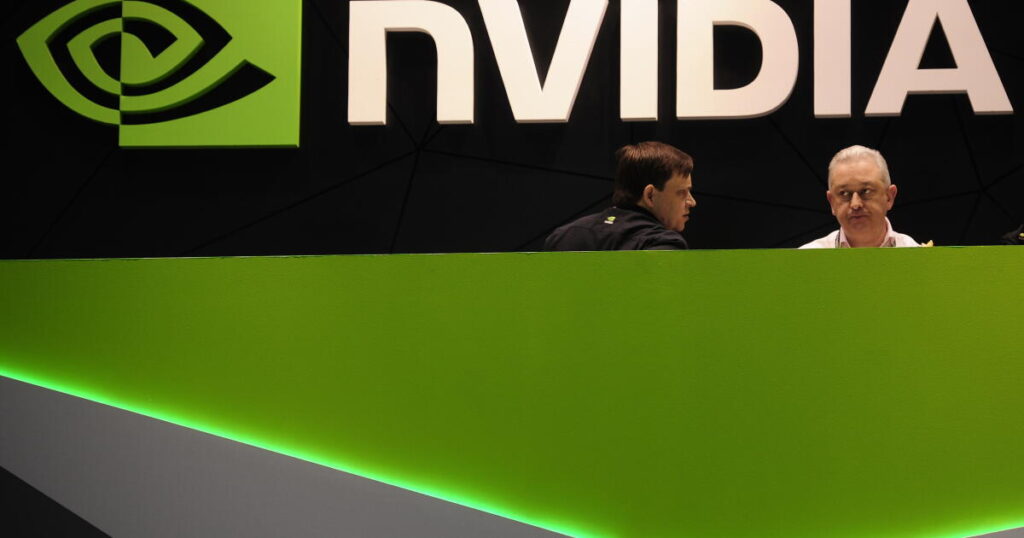
Semiconductor stocks bore the brunt of the statements. Chipmaker Nvidia fell 3% to $210.96. Its rival AMD lost 4%. Intel plunged 6%.
Amid the fears, OpenAI, the company behind ChatGPT, suggested it might be delaying its initial public offering plans.
OpenAI Chief Executive Sam Altman said in an interviewwith Fortune that it was an “ill-advised moment” for an initial public offering, saying the company won’t list this year.
Shares of OpenAI shareholder SoftBank Group plunged 11% on Monday.
Worries over doomsday scenarios tied to increasingly powerful technology skyrocketed last week after an Anthropic employee resigned, saying AI companies were gambling with humanity’s future.
On Saturday, Amodei outlined ways he hoped to slow the pace of AI development.
Among his suggestions: Use independent third-party monitors to ensure AI was being developed safely.
“Anthropic is unilaterally committing to this step now,” Amodei said.
OpenAI said it would follow suit.
Microsoft on Monday published a “humanist” code of conduct to show its commitment to ensuring Microsoft’s models “will never resist human interruption, correction, or shutdown.”
Amodei’s other proposals included working with democracies to set safety standards and finding ways to ensure Chinese entities also comply.
AI capabilities have grown so rapidly that many industry leaders say they have spooked themselves. They warn that there is a not-insignificant possibility that humans will lose control of AI, which could do serious damage to the world.
Skeptics say some of the fearmongering is motivated by industry leaders trying to solidify their positions by using new restrictions to make it difficult for competitors to emerge.
“What is clear is that Anthropic and OpenAI have grown to a size where they feel like they can do two things: One is encourage regulation, and two is control what that regulation looks like. And if they can do that, they can prevent competition,” said Gil Luria, head of technology research at D.A. Davidson.
After realizing a swarm of AI agents broke out of testing and hacked rival companies, OpenAI paused AI training for new models and promised to strengthen its cyber defenses. But it has since resumed.
If there were a pause in new AI development, it would slow the training of the next models, but current models could continue to serve customers, analysts said.
That could slow growth but not by much, said Joel Brookhart, an analyst covering AI companies at SemiAnalysis.
“There’s not going to be a material slowdown,” he said.
Anthropic reportedly disclosed its second consecutive profitable quarter Sunday as it prepares to go public. Its revenue for the second quarter surged past $11.5 billion..
Some tech leaders say they doubt that the sky is falling.
Jensen Huang, the CEO of Nvidia, dismissed AI doomsday scenarios as totally unfounded. He said that companies have made tremendous strides in defending against cybersecurity risks.
President Trump dismissed the risks and defended the administration’s light-touch regulatory approach.
He said U.S. laws already ban companies from creating dangerous technologies and punish them for damage their products cause. The U.S. has to continue upgrading its AI capabilities to stay ahead of China, he said.
“There is a SICK conspiracy going on against AI and Data Centers, and the only one that is happy about it is China. WHOEVER WINS AI, WINS!” Trump posted. “We are leading China, and all others, and will continue to do so.”
The post Talk of AI pause slams Nvidia, AMD and Intel as fears of doomsday scenarios spread appeared first on Los Angeles Times.