This is an edition of The Atlantic Daily, a newsletter that guides you through the biggest stories of the day, helps you discover new ideas, and recommends the best in culture. Sign up for it here.
Every president likes to take credit for good news on their watch, but most of them have at least a little shame about it. Not Donald Trump.
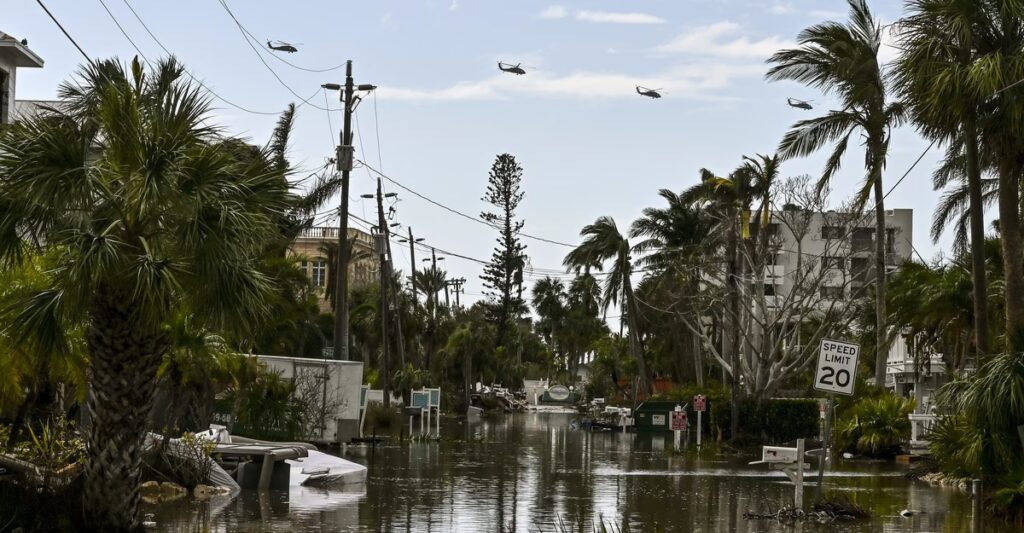
September 10 is typically the peak of Atlantic Ocean hurricane season. The National Oceanic and Atmospheric Administration expected a relatively restrained year, but as the meteorologist and hurricane specialist Michael Lowry writes, the season “has never gone beyond September 11th in the reliable records (since at least 1950) without a hurricane” in the Atlantic Ocean—until this year. There aren’t even any strong prospects forming.
Amid spreading violence in the Middle East, warnings of an AI apocalypse, and high fuel prices, it’s a rare piece of good news, and Trump wants credit. Over the weekend, the White House flagged the news, commenting, “Thank you, President Trump!” This is absurd, though maybe no one should be surprised that a man who believed that marking a map with Sharpie can change a hurricane’s path would take credit for a low-key storm season. (He also reportedly once suggested attacking storms with nuclear weapons, so perhaps, as the journalist Catherine Rampell jokes, this is deterrence in action.)
Better explanations than presidential benevolence exist. As my colleague Joshua Partlow has reported, this is an unusual year for the El Niño cycle. In the Pacific Ocean, it has produced very warm water, as well as a number of hurricanes. Hawaii, which is seldom hit, has been struck by two hurricanes so far this year. At least four deaths have been attributed to the storms, and power remains out on some parts of the island of Kauai. But scientists say that El Niño also accounts for the absence of major storms, so far, in the Atlantic. “It’s really staggering, just how inhospitable the Atlantic is to anything that could form a tropical cyclone right now,” Kristen Corbosiero, a professor of atmospheric science at the University at Albany, told PBS. The lull is especially notable because last year’s hurricane season was also astonishingly mild in the United States. Although parts of the Caribbean endured hurricanes, not a single one hit the U.S. mainland.
This is great news for the Americans who are otherwise often in hurricanes’ paths, and who have been slammed by a series of storms in the past decade—including 2024’s Hurricane Helene, the deadliest to hit the mainland United States since Hurricane Katrina, in 2005. It is also great news for Trump, who must be one of the luckiest people in history. Hurricanes can help or, more often, badly hurt a president. George W. Bush’s reputation never recovered from Katrina, whereas Barack Obama’s steady hand during Hurricane Sandy seemed to bolster his reelection campaign. Trump’s handling of storms during his first term was poor; he demonstrated little human warmth and, in Puerto Rico after Hurricane Maria, jarring coldness.
Trump’s personal behavior aside, his administration has been especially fortunate because under his leadership, FEMA appears to be in no shape to handle a major disaster. In the first months of his second presidency, Trump and then–Secretary of Homeland Security Kristi Noem announced plans to dismantle FEMA entirely, devolving responsibility for relief to states, an idea panned by most experts. In the meantime, he seemed determined to slowly strangle it, appointing interim leaders with no disaster-relief experience. First came Cameron Hamilton, who was fired after telling Congress that he did not support liquidating FEMA. Next was David Richardson, who, shortly after taking his post in May 2025, acknowledged that he had no completed plan for the impending hurricane season and would reuse the previous year’s. (FEMA employees reported that Richardson said he didn’t even realize such a season existed; a FEMA spokesperson later said he was joking.)
Because no storms have since struck the mainland, these failures ended up having much less human and economic cost. FEMA appears to be on a somewhat stronger footing now. Trump has backed off plans to eliminate FEMA, Noem and Richardson are gone, and Hamilton is back as permanent administrator—and has won some tentative praise for working to learn more about disaster relief. He inherits serious challenges, though. A federal judge ruled on Friday that an administration order to lay off half of FEMA’s workforce was illegal. “Frankly, the FEMA staffing plan number appears as if pulled from thin air,” the judge wrote of the government’s proposal, which included cutting thousands of on-call employees who rush in with aid after a disaster.
A report released last month by the Government Accountability Office was even more scathing. The GAO found that FEMA’s personnel decisions had been made “without assessing whether it had the necessary staffing capacity to meet its mission,” including what it is required to do under law, and that “FEMA is not positioned to determine whether it has the right number of people with the right skills in the right positions at the right time to meet its mission.” Furthermore, the report said, “the agency has no overall strategic direction.”
Alas, the calm before the storms won’t last indefinitely. Experts who spoke with The New York Times said that it would be premature to assume that no major Atlantic hurricanes will form this year. If the president’s political luck continues, then perhaps the East Coast won’t see a really bad storm until after the midterm elections, or maybe even next year. Given his administration’s approach to hurricane preparedness and the travails of FEMA, though, ordinary Americans along the Atlantic coast and the Gulf Coast are likely to see their weather luck run out.
Related:
Here are four new stories from The Atlantic:
- Anne Applebaum: MAGA is making the world safe for corruption.
- Trump’s secret points system for Cabinet members
- Jonathan Chait: Who needs regulation when Trump is president?
- Gas prices could cost Republicans the midterms.
Today’s News
- President Trump rejected calls for new AI guardrails, saying that the technology instead needs “a STRONG AND SMART (High IQ!) PRESIDENT, and the U.S.A. has that, in spades!” His comments came after several AI executives called for stronger safeguards or a slowdown in development.
- New York and 21 other states sued the Trump administration to block a new rule expanding what immigration officials can consider when deciding whether applicants qualify for green cards, visas, or entry into the United States. The rule, set to take effect on Friday, would likely make it harder for people to be approved if officials decide that they would possibly need benefits such as Medicaid, food assistance, and housing aid.
- A second federal judge blocked the Trump administration’s new mail-ballot rules, finding that the Postal Service likely lacks the authority to impose them. The Supreme Court will weigh in on the rules ahead of the November elections.
Dispatches
- The Wonder Reader: Isabel Fattal explores what asking for help does for the people helping.
Explore all of our newsletters here.
Evening Read
The Biggest Obstacle to Universal Child Care: Babies
By Kendra Hurley
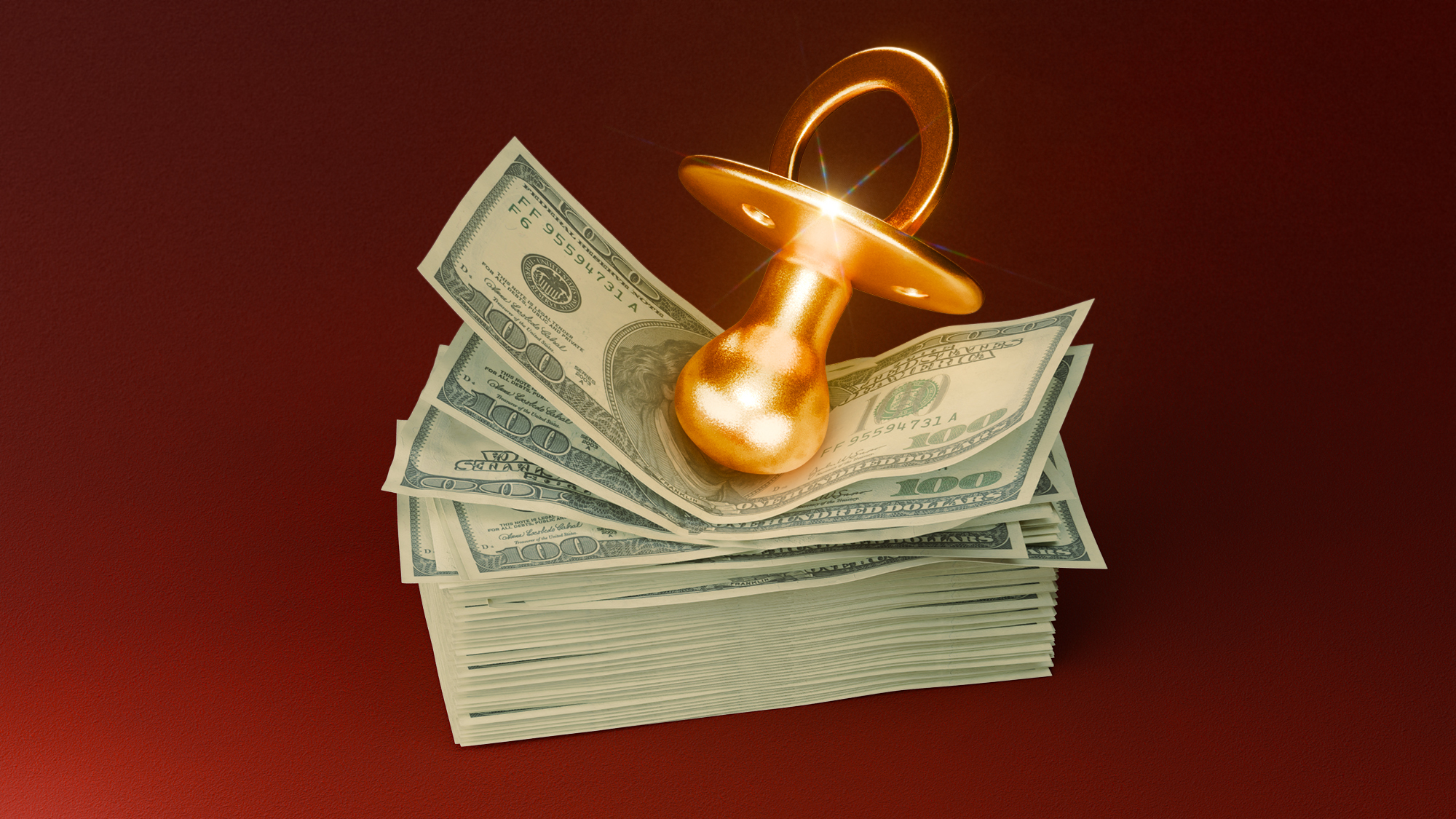
Last year seemed like a pretty big one for breakthroughs in child care. In New York City, Zohran Mamdani’s promise of publicly funded care for young kids helped him win the keys to Gracie Mansion. Officials in Connecticut created an endowment to make care more affordable in that state. And New Mexico became the first state to commit to free child care for all of its residents. But as policy makers have begun hammering out the details of these ambitions, they’ve hit against a stubborn and formidable obstacle: babies.
More From The Atlantic
- The Permanent Questions With David Brooks: What is the good life?
- What Trump doesn’t understand about Xi
- Why does Donald Trump hate this sculpture?
- The property-tax revolution
- A bigoted outburst against Texas sports fans
- Americans don’t understand who’s rich, Owen Zidar and Eric Zwick argue.
Culture Break

Take a closer look. Before the photographer Edward Steichen left painting behind forever, he attempted to refocus it on nature, Susan Tallman writes.
In a galaxy far, far away. The Star Wars creator George Lucas’s next great epic is an art museum, James Parker writes.
Rafaela Jinich contributed to this newsletter.
When you buy a book using a link in this newsletter, we receive a commission. Thank you for supporting The Atlantic.
The post How Long Can the U.S. Escape an Atlantic Hurricane? appeared first on The Atlantic.