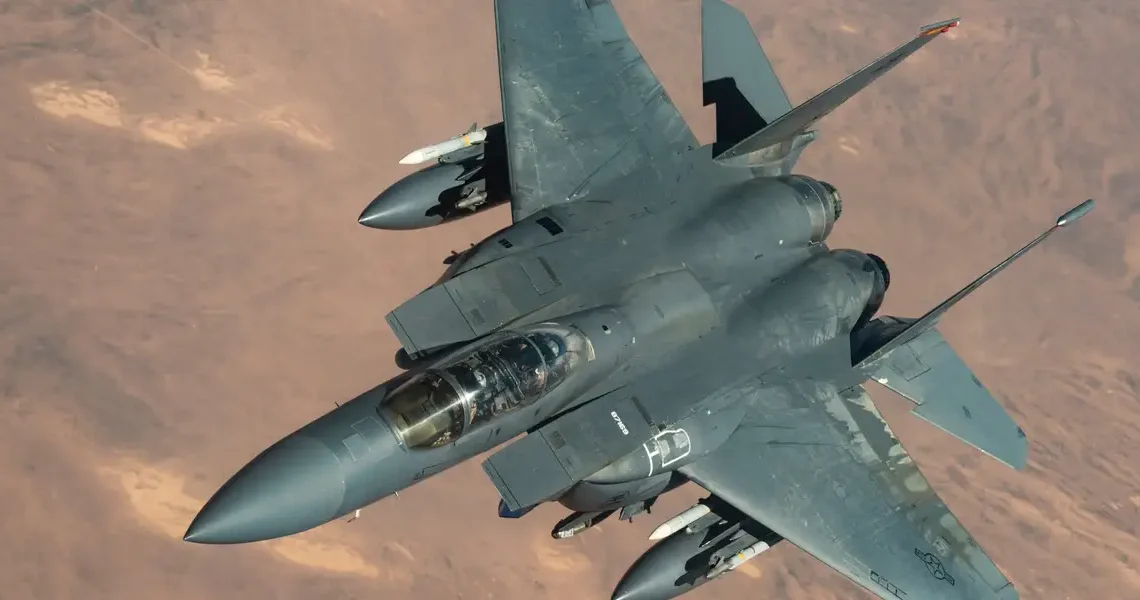
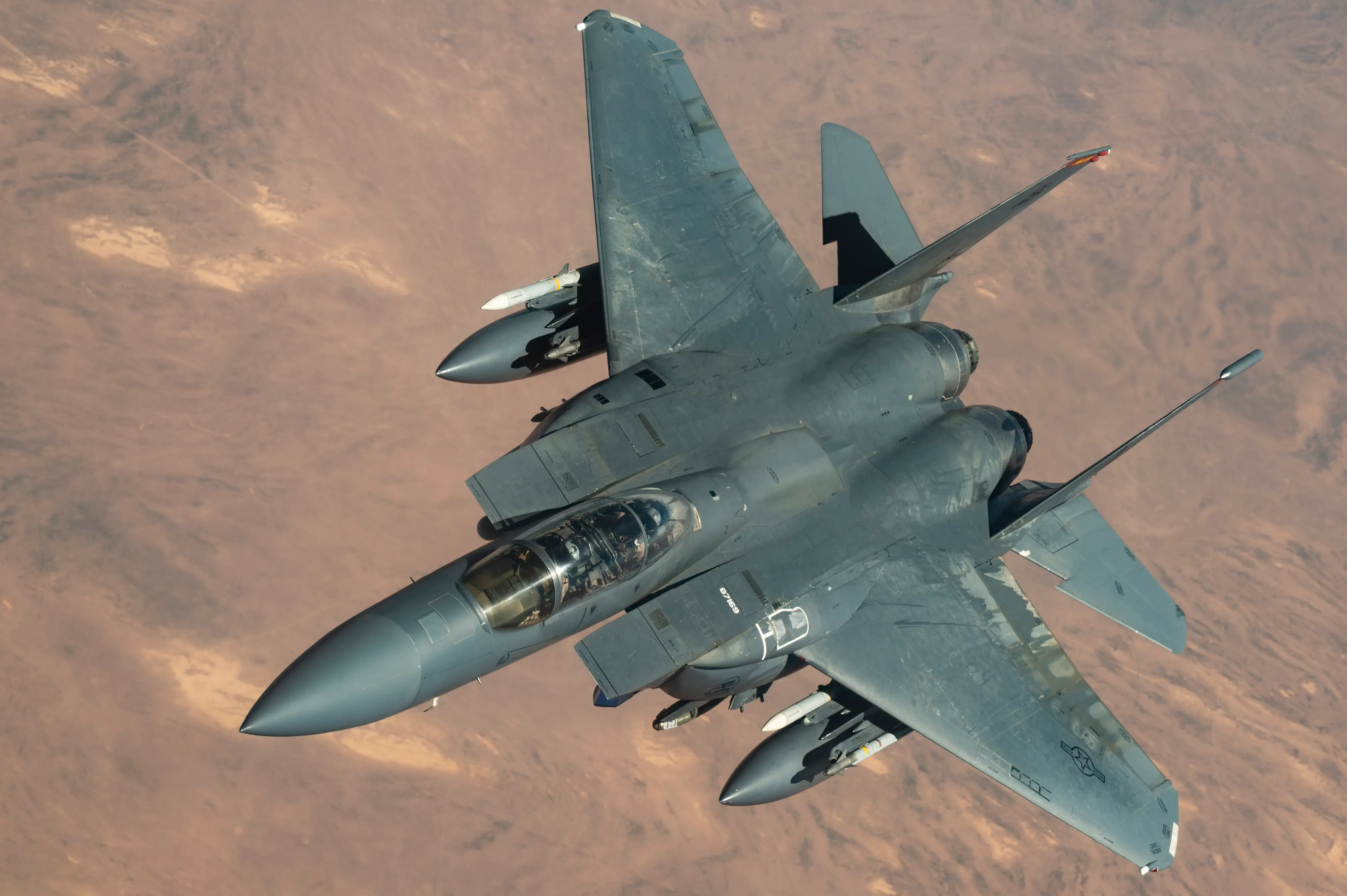
An Air Force officer who survived behind enemy lines for two days in Iran after his F-15E fighter jet was shot down said he hit the ground hard after the shoulder-fired missile that struck his Strike Eagle also shredded part of his parachute.
Severely wounded and stranded in hostile territory, the downed airman was forced to rely on survival training for one of the military’s worst-case scenarios.
In an interview with CBS News’ 60 Minutes, the weapons systems officer, identified only by his call sign, Bravo, described surviving a nearly catastrophic fall, scaling a towering ridgeline despite broken bones, and evading Iranian forces for days before US special operations troops could rescue him.
The pilot, who declined to speak with 60 Minutes, and the weapon systems officer were shot down on April 2 by an Iranian surface-to-air missile. Bravo said the missile strike was like being hit by a freight train. He credited fast action from the pilot, known as Alpha, for the pair’s ejection, a notoriously violent process for aviators.
US military aviators undergo extensive training for ejections, which alone can cause serious injury or prove fatal, and also for surviving and evading enemy capture.
Alpha landed safely five miles away from Bravo, who described the ejection as “terrifying.” The weapons officer recalled during the interview with 60 Minutes correspondent Norah O’Donnell a dangerous free-fall into rugged Iranian territory. His parachute had been damaged during the initial strike, he said.
Rather than panic over the fall itself, Bravo said he prayed and went to work trying to fix the immediate problem — his chute.
“Free-falling is a good way to put it,” he said. “I wasn’t focused on the speed at which I was falling. I was instead focused on trying to correct the problems that were in front of me and doing anything I could to unfurl or pull pieces of the parachute loose.”
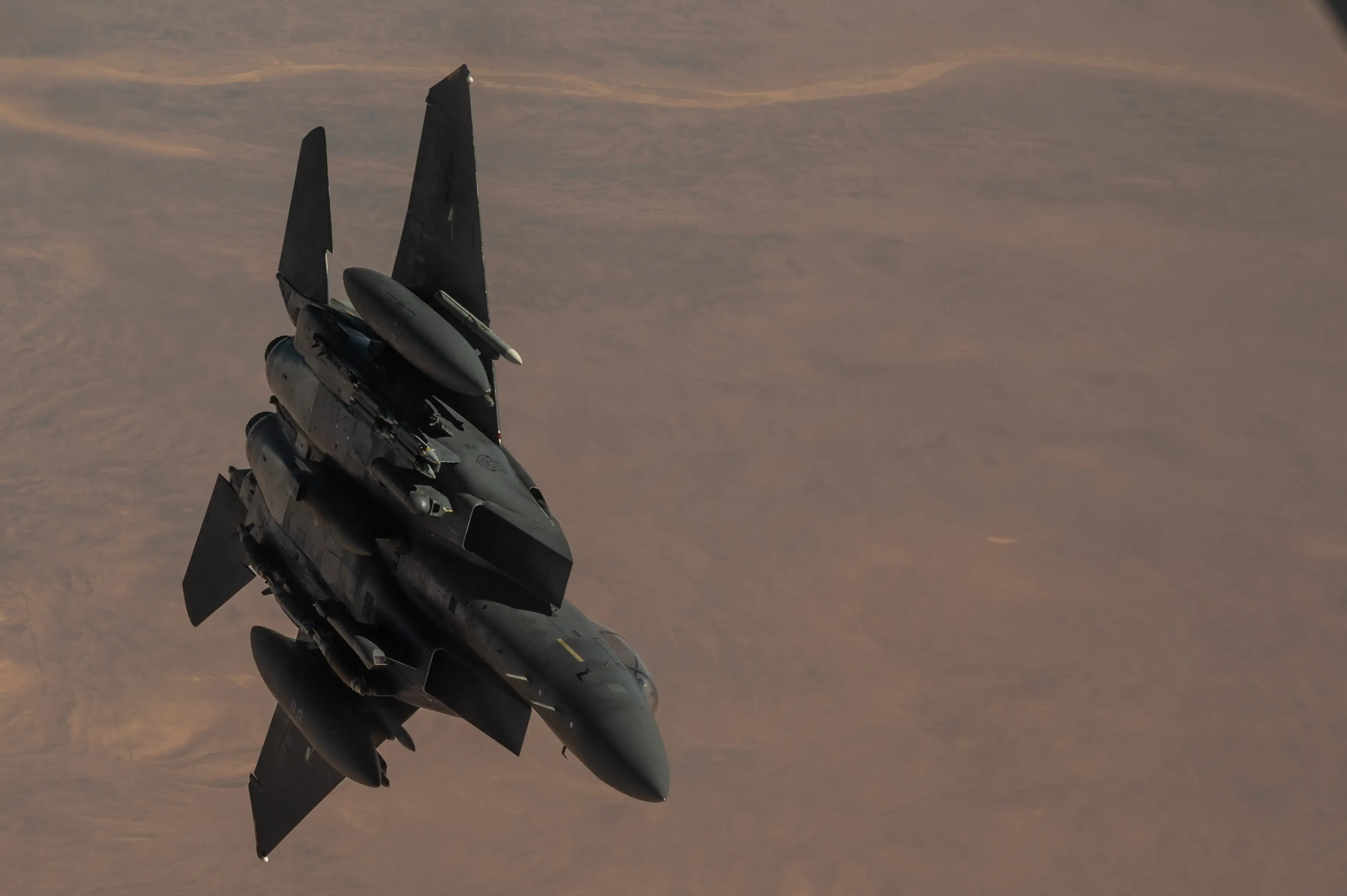
Based on his description of the fall and his injuries — including a broken back, broken shoulder, sprained ankle, and cuts — professionals estimated that he struck the ground at between 70 and 100 mph, he said, calling his survival a “modern day miracle.”
“I believe that it’s a testament to God’s provision in my life to bring me through that moment in a way that didn’t prevent injuries, but prevented any catastrophic injuries that would have affected my ability to survive,” he said.
Despite his injuries, Bravo climbed a 7,000-foot ridge, seeking both concealment from the Iranians who were out looking for him and a communications signal. The action reflected a core tenet of the SERE, or Survive, Evade, Resist, and Escape, training that aviators go through. They are taught to find a place to hide that increases the chances of getting in contact with rescuers while reducing the likelihood of capture.
He remained atop the mountain for two days, recalling in the interview that the Iranian forces came within a few hundred meters of his position at one point.
Asked what kept him going, Bravo told O’Donnell, “Never let a lack of motivation put you on Iranian TV.”
Both the White House and the Department of Defense have been involved in promoting the 60 Minutes interview. Secretary of Defense Pete Hegseth, Chairman of the Joint Chiefs of Staff Gen. Dan Caine, and Adm. Brad Cooper, the head of US Central Command, participated in the interview. A White House press release on the interview presented the story as “Warrior Ethos in Action.”
CNN reported last week that the Pentagon pushed the F-15E pilot and weapon systems officer to participate in the 60 Minutes interview. The Pentagon called that report “a complete lie.”
The search-and-rescue mission to find Bravo was massive, involving 92 special operations personnel, multiple aircraft, and another 3,000 to 5,000 troops supporting the operation.
These daunting missions can require commanders to put additional troops at risk. During the F-15E crew rescues, a supporting aircraft was hit by enemy fire, forcing its pilot to divert to friendly territory and bail. But the military accepts that risk as part of its long-standing promise to recover downed airmen, a commitment it sees as critical to morale.
A former military pilot previously told Business Insider that if “the worst thing happens” over enemy territory, it is reassuring to know “that you’re going to come get me, or try everything in your power to come get me.”
Read the original article on Business Insider
The post ‘Never let a lack of motivation put you on Iranian TV’: US airman shares intense Iran survival story after shootdown appeared first on Business Insider.