This is an edition of The Atlantic Daily, a newsletter that guides you through the biggest stories of the day, helps you discover new ideas, and recommends the best in culture. Sign up for it here.
September has arrived, bringing the first hints of fall: cooler days, changing leaves, and the urge to revisit comfort watches. Below, The Atlantic’s writers and editors recommend six films that put them in an autumn spirit.
When Harry Met Sally (streaming on Prime Video and Apple TV)
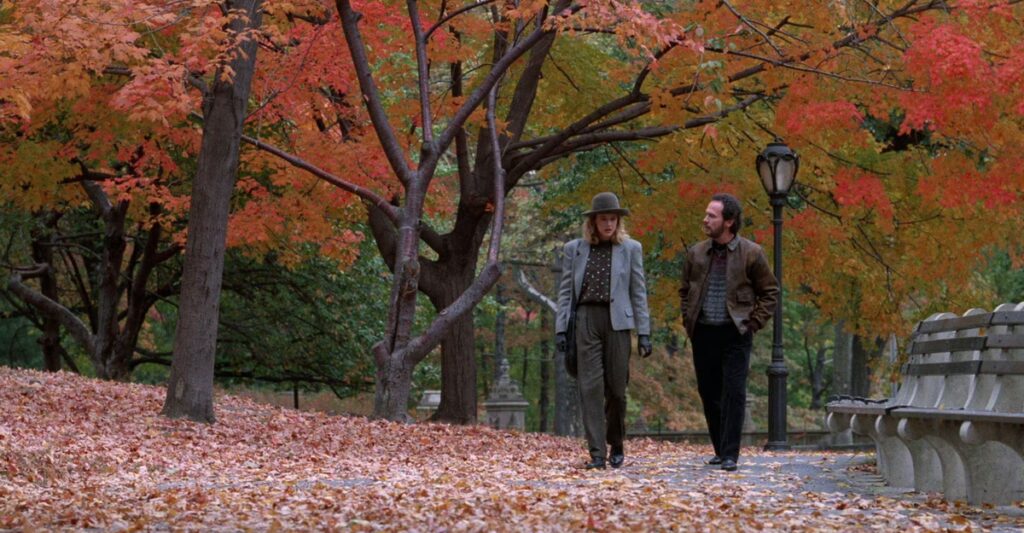
There’s the cornucopia of cable-knit sweaters, a chocolate-brown velvet bowler hat, the fog of bright-orange leaves streaming through the glass wall at the Metropolitan Museum of Art. Autumn in New York is the backdrop of When Harry Met Sally, but that doesn’t fully account for the place that Nora Ephron and Rob Reiner’s classic occupies in my life: For me, it’s the chicken noodle soup of movies. I have my personal reasons for considering it the ultimate comfort watch. Maybe it’s my affinity with Sally (played by Meg Ryan), the curly-haired journalist determined to have life happen to her, though her job is to “write about things that happen to other people.” Or the movie’s love for my hometown, which forms the bedrock of so many of Ephron’s films. Or the weirdly specific fantasy of having your date unwittingly quote to you something you wrote in a magazine.
This time of year, I’m far from the only person who considers a When Harry Met Sally rewatch as inevitable as digging my denim jacket out of the back of my closet. If there’s a universal magic to the movie, maybe some of it comes from magic in real life. The original script saw Sally and Harry’s (Billy Crystal) story ending bittersweetly, with the two apart. But midway through making the film, Reiner fell in love with his wife, Michele Singer. This fall—our first without Reiner and Singer—I’ll be revisiting the movie in large part for the ending he decided on instead: perhaps the most memorable, and certainly my favorite, in the romantic-comedy genre.
— Marie-Rose Sheinerman, assistant editor
***
Michael Clayton (streaming on Prime Video and Apple TV)
Fall is not really about melancholy and the inner life, as the poets would have you believe. It’s that period, after summer’s frivolities, when things get serious again. Michael Clayton, a film I first saw at the urging of my friend and colleague James Parker—and which we both regularly rewatch—is charged with that urban, autumnal, overcoated feeling of things getting serious.
The people in it are grown-ups. If they’re not, as with Timmy—Michael Clayton’s brother, whose feckless behavior leaves Michael exposed to loan sharks—they’re basically ignored. Sydney Pollack? What a performance! What an impeccably serious guy! Tom Wilkinson, Tilda Swinton—they’re brilliant in this. And George Clooney, playing the titular character, is haunted by his own rotting, inky-eyed charm and stymied at every turn, despite his good intentions. He’s at his best in the scene where Michael, working as his law firm’s fixer, advises an affluent, arrogant client who has just committed a hit-and-run. The client, thinking it’s still unfettered summer, throws a childish tantrum. Michael, in his best autumnal mode, sets him straight: “There’s no play here. There’s no angle. There’s no champagne room. And I’m not a miracle worker; I’m a janitor.”
— Sebastian Smee, staff writer
***
Little Women (streaming on Prime Video and Apple TV)
Fall is a happy-sad season: The sunlight is golden (but that’s a sign that the days are getting shorter), the leaves are ochre and maroon (a sign that they’re dying), and the air is crisp (a sign of impending winter). And to me, Greta Gerwig’s 2019 adaptation of Little Women perfectly embodies this feeling. The story follows the four March sisters through the different seasons of their life. Their childhood flashbacks are scenes captured in warm, autumnal tones, and adulthood flash-forwards are shot in cooler, harsher light, to reflect the girls’ feelings about the passage of time.
Jo March wants to grow up, and yet she clings to girlhood, panicking as those around her—such as her sister Meg, who gets married—seem content to let the past go. In one pivotal scene, Jo tells her mother that she wishes she could still want what she wanted as a child, when simply being with her family was enough. Now her aspirations for a career and romantic love seem at odds, and her sense of independence has become inextricable from an acute sense of loneliness. For those of us who also cling to the past (even if that past is just “summer”), this film will comfort you and remind you that change is inevitable.
— Nancy Walecki, staff writer
***
You’ve Got Mail (streaming on Prime Video and Apple TV)
The first 30 minutes of You’ve Got Mail are an unabashed ode to autumn. “Don’t you love New York in the fall?” the film’s romantic hero, Joe (Tom Hanks), writes in an email to the heroine, Kathleen (Meg Ryan). When Kathleen arrives at work a few minutes later with a perfect orange pumpkin under her arm, she breathlessly repeats the question: “Don’t you just love New York in the fall?” And how could you not? The film shows children bobbing for apples at a street fair, a tree with copper leaves set against a row of brownstones, and characters walking around the Upper West Side in good knits, blazers, and fleeces.
Even when the movie shifts to winter and then spring, You’ve Got Mail still feels autumnal. That feeling goes beyond the scenery: It’s a wistful movie, and at times a sad one. Characters major and minor express regret over lost loves, broken family relationships, and unrealized dreams. Kathleen and Joe spend most of the film in relationships with people they clearly do not love. These notes of melancholy make it a perfect romantic comedy to turn to as the days get shorter.
— Eleanor Barkhorn, senior editor
***
Point Break (streaming on Peacock)
I grew up in Los Angeles, and as a result, I do not really understand seasons, weather, or people’s fear of being seen perspiring. Since I moved to the East Coast eight years ago, I have found autumn to be a cute but unwelcome reminder that winter is real and, even worse, that I will soon be forced to experience it.
The 1991 action thriller Point Break is also about Angeleno men who do not condone the end of summer. In the movie, they take this aversion one step further, robbing banks to fund the travel necessary to never stop surfing under the hot sun. The dialogue is clunky, albeit quotable, and almost nothing about the plot is believable. And yet, it’s so fun to watch these guys, and the FBI agent who tails them, try to make one summer weekend last forever. That is how I will be spending the fall: in denial, doing as much hiking, paddleboarding, and swimming as possible, until I am forced to stop.
— Marc Novicoff, staff writer
***
Silent Friend (streaming on Prime Video and Apple TV)
Silent Friend is a meandering film that has nudged me toward accepting slowness and inevitable change. The historical drama follows three environmentalists at a German university across three epochs as each tries to uncover the secret life of plants: In 1908, Grete navigates sexism and her own position as one of the first female students in the university’s botany department; in 1972, a young man named Hannes, immersed in his college campus’s Cold War–era counterculture, develops sensors to understand how a potted geranium perceives him; and in 2020, a neuroscientist runs an experiment connecting a tree’s electrical activity with his own after the COVID lockdown cuts off his access to human subjects.
At the center of it all is a nearly 200-year-old ginkgo tree that provides quiet solace to the three characters. The tree becomes a central figure in the story, observing, listening, and breathing alongside its subjects. Its presence embodies the spirit of the film, which is more sensory-driven than narrative-driven and makes it easy to lose yourself in the foliage. Now every time I see a leaf change color, I’m reminded to pay closer attention to the natural world around me and all of the life that brims within it.
— Kim Jao, assistant editor
Here are three Sunday reads from The Atlantic:
- Inside a conservative operation to hijack your social-media feed
- The White House wants to make the Smithsonian a pariah.
- The growing lawlessness in California’s forests
The Week Ahead
- The Uprising, a drama-action film based on the true story that’s said to have inspired the legend of Robin Hood (in theaters Friday)
- The Art of Fighting, a book by Priya Parker on the power of conflict (out Tuesday)
- Last Seen, a thriller series about a police dispatcher who receives a call from a teenager he believes could be his daughter, who disappeared 11 years earlier (streaming Wednesday on Apple TV)
Essay
The Measles-Stricken Mother Who Lost Her Newborn Son
By Tom Bartlett
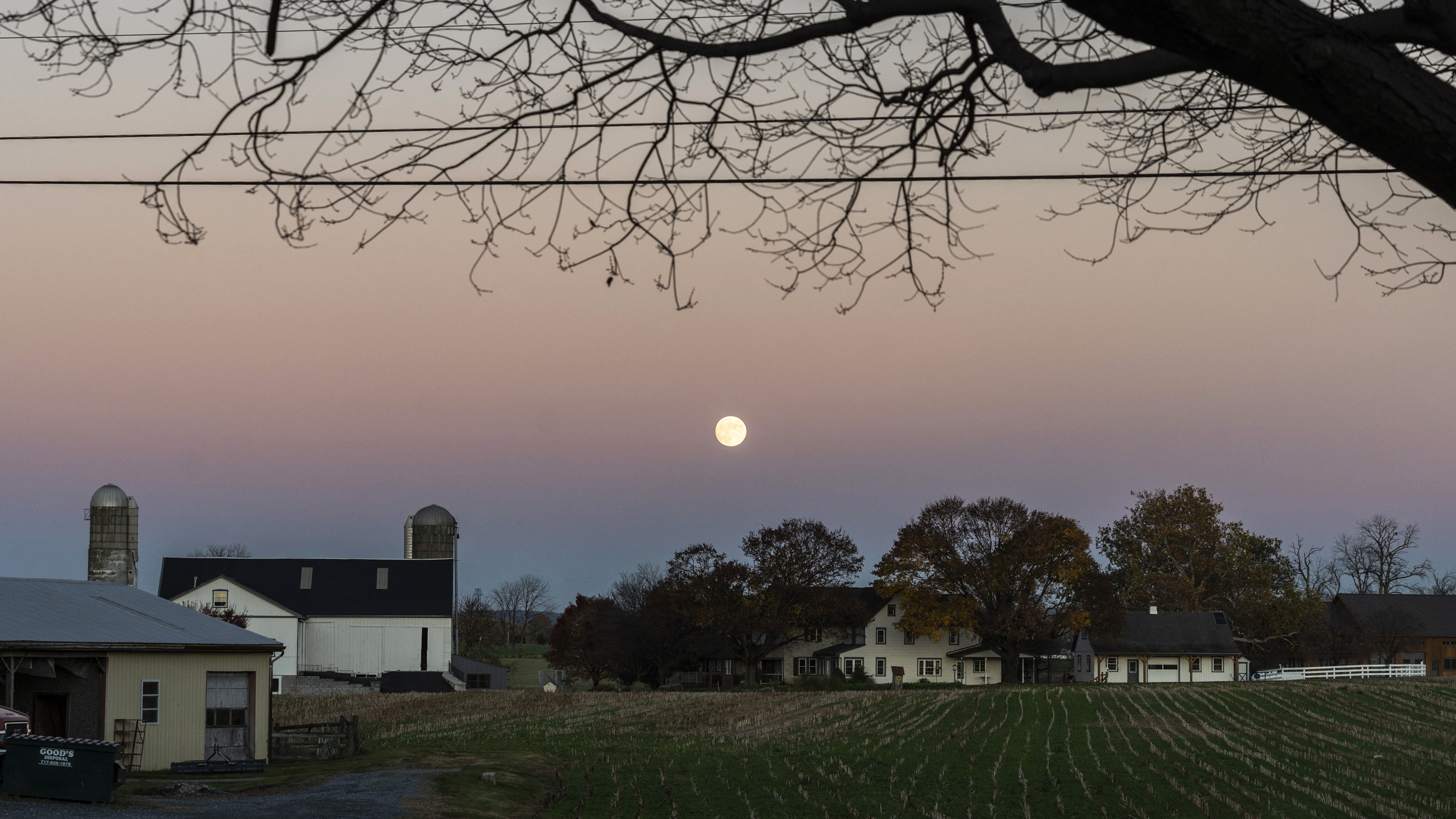
When the Amish man emerged from his barn to greet me, he had no idea that his newborn son’s death had become national news. The man wore a straw hat, black trousers, and suspenders over a long-sleeved blue shirt; one of his similarly dressed sons was guiding a horse-drawn plow in a nearby field.
The man told me that, like most Amish people, he and his family don’t watch TV or use the internet. They don’t read the newspaper either. So they didn’t know until I told them that last Tuesday, Pennsylvania’s governor, Josh Shapiro, held a press conference to announce the first two “measles-associated” deaths in the state in 35 years.
More in Culture
- Gloria Steinem’s feminism for all
- What happened to yoga?
- Why are so many people listening to a podcast about living in a convent?
- The Met’s other failure
- The singular triumph of driving down peanut allergies
- The missing ingredient of modern life
Catch Up on The Atlantic
- Tom Nichols: Hegseth’s Pentagon lurches off the rails.
- The air marshals keeping watch on Eric Swalwell
- How the right could actually end birthright citizenship
Photo Album
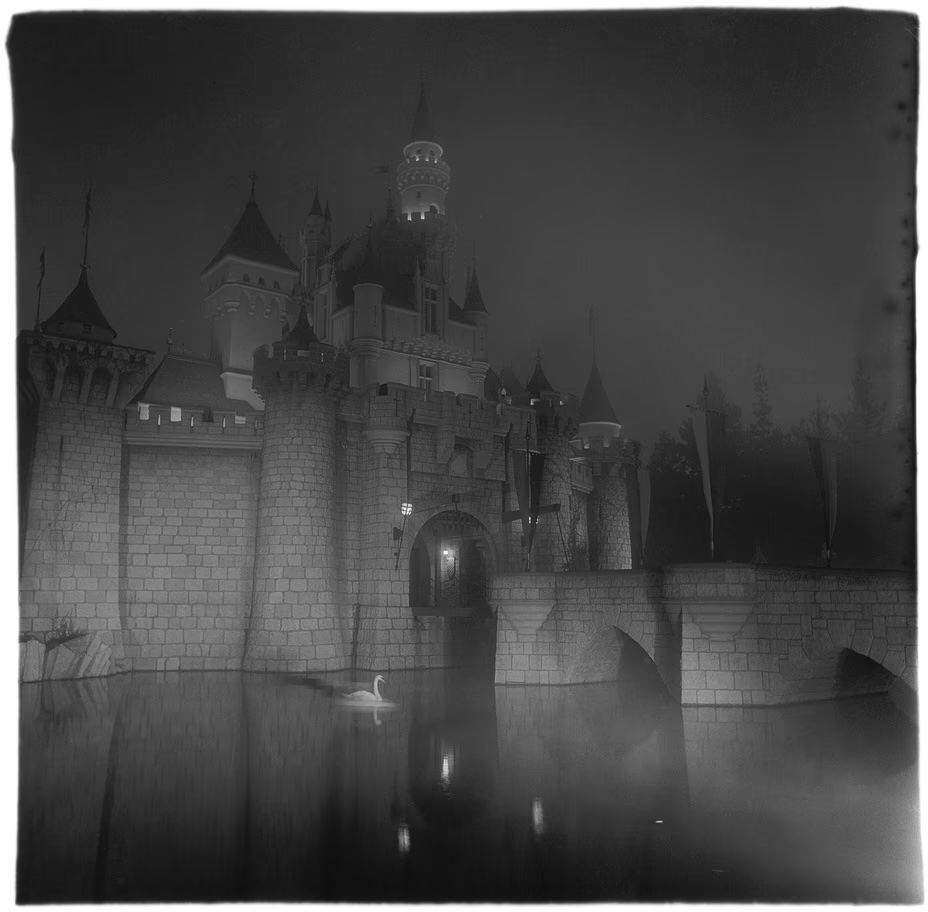
Late one evening in 1962, alone in Disneyland, Steve Martin ran into Diane Arbus, one of America’s greatest 20th-century photographers. Take a look at some of her images of Disneyland with no people.
Explore all of our newsletters.
When you buy a book using a link in this newsletter, we receive a commission. Thank you for supporting The Atlantic.
The post Six Movies to Get You in the Fall Mood appeared first on The Atlantic.