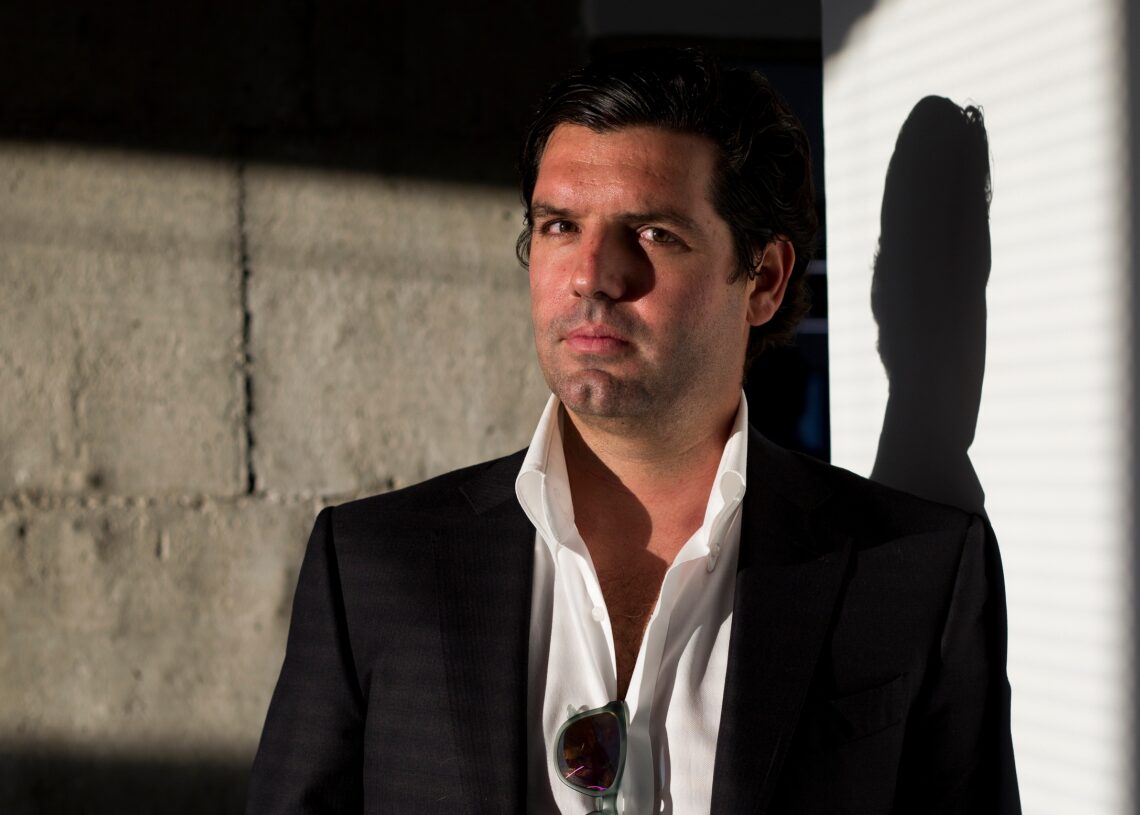
On a phone call in March, a Trump administration emissary made a bold pitch. How would Alejandro Betancourt, a wealthy Venezuelan oilman and influential power player in his country, feel about taking on a new business partner: the U.S. government?
Operating from his residence in Britain, Betancourt, 46, developed a reputation for a golden touch in extracting Venezuela’s challengingly thick crude, with his company ramping up production tenfold in two years. But the deal with Washington, he was warned, would have costs, according to two people with knowledge of the call.
Mauricio Claver-Carone — the former U.S. special envoy for Latin America, who placed the call — told Betancourt he would probably forfeit a percentage of his company — the second largest private oil firm in Venezuela — and its independence as the administration named new board members. In exchange, he’d gain access to vast new oil reserves and potentially become a “global player.”
“I’m all in,” Betancourt replied, according to the people familiar with the call, who spoke on the condition of anonymity to discuss confidential negotiations.
Betancourt for years had grown wealthy off business with Venezuela’s corrupt governments. But at times he also secretly aided efforts to undermine its former strongman, Nicolás Maduro, according to Betancourt supporters and U.S. officials. In subsequent conversations with associates about the developing Trump deal, Betancourt mused about legacy — of shaping a new Venezuelan economy, according to people familiar with the discussions.
If it worked, the United States would gain a lasting foothold in a formerly adversarial country while Betancourt, a U.S.-educated entrepreneur facing international investigations, would win a formidable new backer in the form of Uncle Sam.
The extent of that backing unfolded behind the scenes. The Washington Post reported last week that soon after Maduro’s capture on Jan. 3, senior administration officials began intervening on Betancourt’s behalf with Swiss authorities who had issued a warrant for his arrest in connection with a money laundering investigation.
Betancourt’s attorney in the United States, Jon A. Sale, denied any wrongdoing by his client.
In May, Swiss authorities requested that the United States detain him. Washington did not act on the request. Instead, senior officials again intervened, granted him a multiple-entry visa and welcomed him in Washington for high-level meetings.
The result of those visits emerged Friday when President Donald Trump announced that the U.S. government was taking an ownership stake in North American Blue Energy Partners (NABEP), Betancourt’s private company, and had arranged for the Venezuelan government, led by interim president Delcy Rodríguez, to grant him the rights to 14 oil fields. The company now has three.
Industry analysts view the deal as a high-risk gamble for the U.S. and for Betancourt, who must now come up with significant financing to exploit the new oil reserves.
Initially, Trump sought a different approach, one person with knowledge of the White House discussions said. In the aftermath of the U.S. military’s capture of Maduro on Jan. 3, as he proclaimed the U.S. would “run” Venezuela, Trump had proposed taking a direct stake in PDVSA, the country’s state-owned oil giant.
That plan sparked concerns within his Cabinet, including from Energy Secretary Chris Wright, who argued that the major oil giants, as opposed to the U.S. government, should be encouraged to enter the Venezuelan oil sector. Others around Trump fretted about the legal and political hurdles of a stake in a Venezuelan state entity.
Secretary of State Marco Rubio, among others, saw Betancourt as the answer, the person with knowledge of the White House discussions said.
An Energy Department spokesman, Ben Dietderich, denied any disagreement between Trump and Wright, or any suggestion that Wright was “opposed to exploring multiple avenues to unleash Venezuela’s resource potential.” Dietderich referred questions about Trump’s initial interest in a PDVSA stake to the White House, which did not respond to a request for comment.
The State Department also did not respond to a request for comment.
This article is based on interviews with 10 people familiar with Betancourt’s history and operations, including two with detailed, direct knowledge of how the deal announced by Trump came together. They include people involved in U.S. policy on Venezuela and the Venezuelan oil industry, employees of Betancourt and other people briefed on the agreement, most of whom spoke on the condition of anonymity to discuss sensitive information.
Betancourt has faced investigations in Venezuela, the U.S. and Europe, and Swiss authorities are still actively pursuing their money laundering investigation, according to people with knowledge of the matter.
Administration officials who advocated for working with him argued that while Betancourt was no saint, he had no active cases against him in the U.S., and investigations against him elsewhere were based on old allegations. His success in the oil sector, his past support for the Venezuelan opposition and clandestine assistance to the United States leading up to Maduro’s capture convinced them he was the man for the job.
“This is a proven operator,” a senior U.S. official told reporters during a briefing Tuesday on the Venezuelan deal. “I’m not nominating anyone for sainthood here. What I am telling you is that this is a person that, in the past, has been helpful to the United States government.”
In the first Trump administration, there were deep divisions between the State Department and the White House over whether and how to engage with Betancourt, who held major influence in Venezuela but faced a money laundering investigation, ultimately dismissed, over a loan deal with PDVSA.
“Trump has allied the government with the most shadowy and repellent Venezuelan businessman he could find,” former Trump official Elliott Abrams wrote in a Post op-ed this week. “We knew exactly what Betancourt stood for and kept him far away from the U.S. government. No longer.”
Others, however, have found Betancourt useful.
At the request of opposition leaders and without direct U.S. approval, he secretly flew to Moscow in 2019 to deliver a letter from then opposition leader Juan Guaidó calling on the Kremlin to drop its support for Maduro, according to two people with direct knowledge of his efforts.
Betancourt, these people said, was also a financial backer of Guaidó, who became a cause célèbre among Trump officials later that year by challenging Maduro for Venezuela’s presidency before fizzling out.
Guaidó did not respond to a request for comment.
In 2020, he denied having any “relationship” with Betancourt. Several Venezuelan opposition supporters and people involved with U.S. policy during the first Trump administration said they were not aware that Betancourt aided the opposition, and raised questions about whether the administration was now seeking to overstate his assistance to rehabilitate his image.
“They are trying to reinvent this guy,” said Pedro Burelli, an advocate for the Venezuelan opposition and former board member of PDVSA.
In 2019, Betancourt hired Rudy Giuliani to help him contend with a Justice Department investigation in which he was not charged but appeared as an unnamed co-conspirator, The Post reported.
Rubio this week told the Miami-based Venezuelan podcaster Sergio Novelli that Betancourt had “ended up in a very, very bad place with Maduro. Because it became known that he was supporting elements of the opposition back in 2019.”
Betancourt reestablished regular contact with the second Trump administration last year, months before Maduro’s capture. He became an increasingly valuable asset — to a point that some officials believed that without his help it would not have been possible to hold the country together after Maduro’s seizure, according to people with knowledge of Betancourt’s actions and U.S. strategy in Venezuela.
More recently, Betancourt used his extensive information network in Venezuela to secure intelligence that helped Washington interdict “ghost ships” that were seeking to smuggle sanctioned Venezuelan oil, according to two people with direct knowledge of his collaboration with U.S. officials.
On the chaotic day of Maduro’s capture in January, Betancourt emerged as Washington’s good cop. While other Trump emissaries threatened Rodríguez if she did not cooperate, Betancourt offered reassurances, including over her personal safety.
After the capture, Betancourt influenced Venezuelan government decisions, particularly on oil. He “became Venezuela’s de facto minister of economy,” said a person supportive of Betancourt’s influence inside the Venezuelan government.
“Mr. Betancourt has a long history of supporting the United States,” Sale, his attorney, told The Post.
Even as he was rebuilding his relationship with Washington, however, Betancourt’s legal troubles were deepening. He was arrested twice in Britain in 2025, first after Spain issued a warrant in a related money laundering investigation, and in November at Switzerland’s request.
In May, the Swiss withdrew their extradition request to Britain, allowing British travel restrictions on Betancourt to be lifted. Swiss authorities then asked Washington to detain him, according to people familiar with the matter.
Instead, at the request of a senior State Department official, the U.S. Consulate in London in June issued Betancourt a one-year, multiple-entry visa.
Since then, he has traveled repeatedly to Washington. “From an intervention standpoint, we just wanted to have access to him so we could finalize this arrangement,” the senior U.S. official said.
The deal gives the U.S. 35 percent of Betancourt’s company, and calls for Venezuela to give NABEP 14 additional oil fields, putting 65 billion barrels of reserves under the company’s control. The U.S. will have a right to buy 20 percent of the oil at cost.
While many details of the deal have not been disclosed, Trump and other officials have said the U.S. would claim its stake through an office of the Pentagon that has been working with private companies to accelerate and scale investment in critical supply chain technologies.
Experts have said any significant new oil extraction from the deal could be years in the future. Oil industry officials also question how willing large firms will be to get involved.
“No publicly traded company is going to want to invest in this,” said Ed Hirs, an energy economist and consultant who advises oil and gas companies on deals. “Betancourt has been under investigation. That is close enough to the line legally that no U.S. board of directors is going to be comfortable going in alongside him.”
Hirs also said companies will be concerned about the durability of the deal once Trump leaves office. “Delcy Rodriguez negotiated this with a gun to her head,” he said.
Advocates of the alliance, however, say some of the new fields are close to NABEP’s existing ones, making it easier to ramp up some operations. They cite NABEP’s increase in output under Betancourt as evidence of what’s possible.
A person aware of Betancourt’s strategy said he is looking to finance the new venture in part by seeking up to $10 billion in prepayments from major oil traders.
That sum would be derived from an advance on NABEP’s projected net annual revenue of $5 billion, based on a price of $70 a barrel, with anticipation that actual revenue in coming years would be higher as production ramps up.
NABEP officials insist there will be “meaningful” new production within two years. Already, the company has acquired or negotiated 52 additional rigs for its new operations, adding to a fleet of 65, according to an internal NABEP document obtained by The Post. To secure access to infrastructure, the company also acquired Houston-based Drilling Structures International, a rig manufacturer.
“We will be able to deploy resources immediately,” said a NABEP official who spoke on the condition of anonymity because he was not authorized to speak to the press.
The scion of a wealthy Venezuelan family, Betancourt started as an oil trader before investing in a Russian-backed oil venture in the 2010s that was later seized by the Venezuelan government.
In 2023, Betancourt reclaimed a foothold in the Venezuelan oil sector with Harry Sargeant, a Florida-based Republican donor and oilman who was deeply divisive within the Trump administration. Last month, under pressure from the administration to divest from NABEP, Sargeant sold his stake to Betancourt for $300 million, according to three people aware of the transaction.
Now, Betancourt faces the challenge of appeasing Trump while increasing Venezuelan oil output.
Some in the industry cite Betancourt’s experience taking decrepit oil fields — or brownfields — and cleaning up the wells to get crude pumping again. The task ahead is more complex and includes developing new, largely untouched “greenfields.”
Under his existing contract, Betancourt has already tapped one greenfield, and is extracting nearly 30,000 barrels per day from the site, according to a company official.
Francisco Monaldi, director of the Latin American Energy Program at Rice University, said he doubted some of the “greenfields” will be developed soon.
“That’s the last thing you’d want to develop,” Monaldi said. “But it helps Trump claim there are 65 billion barrels in reserves. It helps NABEP claim that it has one of the largest reserves on the planet.”
Evan Halper and Helena Carpio contributed to this report.
The post Trump’s huge Venezuela deal began with a call and a bet on an oilman appeared first on Washington Post.