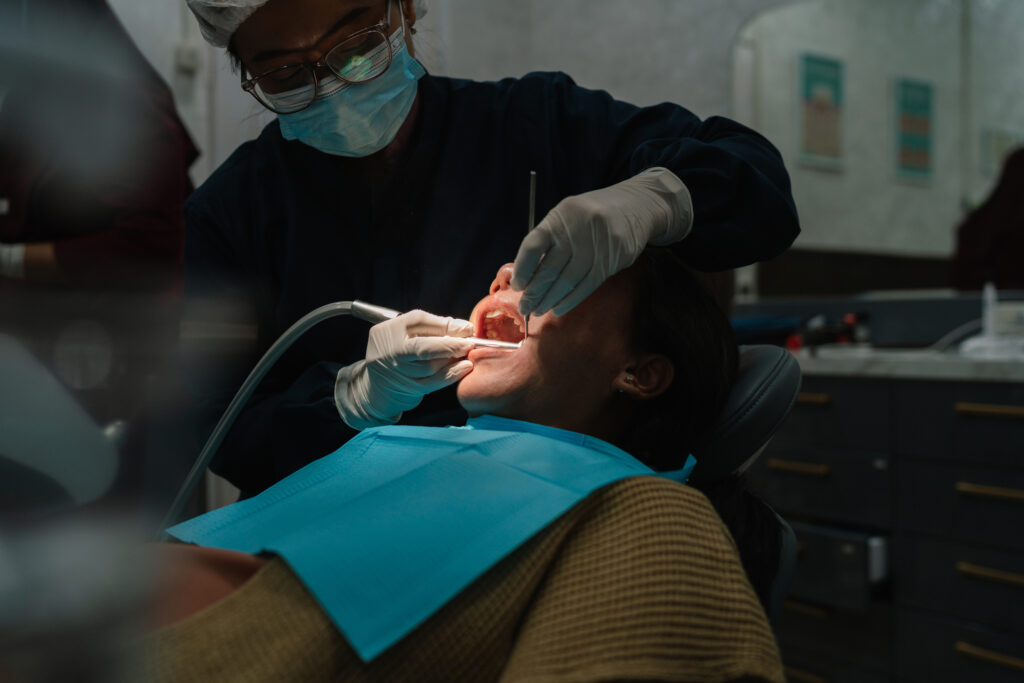
Plenty of dental issues can feel like no big deal, at least at first. The symptoms don’t always hurt and may not even catch your attention. “A lot of times patients don’t realize they have a problem in their mouth because they don’t look so closely,” said Steven Katz, immediate past president of the American Association of Endodontists.
Even a toothache might come and go, Katz said, leading some people to put off dealing with it. And making a dentist appointment for a painless problem — for instance, gums that bleed when you floss — can feel like more of a hassle than it’s worth.
But seemingly minor dental symptoms often signal infections that, if left untreated, can progress into more complex problems, Richard M. Lipari, a cosmetic dentist in New York, said in an email. These issues can also require more costly treatment and additional visits to repair. Some changes in your mouth can even be early warning signs of disease elsewhere in the body, Lipari added.
Below are five tooth and gum symptoms you may be tempted to ignore — but shouldn’t, for the sake of your oral and overall health.
Tooth pain of any kind
“There’s no amount of pain in your teeth that should be considered normal,” Katz said. The most common cause of a toothache is tooth decay.
It starts when bacteria combine with saliva and food particles to form a sticky film of plaque on a tooth’s surface. The bacteria feed on sugars and starches and produce acids that erode enamel. This decay can eventually lead to a cavity — a hole that can cause pain or irritation if it reaches the sensitive inner layers of the tooth.
More than 1 in 5 people ages 20 to 64 in the United States have at least one untreated cavity, according to the Centers for Disease Control and Prevention. The concern is what can happen next: As bacteria move deeper into the tooth, an infection can develop at the root, causing sharp or throbbing pain. Over time, it may even spread to the face, neck and underlying bone.
Katz cautioned that even if your tooth stops hurting, you shouldn’t ignore it. “A lot of patients think, ‘Okay, well, I aggravated something, and it’s gone now,’” he said. But usually, pain that suddenly lets up is a sign that decay has killed the tooth’s nerve. So, the pain can disappear even as the infection gets worse. “That’s when [bacteria] can start to eat away at the bone,” he said.
While a cavity can be fixed with a simple filling (which generally costs a couple hundred dollars without insurance), a dental infection typically requires a root canal (which can cost $1,000 or more, depending on the tooth). During the procedure, a dentist drills into the tooth to clear out the infected pulp and then reseals it and stabilizes it with a crown. But if an infection destroys enough bone, the tooth will ultimately have to be removed.
There’s also evidence that untreated dental infections are associated with a higher risk of several conditions beyond the mouth, including Type 2 diabetes, cardiovascular disease and dementia. Bacteria and inflammation around the root of an infected tooth may spill into the bloodstream and reach other parts of the body.
Swollen or bleeding gums
Puffy gums that bleed easily are often a sign of gingivitis, a mild form of gum disease, Lipari said, even if they’re not painful. Like cavities, gingivitis is generally caused by plaque buildup. The immune system triggers inflammation in the gums in an attempt to ward off an infection.
While regular brushing and flossing can remove plaque and reverse gingivitis, if the swelling persists for longer than a couple of weeks, it’s important to see a dentist. They can use special tools to remove plaque and its hardened form, called tartar, at and below the gumline. This helps keep gingivitis from progressing to periodontitis, a more severe form of gum disease. At that stage, inflamed gums can pull away from a tooth, creating a pocket where bacteria can accumulate. The gums may become even more swollen or tender, and tooth pain and sensitivity can develop.
Like dental infections, untreated gum disease has also been associated with other serious health issues. “The same systemic inflammatory mediators involved in gum disease are linked to conditions like cardiovascular disease and neurodegenerative disorders,” Lipari said.
Though gingivitis is the usual culprit, persistently swollen or bleeding gums can sometimes have other causes, which a dentist can help rule out. For example, bleeding gums are also “strongly associated with diabetes,” said Lipari. Having high blood sugar can increase the amount of glucose in your saliva, which feeds bacteria in the mouth and increases the risk of plaque buildup.
In very rare cases, gums that frequently bleed could also point to a blood disorder or cancer such as leukemia that interferes with blood clotting, Katz said. (If a dentist sees bleeding that doesn’t appear typical for gingivitis or suspects a different underlying trigger, they can refer you to the right doctor for a workup.)
Loose teeth
A loose tooth, particularly one that’s accompanied by tender or swollen gums, may signify advanced gum disease, Lipari said. Left untreated, the infection can damage the bone holding the tooth in place, leaving it mobile or wobbly.
In rare cases, a loose tooth could also indicate a tumor in the mouth or jaw, Katz said. “Most of the time they grow silently until all of a sudden they don’t,” he said. “We might see loose teeth because tumors typically will destroy bone.”
A slow-growing tumor could also push teeth out of alignment, Katz added. Outside of orthodontic treatment, you shouldn’t notice your teeth moving, he said: “Our teeth are always moving microscopically, but to move significantly such that your bite would be off, for example, that’s something that should ring a bell.”
Bad breath or a bad taste that doesn’t go away
A garlicky pasta or tuna salad sandwich can certainly give you bad breath that lingers for a few hours. But a foul odor or taste that persists day after day could signal an infection — and you might not always have pain or swelling along with it.
In some cases, a small drainage track can form near an infected tooth or gum, allowing pus to escape. Sometimes it looks like a bubble or pimple on the gumline, though people often don’t notice it, Katz said. The release of fluid keeps bacteria and inflammation from building up, so the infection might not hurt much, he explained.
Alternatively, off-smelling breath could be a result of dry mouth. Saliva helps wash away food debris and bacteria. Dry mouth is a common side effect of certain medications, including blood pressure drugs, antidepressants and GLP-1s, Katz pointed out.
If dryness and bad breath persist, it’s worth bringing it up to your dentist or primary care doctor. A dry mouth can also be associated with autoimmune diseases such as Sjögren’s syndrome (in which the immune system mistakenly damages the body’s moisture-producing glands) as well as diabetes, Lipari said, and can raise your cavity risk. In certain cases, a bitter or sour taste in the mouth could also be a by-product of acid reflux, or the backflow of stomach acid and contents into the esophagus, he added.
Persistent mouth sores
Canker sores — small ulcers that form inside the mouth, such as on the inner cheek, tongue or gums — generally heal within a couple of weeks. (It isn’t known exactly what causes canker sores, but stress, minor trauma to the mouth, certain kinds of toothpaste, and spicy or acidic foods may trigger or aggravate them.) But if you have a sore that sticks around for longer than two weeks, or turns into a lump or bleeds, it’s important to see your dentist or primary care doctor. Certain autoimmune conditions, such as lupus, can cause mouth sores, and in rare cases, a persistent sore can be a sign of oral cancer, Lipari said.
The bottom line
If you notice any of the above symptoms, it’s better to get them checked sooner rather than later. That way, you’re more likely to catch an infection or other underlying issue before it becomes more serious. (It’s also wise to keep seeing your dentist regularly, even if you don’t have symptoms. They can spot problems early, when they’re easier to treat.)
The typical resolution for gum and tooth disease is a root canal, Katz said. Getting one done when you need it may not only spare your tooth and stop the symptoms — research shows it can improve markers tied to heart health such as cholesterol and chronic inflammation.
And these days, a root canal isn’t as bad as you may fear. Better local anesthesia can keep pain to a minimum. Improved technology means the procedure can often be completed quickly, Katz said, typically within an hour and in a single appointment. As he put it, “This is not your grandmother’s root canal.”
The post 5 subtle dental symptoms you should never ignore appeared first on Washington Post.