If you want to hire someone new, you’ve got to show them the money.
Workers say they want more money than ever for a new job. The latest data from the Federal Reserve Bank of New York shows that the reservation wage — the average lowest wage a respondent would be willing to accept for a new job — hit a series high in July 2026. Workers say their asking price is now $88,387, up over $10,000 from March 2025.
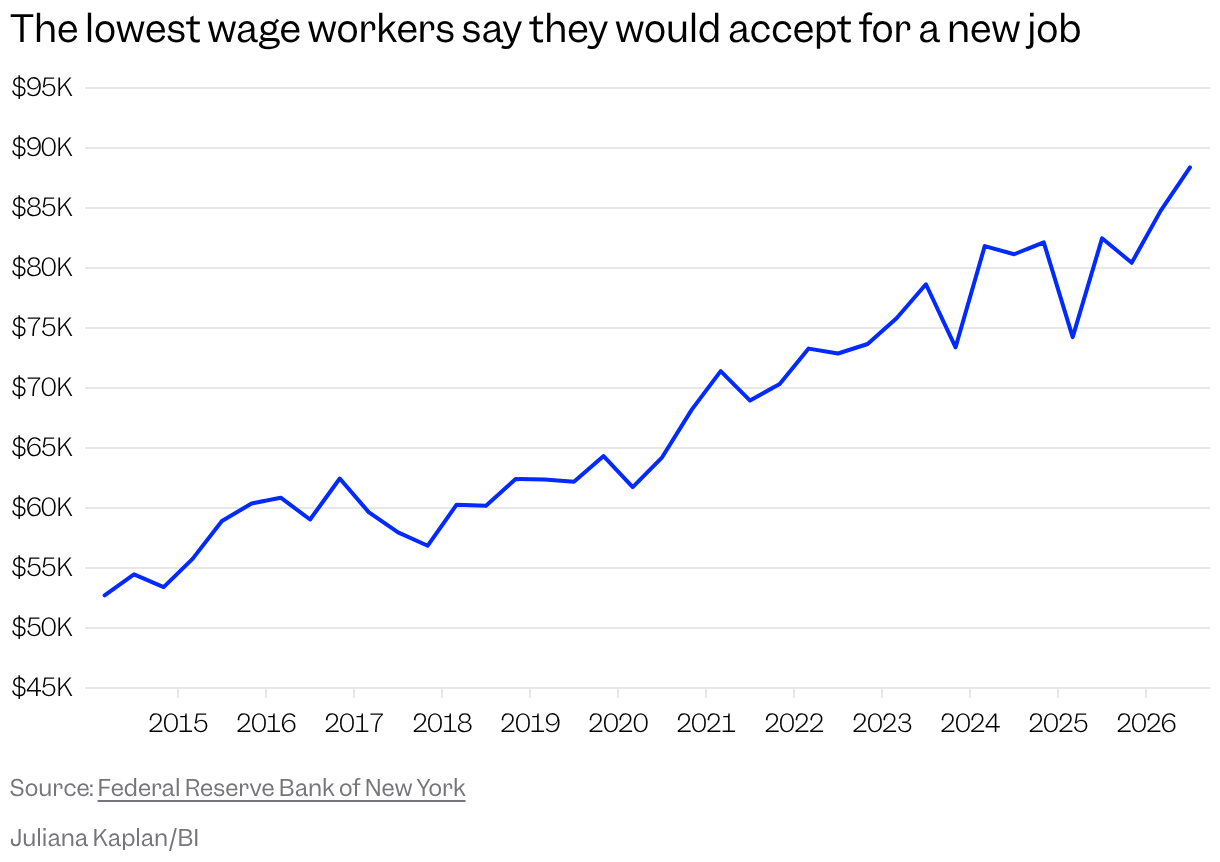
It’s a stark figure in a labor market that’s shown signs of weakness. Why are workers demanding more in a market that wants to offer them less? The soaring reservation wage shows how strongly workers may be clinging to their current roles and how risk-averse they’ve become.
Demands for a higher pay package align more closely with the hiring environment for those already gainfully employed, and dipping their toes into the job hunt. During the Great Resignation, in a tighter labor market following the post-pandemic reopening, job-hopping was a lucrative and well-tested way to get ahead on the career and earnings ladder. Waves of layoffs and job contractions have made the decision to jump ship more charged. In a more uncertain labor market, the cost of an exit goes up.
“It’s a relatively weak market. It’s harder to come by an offer,” Chris Martin, senior economist at Glassdoor, said. “And so the amount that I need to be paid or that I expect from a new role is higher than it would be otherwise.”
There’s also the harbinger of AI. How companies use or push AI is increasingly on workers’ radar — an analysis by Martin for Glassdoor found that mentions of AI in users’ reviews of firms were up by 240% from May 2025 to May 2026, and those mentions were getting increasingly negative. Switching to a new job now is more complicated than signing an offer letter; it means betting that that role and firm won’t be too shaken by AI.
“AI certainly has something to do with our labor market expectations,” Martin said. “So if we need to be compensated more for risk, part of that is that we’re not sure how AI is going to change the labor market. If I have a pretty good gig right now, I may want to stay and wait and see, rather than mix things up.”
Finding a job still isn’t easy, though
In a weak labor market, expecting a hefty pay hike might feel like a big ask. And, for some, it is: Despite the results of the NY Fed survey, workers actually on the job hunt have signaled that they’re willing to take a pay cut just to get hired post-layoff.
That means those reporting a higher reservation wage may end up facing disappointment.
“What this signals about the economy is workers and job seekers know their value and believe inflation will continue to be elevated. That said, while this is what workers want, they aren’t necessarily getting it,” Heather Long, chief economist at Navy Federal Credit Union, said. “Wage gains are at the lowest levels in five years, hiring is weak, and the ranks of long-term unemployed are growing.”
Holding out for higher pay does seem to be working, as the offer wage tracked by the New York Federal Reserve — which looks at pay proposals for those who received job offers — has been going up over the past year. As Nicole Bachaud, an economist at ZipRecruiter, notes, the wage premium for job switching has been rising.
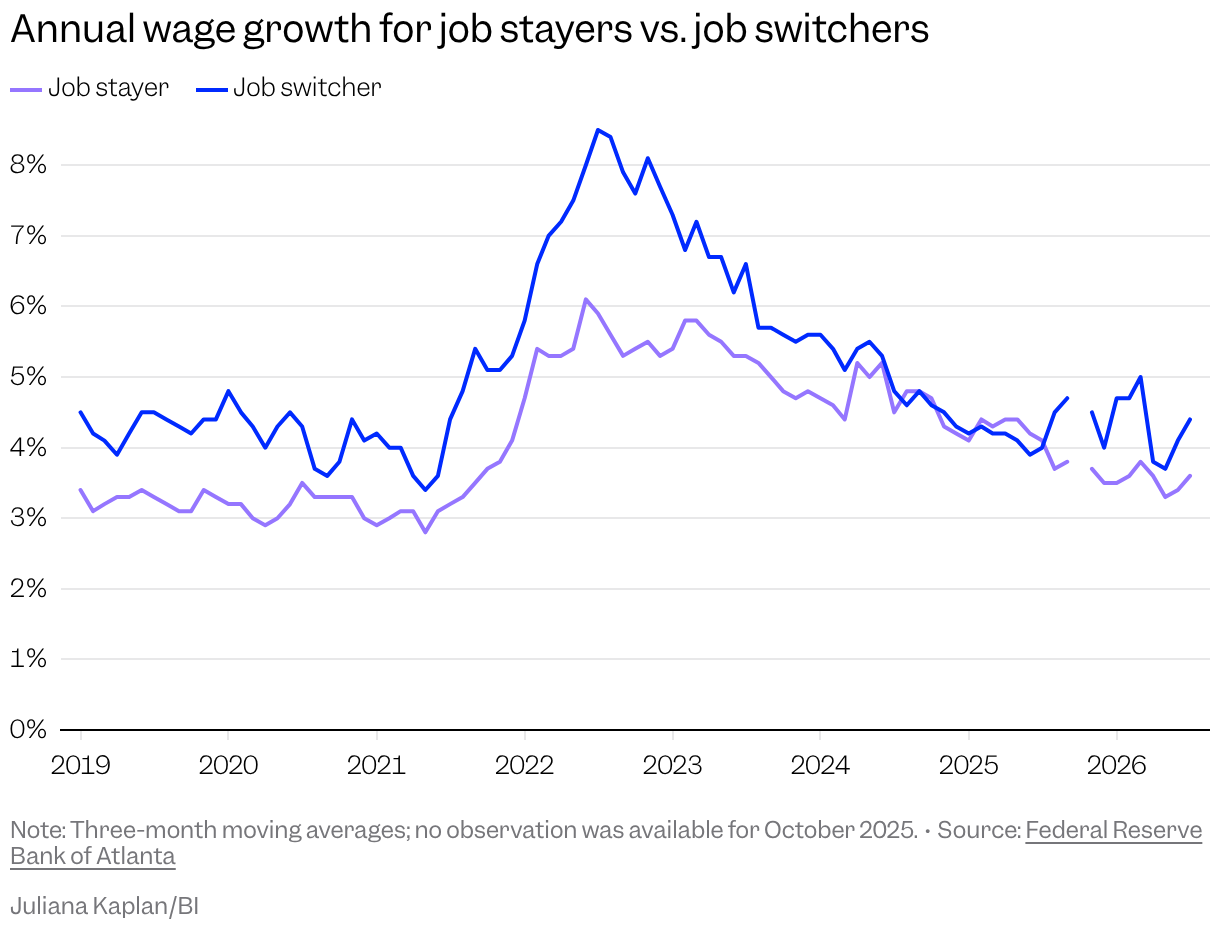
“For candidates fortunate enough to be searching from the comfort of an existing role, an offer that falls short on pay simply won’t justify the leap,” Bachaud said.
Are you holding out for a higher job offer, or scared to leave your current role? Contact this reporter at [email protected] to share your story.
Read the original article on Business Insider
The post Workers want more money than ever to risk taking a new job appeared first on Business Insider.