My father is the oldest of three siblings. They had an abusive childhood, and their relationships with one another have never recovered. My father is now distant from his siblings, and his sister, my aunt, is largely estranged from the whole family.
My aunt has long struggled with physical and mental-health problems and has few close relationships. She tends to become heavily dependent on one relative until the relationship breaks down. Since my early childhood, our contact has been sporadic. She often speaks badly of my parents, and I have no wish to become an audience for her attacks on my father.
During the pandemic, she reached out again. We’ve been in occasional contact since then, which suits me. I don’t want her to feel isolated, but I don’t feel close to her, and our conversations often seem to revolve around her seeking reassurance.
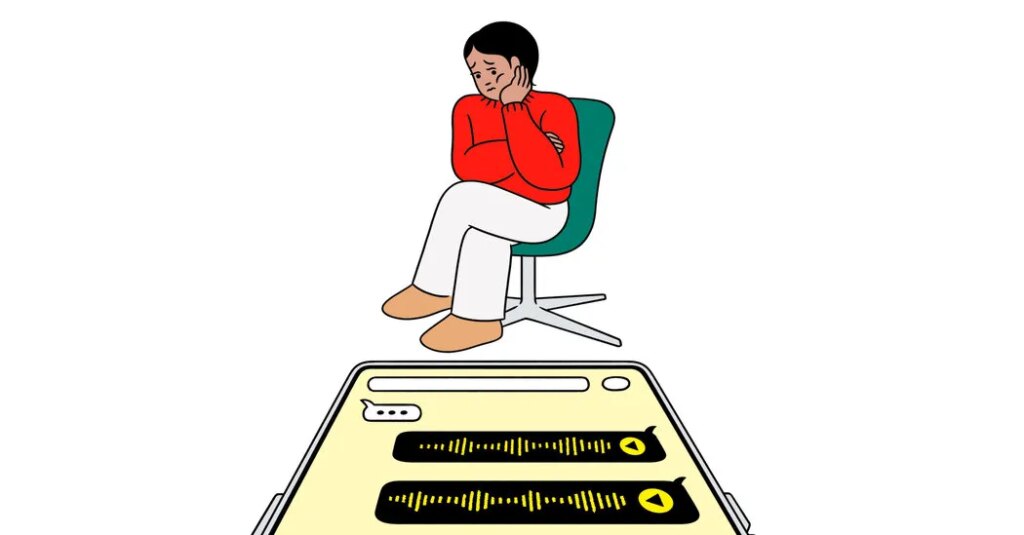
Two days ago, she sent and then deleted several voice notes. In one, she tearfully told me that she loved me and was proud of me, that her health had worsened and that she had decided to seek medical assistance in dying (MAID). She asked me not to tell my parents.
I was shaken. I don’t want her to feel unsupported, but I’m wary of being drawn into a level of involvement I can’t sustain. I’m also uncomfortable keeping this secret.
I sent a brief message saying I loved her and was thinking of her. The next day she replied: “I’m so sorry for leaving you that message. It was selfish of me, and I apologize. Please be safe. XO.”
What is my responsibility now? Should I leave the matter alone, or acknowledge more fully what she told me? How can I offer support without becoming responsible for a crisis, or a relationship, that I am not equipped to manage? — Name Withheld
From the Ethicist:
When people face the sort of medical problems that make MAID something to contemplate, they are likely to be in severe distress. When they’re also socially isolated, it’s hardly surprising if they reach out to someone with whom they feel at least some connection. Perhaps this is all that’s going on here. Still, her behavior fits a troubling pattern you’ve described. She sent you a series of voice mail messages and, after you listened to them, deleted them. She told you how much she loves you, asked you to keep her plans a secret from your parents, then apologized for having sent the messages, which is the sort of gesture that creates pressure for further reassurance. All of this, especially the requested secrecy, has the effect of recruiting you into a special relationship with her, setting you apart from the rest of your family and discouraging you from discussing the situation with others.
It must be said, however, that people can behave manipulatively without exactly intending to manipulate. So your assumption should be that your aunt was genuinely contemplating an assisted death, genuinely regretted the disclosure and genuinely craved reassurance. At the same time, you can take seriously her message about seeking a medically assisted death without being drawn into a sustained, intimate engagement. Bear in mind, too, that a request for secrecy doesn’t impose a binding obligation when you haven’t agreed to it as a condition of receiving information. So her request is just one factor to consider in deciding whether discussing the matter with others would be helpful, to you or to her.
It would be kind to give her a call, explaining that her messages left you concerned and uncertain about her situation. (A decision to seek MAID is a far cry from obtaining it; eligibility is subject to a formal medical assessment.) You can ask whether she has spoken to her doctors about MAID and what they’ve told her. Just be careful about offering more than you can give. You don’t have to make yourself available for an extended or continuing conversation. You can tell her that you care about her while making clear that you can’t be her main source of emotional support, and encouraging her to turn to her doctors and others better placed to help. Your relationship with her has been limited; your obligations to her are limited in turn.
Readers Respond
The previous question was from a health care worker who wondered if she said the right thing. She wrote:
I work at an inpatient hospice unit, and recently we had a patient who died (relatively) unexpectedly during the night. When he died, his son was not at his bedside, and we were unable to reach him for hours. This was not due to lack of love for his father but because the son was inebriated and unable to answer his phone. I pass no judgment on the ways that people deal with grief, and when the son came in the next morning, it was clear that he felt extremely ashamed of his absence. By the time he returned to the facility, the staff who witnessed his father’s death had gone home and passed on only superficial details to the next shift, including a few that might have indicated that he had been in distress immediately before his death. As he was leaving the facility, the son asked me if his father had suffered. I told him that it was a peaceful passing while the patient was asleep. Of course, the honest answer would have been to tell him that I did not know. … Did I betray a position of trust by lying to him? What, if anything, makes a lie morally acceptable? — Name Withheld
In his response, the Ethicist noted:
It’s understandable that you wanted to spare a grieving person further pain. Still, it was a mistake to give an answer you didn’t believe. A lie can sometimes be justified when it prevents serious harm and there’s no better alternative. Here, though, you could simply have explained that you weren’t there but that his father was being cared for, with the aim of keeping him comfortable. It’s very likely that the son was feeling guilt about not being there. You could truthfully have reassured him that his absence didn’t cause his father’s death or take away from the care he had previously shown.
(Reread the full question and answer here.)
⬥
I think all bets are off when you’re dealing with the death of a loved one. When my mother died, in a memory-care unit, I was told by one of her caregivers that she had said she was “going home” that morning. I believed it, and it all seemed not out of the realm of truth. I used it in her eulogy. Subsequently I came to the conclusion that this never happened — that it was a statement made by a caring, religious person to give comfort to my mother’s loved ones. That realization did not lessen the reassuring statement. In fact, I got something out of the kindness of a caregiver: I realized that this is the kind of person you want caring for your mother. — Stuart
⬥
Sparing ourselves discomfort is not the same as sparing others pain. Too often, people mistake protecting themselves from uncomfortable conversations for protecting others. Just ask someone who was the last to know about their spouse’s affair. When the truth finally emerges, they lose faith not only in their cheating spouse but also in the friends and family who knew and stayed silent to avoid their own discomfort. Adults deserve the truth, delivered with kindness and compassion, even when telling it is uncomfortable. — Tracy
⬥
I am a retired hospice social worker. We frequently explained to people — and this is true — that people often wait to die until their loved ones are not in the room. It was not uncommon for a loved one to step away to get coffee and for the patient to die while they were gone. I would have told the son this to help assuage his guilt for not being there. I think telling him that the staff did all they could to ensure his father’s comfort is a better option than giving details that would only cause him to question himself and add to his grief. — Libby
⬥
Really, what harm was caused by this white lie? If the death certificate will not contradict it, I don’t see the harm. Nor do I see benefit in the “truth.” — Patricia
⬥
I think if a medical professional has an opportunity to be kind and nonjudgmental rather than clinically factual, kindness is the better choice. I received clinically factual information as my husband died a horrible death from lymphoma, which was understandable, and in a medical setting, appropriate. But it was also cruel and heartless. It remains a trigger, and a very sickening memory that adds, unnecessarily, to my grief. — Marcia
The post My Difficult Aunt Told Me She’s Seeking Assisted Death. Should I Get Involved? appeared first on New York Times.