Three things that people often mention to me, as a linguist, leave me wondering whether to just nod politely or disappoint them with the truth. In this space, I feel that I should deal only with the truth, so if I may, prepare for some fun-fact disappointment! Here are those things people share with me with bright eyes.
English has a long list of fancy names for groups of animals. Not just the boring old herd of cows, flock of birds and gaggle of geese. There is also a murder of crows, a flamboyance of flamingos, a tower of giraffes, a charm of goldfinches, a conspiracy of lemurs, an ostentation of peacocks, a dazzle of zebras and so on.
These collective words always seemed a little suspicious. Almost none of them are actually used. When is the last time you heard someone talking about a smack of jellyfish?
In fact, many of these words were made up. The collective fun was kicked off back in 1486 by a prioress, Juliana Berners, in an arch tome cataloging the activities of a gentleman, “The Book of Saint Albans.” In the list of animal collectives, Berners was clearly having a little fun, as in coming up with group names for humans like a “blast of hunters” and a “melody of harpers.” There were new editions of the book into the 17th century. The ones about flamboyant flamingos and ostentatious peacocks are of later vintage than the original book.
These words are certainly fun, but ultimately most of them are less words than jokes. Comprehensive dictionaries list neither a peacock-related definition of “ostentation” nor one of “bloat” referring to hippopotamuses. These words are a part of the English language in much the same way that I possess an Estonian translation of the book “Ragtime” and an ocarina, neither of which I ever touch, though I am vaguely pleased that they are around.
Languages get easier over time. It’s easy to suppose so. We can hear things wearing away because of how quickly we talk — “What did you do that for?” becomes “Dja do that for?” We see the distinction between “lie” and “lay” eroding and people using “infer” to mean “imply.” Even if you know that such things are inevitable as a language changes, it looks like decay. Especially if we compare Old English — a much busier grammar that was essentially a flavor of German — with the modern language.
But actually, English’s story was unusual as the world’s 7,000 languages go. Normally, languages do not simplify over time; they morph. Some things go, but new things are always coming in. It’s like a lava lamp: The blob doesn’t get simpler or more complicated; it just changes. Old Church Slavonic was an ancient Slavic language. It was incredibly complicated, and adult learners would have found it gloriously frustrating. A modern Slavic language is Russian. It is incredibly complicated, and adult learners find it gloriously frustrating. That’s how language changes normally.
If vast numbers of adults learn a language at some point, it gets somewhat more streamlined because adults aren’t great at mastering the heavy-lift bits of a language the way children are. But there are always new things happening under the hood. If you say “Let’s try it and see” at normal speed, it often comes out as “T’stry it and see.” Once it’s just “t’s-,” “let” is lost to the ages, and English has a new prefix: “T’s-” means “join me.”
In the end, the reason we know languages don’t just simplify over time is common sense. Human language has probably existed for at least 100,000 years and possibly almost a million. If languages had all been getting ever easier over all of that time, humans worldwide would just be yelling “ah,” pointing at things and gesturing frantically. Despite occasional appearances otherwise, we are doing better than that.
In the Appalachians there are people still speaking Elizabethan English. Goodness, wouldn’t that be nice? It would mean that in those mountains, we could visit places where people were speaking the English of Shakespeare’s time. But wouldn’t that be on YouTube by now?
Yet it makes sense that this idea holds on, as smart people have been broadcasting it since the late 1800s. The idea is that Appalachians were traditionally so isolated that their English stayed the same while everybody else’s moved on. “The Southern mountaineers are the conservators of Old, early and Elizabethan English in the New World,” the folklorist Josiah Combs taught us in 1916, and “isolated from the outside world, and shut in by natural barriers, they have for more than two centuries preserved much of the language of Elizabethan England.”
People like this man meant well. They were trying to portray Appalachian English as exotic rather than broken. But language change never stops. Why would people’s language freeze in place just because they don’t interact much with outsiders? Plus, by the time white people got to the Appalachians in the 1700s, they weren’t speaking Elizabethan English anymore.
Understanding why this myth exists takes just a simple change of lens. Promulgators of the myth hear ancient past tense verbs like “holp” for “helped” and “fotch” for “fetched” and think of Appalachian speech as antique because verbs like that were a part of Elizabethan English. In mainstream American English, we replaced “holp” and “fotch” with “helped” and “fetched” long ago.
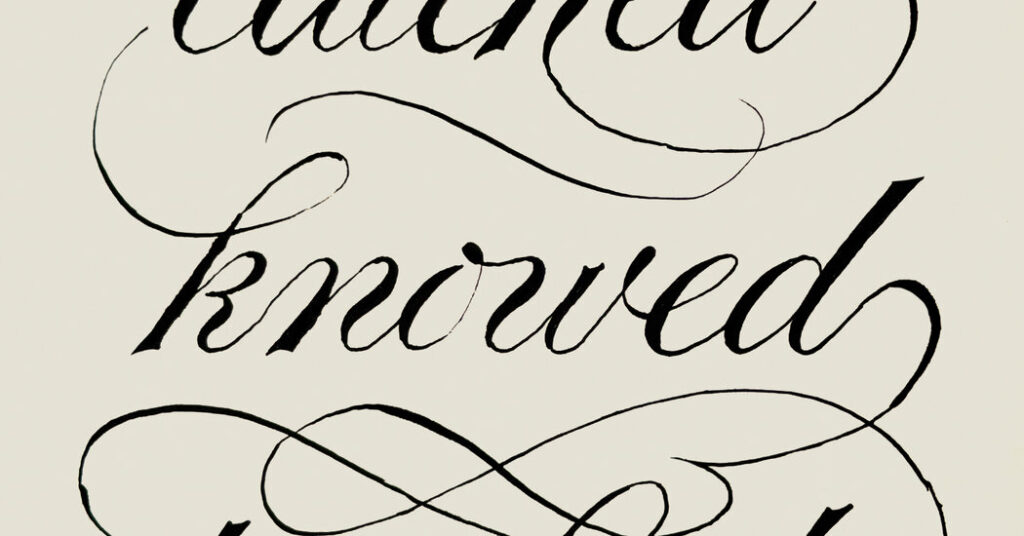
But forms of a language in different places hold on to some things and shed others, largely for reasons of chance. In Appalachian speech, people can let go of “caught,” “taught” and “knew” and say “catched,” “teached” and “knowed.” “Caught,” “taught” and “knew” are the forms that trace back to Elizabethan English and beyond. Here’s the lens change: Appalachian linguists hearing mainstream speakers use “caught,” “taught” and “knew” could easily decide that those forms are (sound the trumpets!) relics of antiquity.
So those are the truths. As is the fact that Berners’s is one of the earliest known English texts by a female author. And after the Civil War, some Southerners fled to Brazil. In one enclave called Americana, their descendants today can speak a 19th-century Southern American English.
Maybe that holp a bit?
The post Three Myths People Love to Believe About English appeared first on New York Times.