The watermelon farms and cattle pastures disappeared years ago from tiny Waukeenah, Fla. Now it’s known for something else: the pungent odor of marijuana emanating from a sprawling grow operation run by Trulieve, a cannabis industry giant.
Neighbors grumbled about the smell, the drone of machinery and the bright lights piercing the night from the time Trulieve started harvesting marijuana here in 2020. But their complaints drew little attention in rural Jefferson County, near Tallahassee in north-central Florida.
Then came the Facebook video.
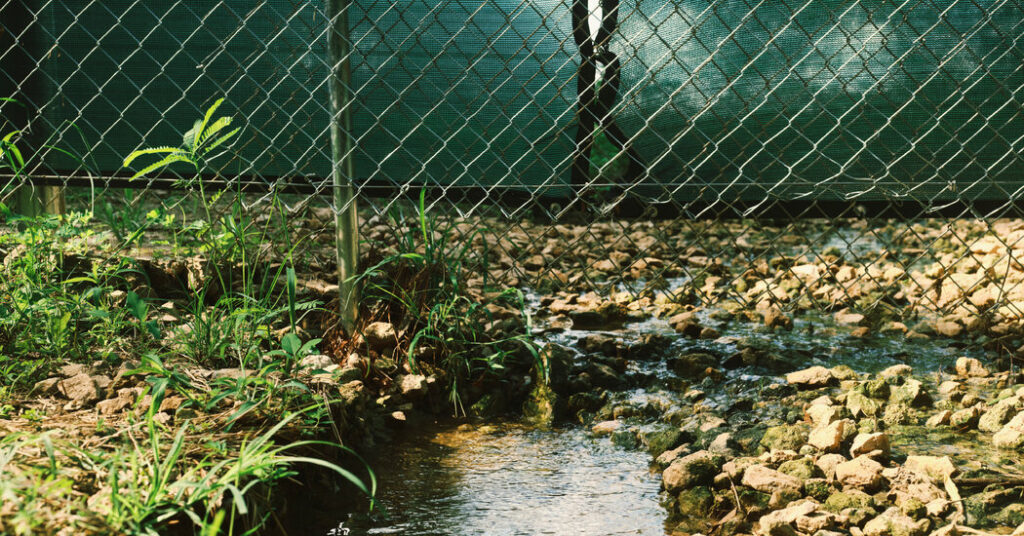
The clip posted online this spring showed greenish water gushing from the Trulieve property onto the adjacent property of Felicia and James Lamb. The video, posted by a relative of the couple, galvanized county residents against Trulieve, whose well-connected chief executive helped persuade President Trump to reclassify medical marijuana in April as a less dangerous drug.
“It was shocking to people,” Felicia Lamb said of the video. “People had heard about the runoff, but it’s another thing for them to see it.”
Residents soon packed Jefferson County commission meetings to complain about the smell and raise concerns that water from the one-million-square-foot indoor cannabis operation, one of the largest in the United States, was contaminating the soil. Trulieve officials have insisted that the water is safe, nothing more than normal runoff that flowed onto the Lamb property long before the company opened its “cultivation campus.”
The officials have also noted that Trulieve has reduced the smell wafting from its facility, by halting marijuana composting on site in recent months and installing powerful filtration systems.
“When a neighbor brings us a problem, we will keep working until we’ve done everything reasonably within our power,” Trulieve’s chief production officer, Kyle Landrum, wrote last month in an opinion piece in the Tallahassee Democrat — a response to Felicia Lamb’s own piece, published days earlier, criticizing the company.
The recent furor has prompted investigations into the Trulieve operation by several state agencies. It has also divided a rural community that was already grappling with change — and is now reconciling itself to an industry that employs nearly 300 people locally, but remains anathema to many.
“I don’t need drugs to enjoy my life but apparently some people do. That’s their business,” said Nancy Gebhart, 73, a retiree who lives across the road and often avoids going outside because of the smell. “Don’t force it on me. I shouldn’t have to put up with their stink.”
Ms. Gebhart and her husband said they want to sell their longtime home in Waukeenah, which has fewer than 200 residents, but that potential buyers don’t want to live near Trulieve.
The tension in Jefferson County echoes community pushback to the data centers springing up around the country. As the nation’s cannabis industry has grown, so have complaints from neighbors of cultivation facilities — but typically in blue states such as California and Massachusetts, where both medical and recreational weed are legal.
In Florida, marijuana is legal only for medicinal purposes. Trulieve, based in Tallahassee, became the first cannabis company to trade on a major U.S. stock exchange in June, a move enabled by Mr. Trump’s loosening of restrictions for medical marijuana. It operates nearly a quarter of the dispensaries in Florida and spent nearly $150 million supporting a 2024 ballot measure seeking to legalize recreational marijuana.
Gov. Ron DeSantis, a Republican, opposed the measure, and it narrowly failed.
Forbes described Kim Rivers, Trulieve’s chief executive, as the cannabis industry’s “Trump whisperer” for her role in persuading Mr. Trump to reclassify medical marijuana under federal law. Analysts say the move will sharply increase profits for cannabis companies by easing their tax burden.
The Lambs’ chief concern is the water flowing from Trulieve’s storm-water pond onto their land. Until the video went viral, they had worked quietly with Trulieve for several years to stop it.
On a recent weekday, the couple trudged down a path lined with wild grape vines and oak trees draped in Spanish moss, near an old hunting camp. Felicia Lamb’s grandfather used to shoot wild turkeys there with Lawton Chiles, a former Florida governor.
The Lambs arrived at a water-filled scar in the earth snaking hundreds of yards onto their property from beneath a metal fence separating it from Trulieve. “It looks like a creek but it’s not,” Felicia Lamb said. “This didn’t exist before Trulieve.”
James Lamb said he commissioned a water test in March that revealed an unsafe level of nitrates, commonly found in fertilizer, which made him wonder if pollutants were seeping into the ground water and a nearby creek.
Their complaints struck a nerve with the public, amplified online by a group called Concerned Residents of Jefferson County. Its spokeswoman is Cindy Pyburn, a retired banking executive turned civic activist.
Ms. Pyburn said neighbors feel like the facility has expanded well beyond what was promised years ago.
“I have no issue with medical marijuana. I wish it weren’t in Jefferson County,” she said. “But they could be managing a business like good corporate citizens.”
As state agencies began investigating, the Florida Department of Health distributed free water-testing kits at the local Dollar General.
The local water management district conducted two inspections and found “apparent violations” involving the storm-water pond. Trulieve responded that the Lambs’ claims of polluted water and excessive runoff were unfounded, and the pond complied with previously approved upgrade plans.
The Florida Department of Environmental Protection said in March that water testing at Trulieve showed no contaminates; the agency said its investigation remains ongoing. The Florida Department of Health did not return repeated requests for comment, but State Representative Allison Tant, a Democrat whose district includes the area, said that the agency had found no contaminants in local well water.
An environmental watchdog group, Blue Shirt Justice League, said last month that water samples from the Lamb’s property had only a low level of nitrates. Ms. Lamb noted that the storm water pond shouldn’t have any nitrates and that heavy rain that fell before the sample collection may have diluted the results.
A spokesman for Trulieve said residents had no need to worry.
“There has yet to be a single report from an independent agency showing any harmful contaminants. Period,” the spokesman, Steve Vancore, said.
For some in Jefferson County, the explanations are not enough.
The county, which has a population of 16,000, is close enough to Tallahassee that many residents commute there for work but is far enough away that they enjoy affordable spacious homes nestled among rolling hills. Residents proudly note that the county has no stoplights.
In Monticello, the county seat, which recently celebrated its annual watermelon festival, seemingly everyone has an opinion on whether Trulieve is helping or hurting their patch of Florida.
Jill Lynch, 65, said she drives past the facility a couple times a week with her granddaughters, who complain that the air smells like skunk. “I hope this isn’t affecting them,” Ms. Lynch said. “You know, like when you inhale that. I don’t know how it works.”
But even in this rural, politically conservative county, views on marijuana do not align neatly. The marijuana legalization measure only narrowly lost here. A smoke shop that sells cannabis products — though not Trulieve’s — recently opened in Monticello.
A state prison provides jobs in the county, but few dispute that the Trulieve facility also provides an economic benefit.
Dorothy Pulliam, 74, who volunteers at a thrift store in Monticello, said she harbors mixed feelings about Trulieve’s presence. “Where else are you going to work here?” she asked.
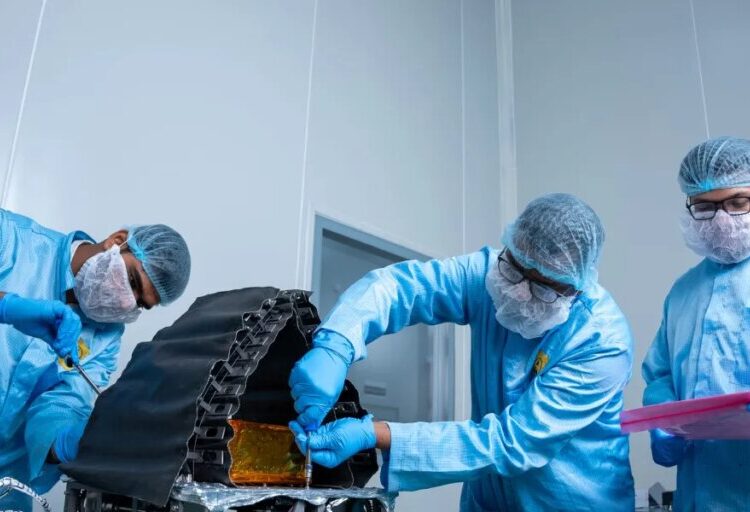
The facility consists of 11 buildings, where employees in white lab coats and hairnets cultivate medical marijuana sold only in Florida.
Workers snip mother plants — strains with names like Papaya Drip, Baby Turtle and Mint Sherbet. The cuttings are eventually planted in grow rooms for each stage of cultivation, irrigated with recycled water on timers and cycled between bright light and near darkness. Once the plants reach four to five feet, workers harvest them by hand before they are transported to another Trulieve facility for processing.
Jerry Loudermilk, 49, a Jefferson County resident, worked at a Tallahassee Target before accepting a job at Trulieve as a cleaner.
“There’s a few around here that don’t care for us right now,” he said. “As far as I’m certain, I love it.”
He just completed his fifth year on the job.
The post A Marijuana Giant That Won Over Trump Has Found Enemies Closer to Home appeared first on New York Times.