In a written statement on the anniversary of Robert E. Lee’s surrender at Appomattox, President Trump described the Confederacy’s defeat in 1865 as the end of “four brutal years of suffering.” Rather than condemn the Confederacy’s treason or name slavery as the cause for which it fought, Mr. Trump quoted Ulysses Grant’s remarks to the vanquished army: “The war is over. The rebels are our countrymen again.”
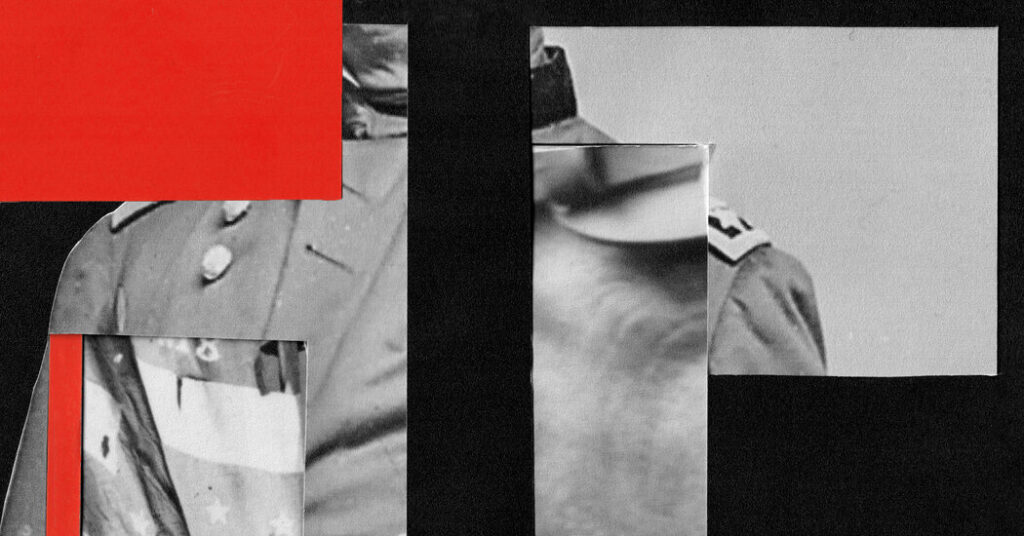
Rebranding rebellion is nothing new. Americans take it for granted that the war between the Confederate states and the Union was always called the Civil War, but it was not. During the war and in its aftermath, it was primarily called an “insurrection” or a “rebellion.” Its current name is a result of decades of lobbying by Confederate heritage groups and white Southerners committed to rejuvenating the South’s image and ignoring its treason and slaveholding.
As Mr. Trump and his allies try to whitewash the Jan. 6, 2021, insurrection, we should return to an older and far more accurate name for the Civil War. We should once again call it the Slaveholders’ Rebellion. If a country unquestioningly adopts language that obscures its bloodiest crimes to absolve their worst perpetrators, how can we expect successive generations to remember the new assaults on democracy without deploying equally forgiving language?
In the war’s early years, the South’s rebelliousness was emphasized in part as a legal necessity. Congress was underlining the president’s constitutional authority to call forth the militia to suppress the Southern revolt. But in the decades after Lee’s surrender, Confederate heritage groups lobbied Congress, educators and the broader public to adopt a name for the war that avoided calling the Southerners “rebels.”
The use of “Slaveholders’ Rebellion” began early. Senator Samuel C. Pomeroy’s July 1861 bill to “suppress the slaveholders’ rebellion” was one instance. But the language was subject to debate. One senator who later defected to the Confederacy said it created “odium and prejudice against a particular interest” — that is, slavery.
Conventions shifted only decades after the war, when white Southerners and their representatives in Congress collaborated to rewrite the history of the conflict. In 1899, one group pushed to expunge references to “rebellion” from historical and public discussion of the war. They preferred the misnomer “War Between the States,” freeing the Confederacy of the stigma of revolt. From 1905 to 1911, the campaign’s sympathizers in Congress moved to strike “War of the Rebellion” — the common name at the time — from legislation. “Civil War” became a compromise solution, mollifying Confederate nostalgics while being more acceptable to their opponents than War Between the States.
Other nomenclature followed. The Dewey Decimal System shifted its classification from “Rebellion, Southern” in 1876 to either the same term or “Civil War” two decades later. In 1895, the American Library Association directed its readers looking up “Rebellion” to instead search “U.S. History, Civil War.” In 1907, Congress declared a preference for “Civil War,” too. To this day, though, the U.S. Government Style Manual lists Civil War, War of the Rebellion and War Between the States as acceptable, a paper vestige of a hard-fought linguistic battle. One is an agreed-upon euphemism; one is accurate; the last is a lie.
American society’s use of Civil War to rhetorically veil the slaveholders’ rebellion has consequences. After the redemption of the Confederacy, ex-Confederates and their heirs helped create a regime of anti-Black violence by instituting a legal architecture of disenfranchisement and lynching. That is what makes confronting how we refer to the Civil War a civic imperative. The danger of rhetorical abstraction lies not only in its distortion of the past, but also in its pre-emptive justification for future assaults on democratic life.
When Mr. Trump pardoned the Jan. 6 insurrectionists, he described them as victims of a “grave national injustice,” framing their release as an act of “national reconciliation.” It was a demonstration of the power clichéd tropes and evasion have to rewrite a country’s moral code, rendering treachery as justifiable as patriotism. Jan. 6 became simply “the events.”
Yet Mr. Trump’s obfuscation of the insurrection could not erase the character of the rebels he sought to absolve, many of whom returned to criminal enterprises following their pardon. In February, Christopher Moynihan, who was among those who breached police barricades at the Capitol, pleaded guilty to charges associated with threatening to kill Representative Hakeem Jeffries. Enrique Tarrio was serving a 22-year sentence for seditious conspiracy for his role in the insurrection when he received Mr. Trump’s pardon, only to be arrested a month later at the Capitol on charges of simple assault.
These pardons operate using the same logic of rehabilitation once used for the Confederacy, even if the consequences have not registered on the same scale. In both instances, moral laundering begins by changing the label applied to rebels. Mr. Trump’s use of “national reconciliation” in his pardon helps revise the meaning of Jan. 6, reframing insurrectionists as martyrs and violent attempts to suppress American democracy as acts of patriotism.
The linguistic whitewashing of the Confederacy is more than a manufactured myth of Southern redemption. It is a ritual of national forgetting, one in which American society participates every time we call the Slaveholders’ Rebellion against the United States the Civil War. “Civil War” is no name for a war waged by slaveholding traitors against the United States to hold Black Americans in human bondage. Now, 165 years since the war’s first shots, we should be honest about how we hold its memory.
Anthony Conwright is working on his first novel, “Speak, Blackness.”
The Times is committed to publishing a diversity of letters to the editor. We’d like to hear what you think about this or any of our articles. Here are some tips. And here’s our email: [email protected].
Follow the New York Times Opinion section on Facebook, Instagram, TikTok, Bluesky, WhatsApp and Threads.
The post It Wasn’t a ‘Civil War.’ It Was the Slaveholders’ Rebellion. appeared first on New York Times.