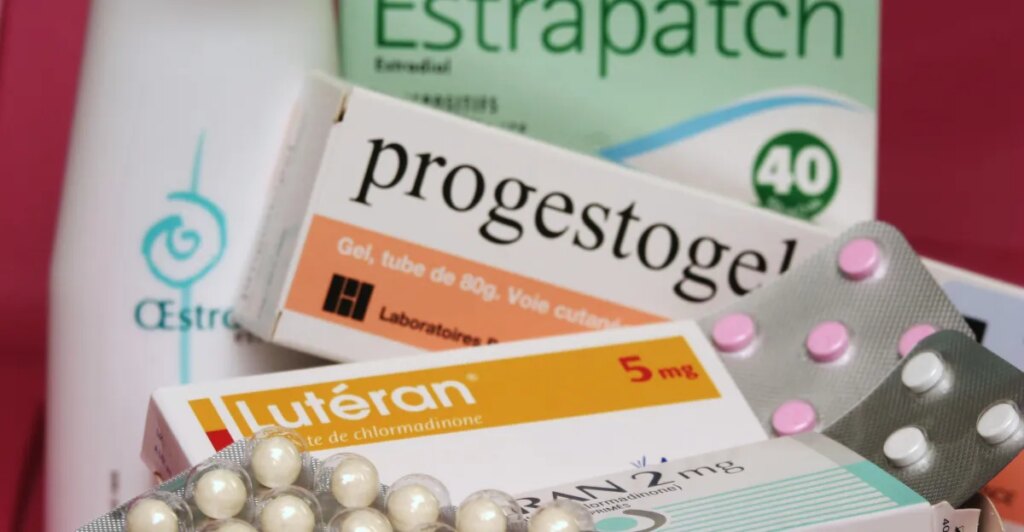
Medicine has come a long way. We are living longer than ever, we have eradicated diseases that once seemed like a certain death sentence, and new improvements are constantly being made to our quality of life. But despite all the advances, there’s a huge gap in women’s health. “I think there’s such an interconnectedness between society, culture, medicine, and science,” Dr. Elizabeth Comen told Vox. She’s a medical oncologist who specializes in breast cancer and an associate professor at NYU Langone. She says medicine often mirrors what’s happening in society at large. “For many societies across the globe, women did not have equal agency or power over their bodies, and that’s really reflected in the history of medicine.”
It’s reflected in medicine’s present, too. The share of women with heart disease in the United States is rising, there’s a cultural backlash and skepticism surrounding birth control, and almost half Americans are turning to social media influencers (many of whom aren’t credentialed) for medical information.
Why is there such a disconnect when it comes to health care for women? And what will it take for it to end? We find out on this week’s episode of Vox’s weekly call-in podcast, Explain It to Me.
Below is an excerpt of my conversation with Evans, edited for length and clarity. You can listen to the full episode on Apple Podcasts, Spotify, or wherever you get your podcasts. If you’d like to submit a question, send an email to [email protected] or call 1-800-618-8545.
We are at this point where we know more about our bodies than we ever have before. Sometimes you go to the doctor, and it feels like they’re still catching up on some pretty basic aspects of women’s health. Why does it feel that way?
Because it’s true. It takes a long time for medical science to catch up with the glaring gaps in our healthcare system. The gaps are not just about the obvious women’s health issues. We focus a lot on breast cancer. We focus a lot on reproductive function or our gynecological needs. But the gaps exist head to toe from our neurologic care, our gastroenterology care, how our hearts function, how our immune system functions, how our joints function. The gaps are real, and the experiences are real.
Can you walk me through some of the history? What did it look like to study women’s health before the 20th century? What were we dealing with?
When we think about modern medicine today and these specialties of urology, gastroenterology, they really didn’t exist before the 1900s at all; those are relatively new concepts. For much of the history of medicine, at least in the Western world, the idea was that, at best, we were small men and, at worst, there were many ridiculous diagnoses like hysteria and a long legacy of dismissing women’s medical needs because we were largely not taken care of by women. Those women that were caregivers in the history of medicine, whether it was the midwives or other types of healers, were largely pushed out of medicine as it became codified, and the idea of medical science really came to rise in the late 19th century.
So, I’m guessing that they weren’t really talking about menopause at the time, let alone perimenopause.
Perimenopause wasn’t even discussed. That’s a relatively new term and new part of our lexicon when it comes to lay discussion and the public at large. With respect to menopause, one of the famous physicians, Roger Wilson, wrote a book [called] Feminine Forever and referred to women going through menopause as vapid cows. He was the one that advocated in the 1960s and 1970s for women to be on hormone replacement therapy. But understand that, in the 1850s, it’s not like people really were wildly aware of what estrogen, and testosterone, and progesterone did. These are all relatively new ideas — the concept of hormones and how they can travel in our body. And again, we have a long way to go.
I read that women were rarely included in clinical trials until the National Institutes of Health mandated it in 1993. I find that so surprising. Why were women missing there?
Well, these studies were not designed with women in mind. Some of the massive cardiology studies for drugs that we use day in and day out were done on thousands of men and not women. There is so much to that history, including the animal models on which many of these drugs were developed. In order to develop a drug, often, they are developed on mouse models first. It wasn’t until 2016 that you were even required to state the sex of the mice that you were studying. In many of these instances, female mice were not even included in drug development.
Oh my gosh — even the mice? How were these hormones marketed to people when hormone replacement therapy first became a thing?
It depends on which advertisements that you look at. If you look at advertisements of women in the 1950s, ’60s and ’70s, a lot of women were being prescribed anti-anxiety medicine. “Can’t manage your household at home? Don’t want to take care of your kids? Here’s what will sedate you and at least make you able to prepare breakfast for your husband.” It’s really shocking, and yet, not that surprising. If you look at Instagram today, are we really that far off from what gets marketed to women? Women sink billions of dollars probably into sham supplements and sham treatments, because they don’t feel cared for when they go to the doctor. And what fills that space? A lot of people trying to market things that have no proven evidence.
I think it’s really interesting that, at one point, hormone replacement therapy was this big thing, because I feel like growing up in the ’90s and 2000s, hearing women who are older than me speak, they were kind of anti-hormones. How did the pendulum swing that way?
Well, the pendulum has swung in wildly different directions. At first, it was: Every woman needs to be on it. And there were wildly successful sales. Then, there was the women’s health study that exaggerated the risk of breast cancer. Understandably, women were terrified. They were told by the media and by reputable scientists that these risks were significantly high and that they could not be on it, and we didn’t leave them with any alternatives. Now, we’ve become much more granular about what we know and what we don’t know, but I still think we’re far behind on the science. There’s still a lot that we need to learn, but, fortunately, an understanding of the prior studies and what their limitations are has come to light.
There are all these gaps in trust and treatment. There’s going to be a fair amount of snake oil out there, but are there ways that this moment is actually driving better treatment for women?
I’m so grateful that we’re talking about it, but I am terrified of what I see from influencers on Instagram. People can fake their knowledge. There’s so much fake imagery and information that is out there. I wish that we could invest this in quality science, which is long and laborious and painful at times but gives us the quality answers that we need. Every day, I see the consequences of fake information online, whether it’s an incredible loss of financial resources or just wasting money so that you could buy a nice pair of shoes. That would make you feel better than the ridiculous thing online that’s over promising and under delivering. The fear mongering is out of control.
What do you think it will take to trust their doctors again, rather than turning to the treatments they’re being sold online that might be dangerous? What will it take for them to feel good about the interactions they’re having at the doctor’s office?
I think it’s going to be really challenging. We can’t blame patients, because we’ve done them a disservice. Medicine has fragmented the care of many patients — not just women, but men as well. We have to build a health care system that allows for time to be with patients and really hold space for them. I think that’s where the trust is really going to be built, because, at the end of the day, despite all the technology that’s available, medicine is about human to human care. That is what everybody wants to be treated as: a human to be seen and heard in the ways that you can’t just reduce a body to biology.
The post Why it took so long to talk about perimenopause appeared first on Vox.