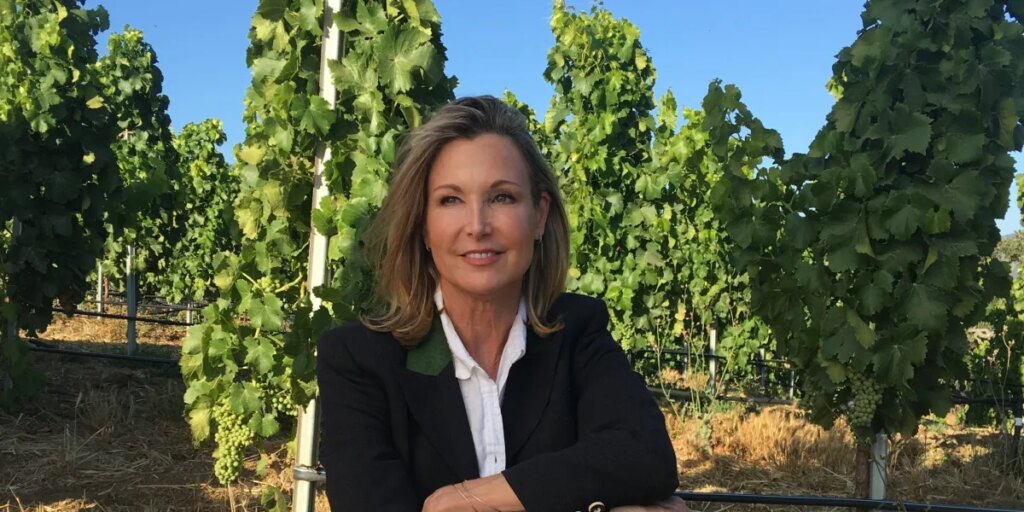
When Kim Busch sat in medical center waiting rooms with her husband, Andy, she couldn’t help but notice the forlorn faces of other patients who couldn’t afford to have their families there with them.
The Busches knew they were fortunate. They lived close enough to drive to treatment for Andy’s glioblastoma, an aggressive malignant brain tumor; they could book a hotel for an early scan; and they could hire a driver when Andy’s seizures meant he could no longer get behind the wheel himself. Around them, they saw people for whom none of that was possible. Affording these hidden care costs was possible for the Busches due to the success of their vineyard, Folded Hills, and, in part, their family name. (They’re connected to the Busch family of Anhauser-Busch, the world’s largest brewing company).
“We’ve always known how blessed we are,” Kim told Fortune in an exclusive interview. “We have resources that others don’t.”
That contrast between what the Busches could afford and what they watched other families go without became the seed of Grapes for Glioblastoma, the nonprofit Busch launched through Folded Hills, the Santa Ynez Valley, Calif., winery she co-founded with Andy. She chose to fund something most cancer giving overlooks: the everyday costs of living with brain cancer.
Glioblastoma is the most common and most aggressive primary brain tumor in adults, with a median survival of roughly 12 to 16 months even with treatment and a five-year survival rate below 10%. Andy was diagnosed in August 2023 after a sudden seizure. The tumor, lodged deep in his temporal lobe, was inoperable. More than two and a half years later, he is defying the odds.
“I don’t think Andy would be alive without research,” Busch said, crediting the science that has kept her husband going. But giving strictly to research wasn’t a major focus for her.
“What gave me this idea wasn’t ‘I want to do something for glioblastoma.’ It was that we were sitting in these hospital rooms,” she said, watching exhausted caregivers and hearing about patients who couldn’t climb the stairs to their own bedrooms because they needed a chair lift no one could pay for.
The costs no one sees coming
The expenses Grapes for Glioblastoma covers are deliberately different from what cancer philanthropy typically funds. Instead of research, the fund pays for the practical, often invisible costs of a devastating diagnosis: travel to medical centers, lodging, meals, childcare, caregiving support, and home accommodations such as chair lifts. These are bills that can run anywhere from hundreds to several thousand dollars a month.
“Insurance doesn’t cover that,” Kim explained. The fund operates through a fiscal sponsorship with the Los Angeles–based Edward Charles Foundation, which lets it move quickly while Busch decides whether to eventually form her own 501(c)(3). By rule, it cannot write checks directly to patients. Instead, funds go to the caregiver, the contractor, or the service provider.
That direct-to-family model is noticeably different from how big philanthropy operates. The wealthiest American donors are pouring money into systemic change and research—MacKenzie Scott alone has given away more than $26 billion since 2020—and a recent Milken Institute report found a younger generation of heirs is pushing families to give faster and more strategically, often through impact investing and advocacy rather than checks to grantees. Busch’s bet is smaller and more intimate.
The approach was already working, even before any formal launch. One of the fund’s first recipients, a man in Colorado whose wife is battling the disease, found Busch through her Substack. After the couple’s planned caregiver (their daughter-in-law) died suddenly, Busch said the fund arranged help within days, and the man was soon able to take a road trip to see grandchildren he hadn’t visited in months.
“It’s these simple, simple things that personally we just don’t take for granted,” she said.
From beer dynasty to a winery she runs herself
The philanthropy is woven into a business Busch now runs herself. She and Andy launched Folded Hills, a 600-acre working ranch, vineyard and farmstead near Santa Barbara, in 2017. Kim handled marketing, hospitality, and culture before leaving in May 2020, and said she never expected to return. Andy’s diagnosis pulled her back overnight—a common reality for glioblastoma families, since the disease often forces patients to stop working.
Today, Busch said, Folded Hills is led entirely by women, including its general manager, CFO, director of hospitality, wine club manager, and winemaker. It’s an unusual circumstance in an industry where, she said, men still own and make the overwhelming majority of wine.
Giving has long been built into Folded Hills’ operation. Every month, the winery hosts a “Philanthropy Friday,” donating 100% of proceeds to a featured charity; the program gave away more than $200,000 in 2025. As of May 1, a portion of every bottle sold—10%, Kim said —now goes to Grapes for Glioblastoma.
The brewing heritage is part of the Busches’ story. Andy is a son of August “Gussie” Busch Jr., who built Anheuser-Busch into the world’s largest brewery, and the family’s St. Louis roots run through Folded Hills. After all, its heritage wines are named for Busch forebears. But Kim was emphatic the dynasty is not the point of the philanthropy. The couple specifically left St. Louis to raise their sons away from the family name, and she declined to discuss the family’s net worth, saying any figures would be speculative.
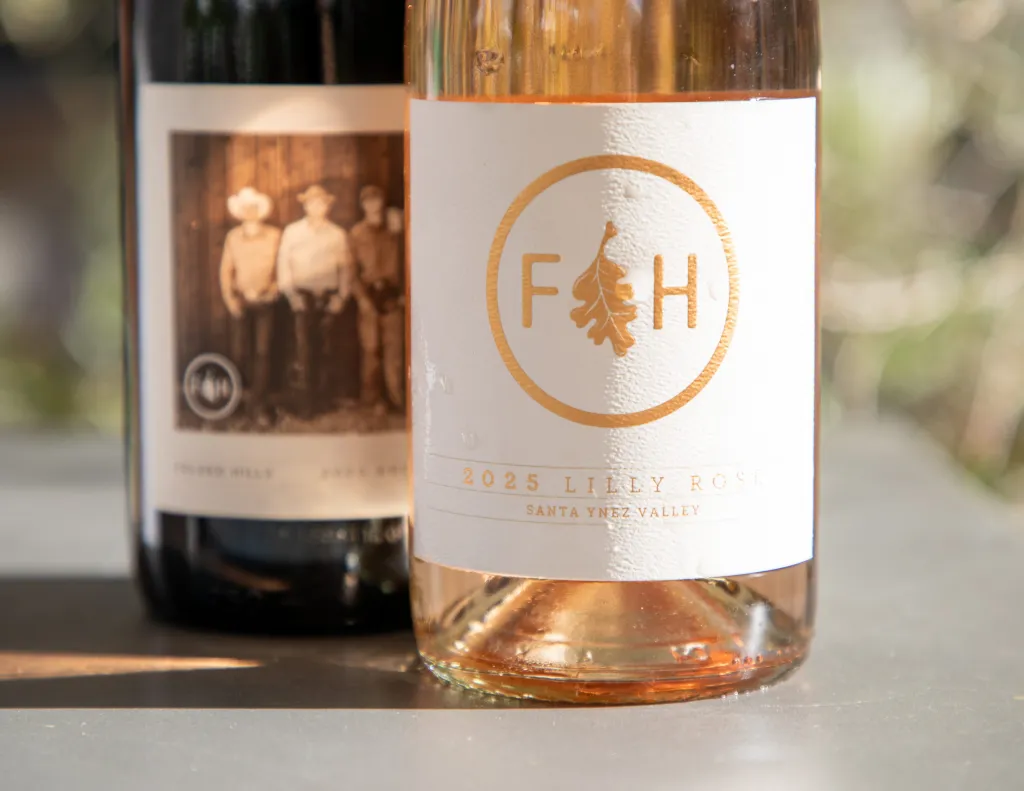 Photo courtesy Emily Schroeder
Kim was also candid pairing a luxury hospitality experience with one of the most devastating diagnoses a person can receive is a balancing act she is still learning. At a recent wine club event, she mentioned the cause in passing and later found a table of guests in tears. But a subsequent Philanthropy Friday for Grapes for Glioblastoma drew some 200 people.
While the fund has had only two grantees so far, Busch expects more once word spreads.
“I know that there are people who need help,” she said. “I just know it.”
The post Most cancer philanthropy funds research. This winery cofounder is paying for the caregivers and chair lifts families can’t afford appeared first on Fortune.