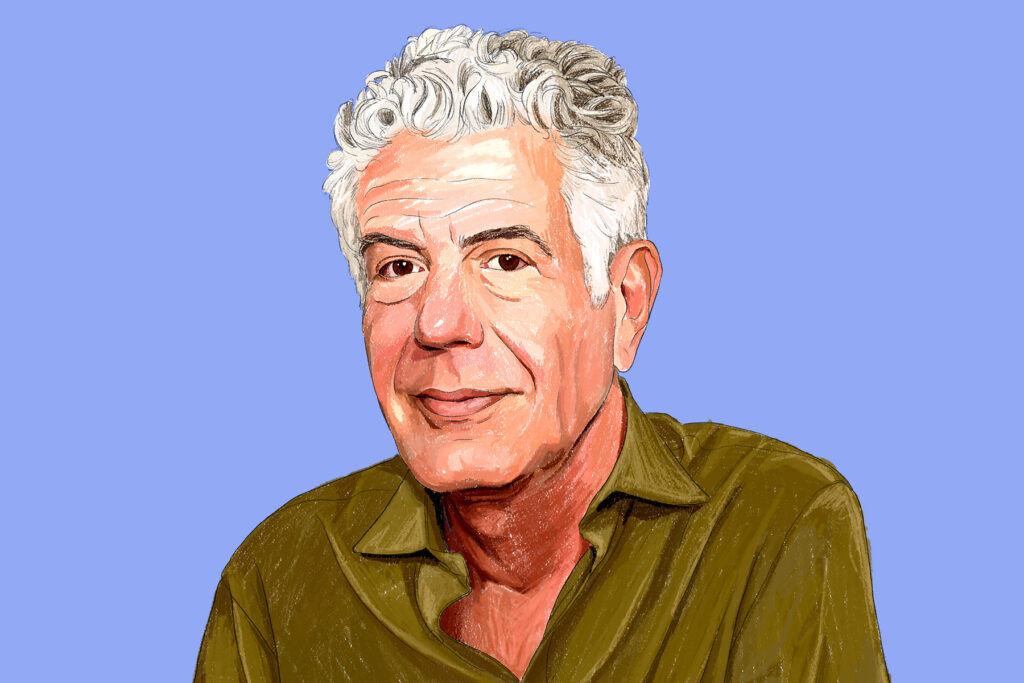
Bourdain would be 70 this week, if not for his suicide eight years ago this spring. For years I watched and listened to him — because he seemed to see and hear me.
Here’s what first drew me to Bourdain: He understood the way hospitality operates like a fine-tuned machine but was powered by so-called misfits — people often seen as outsiders in society, people like me. Immigrants, LGBTQ+ people and artists. Recovering addicts, aspiring actors and single parents. People who are rebuilding their lives one shift at a time. People who somehow, amid the stress and dysfunction and long hours and low pay, merge into families.
When I began this work, I pushed through event shifts that left my feet blistered and my nervous system oscillating between adrenaline and collapse. My days melted into banquet timelines, last-minute seating charts and clients who spoke about “simple elegance” while demanding gold-plated fixtures and fabrics like something out of Donald Trump’s penthouse.
I was 26, young enough to believe event planning was glamorous but seasoned enough to see that controlled chaos always prevailed behind the sparkle and lights.
Coming home after 14-hour days, my stained black suit smelling of sauces and sanitizer, the day’s disasters would run on a loop through my head. So I would kick off my shoes, collapse on my bed and watch Bourdain’s CNN show “Parts Unknown” long past midnight. Bourdain understood. He never romanticized hospitality work. He spoke honestly about burnout, ego, addiction, exhaustion and the invisible labor required to make beautiful experiences appear effortless.
I recognized every type of person he described. The banquet captain who taught me how to smile while quietly putting out emotional fires. The chef who could feed 500 guests while running on double espressos. The bartender who could see heartbreak from across the room. The dishwasher who barely spoke English but somehow became everyone’s smoke-break therapist.
“Everything important I learned, I learned as a dishwasher,” Bourdain said. The greatest education of my life arrived in service corridors, not classrooms. Working events meant witnessing people at the most emotionally heightened moments of their lives. I’ve seen parents shed tears during wedding speeches, families feign strength at gatherings after funerals and brides stress about name cards while fearing change.
Bourdain understood that emotional ecosystem better than anyone, and that’s what truly separated him from other food personalities. Food, for him, was a doorway into people’s lives. A street vendor in Vietnam became a story about resilience. Eating falafel in Jerusalem became a meditation on survival and memory. Meals were never simply meals; they were expressions of history, migration, labor, identity, kindness.
Above all, Bourdain showed me that food is emotional architecture. He expanded my palate, but more important, he expanded my empathy.
There is a moment in nearly every episode of Bourdain’s shows when he stops narrating and simply listens. Those scenes stayed with me most. In an industry obsessed with presentation, listening felt radical. He gave dignity to the people usually hidden behind the scenes.
That’s why his death felt so personal to so many who never met him. When I heard he died by suicide on June 8, 2018, I was between event contracts and questioning whether the hospitality industry I loved was slowly draining me away. I remember sitting alone scrolling through tributes from chefs, bartenders, caterers, servers, planners and travelers around the world. It did not feel like the death of a celebrity. It felt like losing the one person who had been translating our strange, exhausting world into something visible and human.
“If I do have any advice for anybody, any final thought, if I’m an advocate for anything, it’s to move,” Bourdain said at the end of the last episode of “No Reservations,” his earlier Travel Channel show. “As far as you can, as much as you can. … The extent to which you can walk in somebody else’s shoes — or at least eat their food — it’s a plus for everybody.”
Now, on what would’ve been his 70th birthday, I find myself returning to him. Not because I miss his anecdotes, though I do, but because I miss what he represented: curiosity without pretension, intelligence without snobbery, and the belief that food can still gather strangers at a table.
Because it was never just about travel or a meal, not for Bourdain and not for me. It was about staying curious and compassionate in an increasingly transactional world.
The post Why I’m celebrating Anthony Bourdain’s birthday this week appeared first on Washington Post.