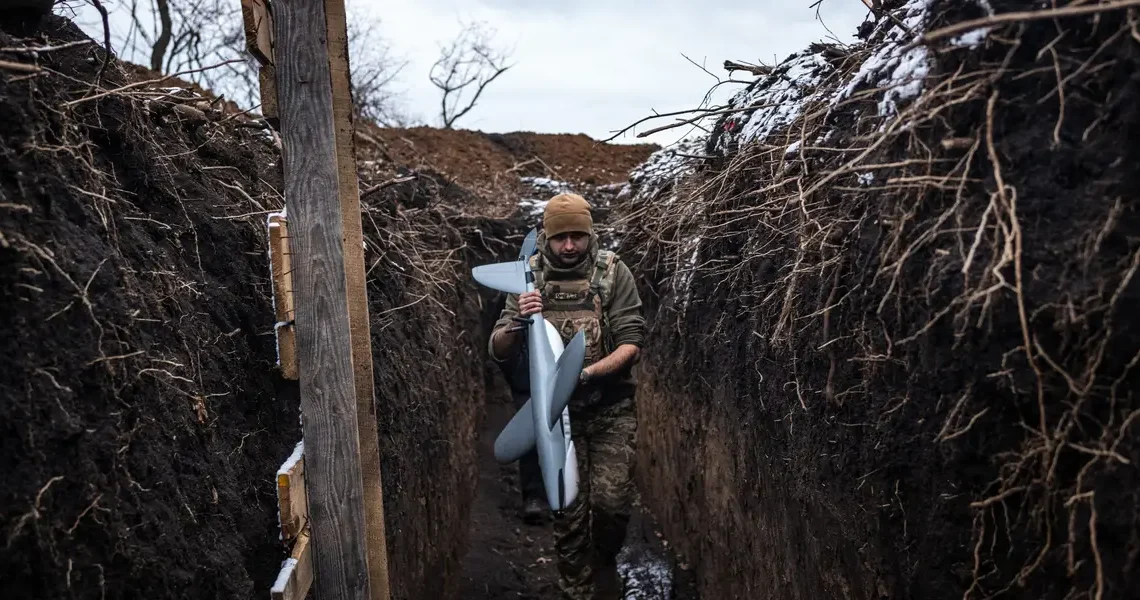
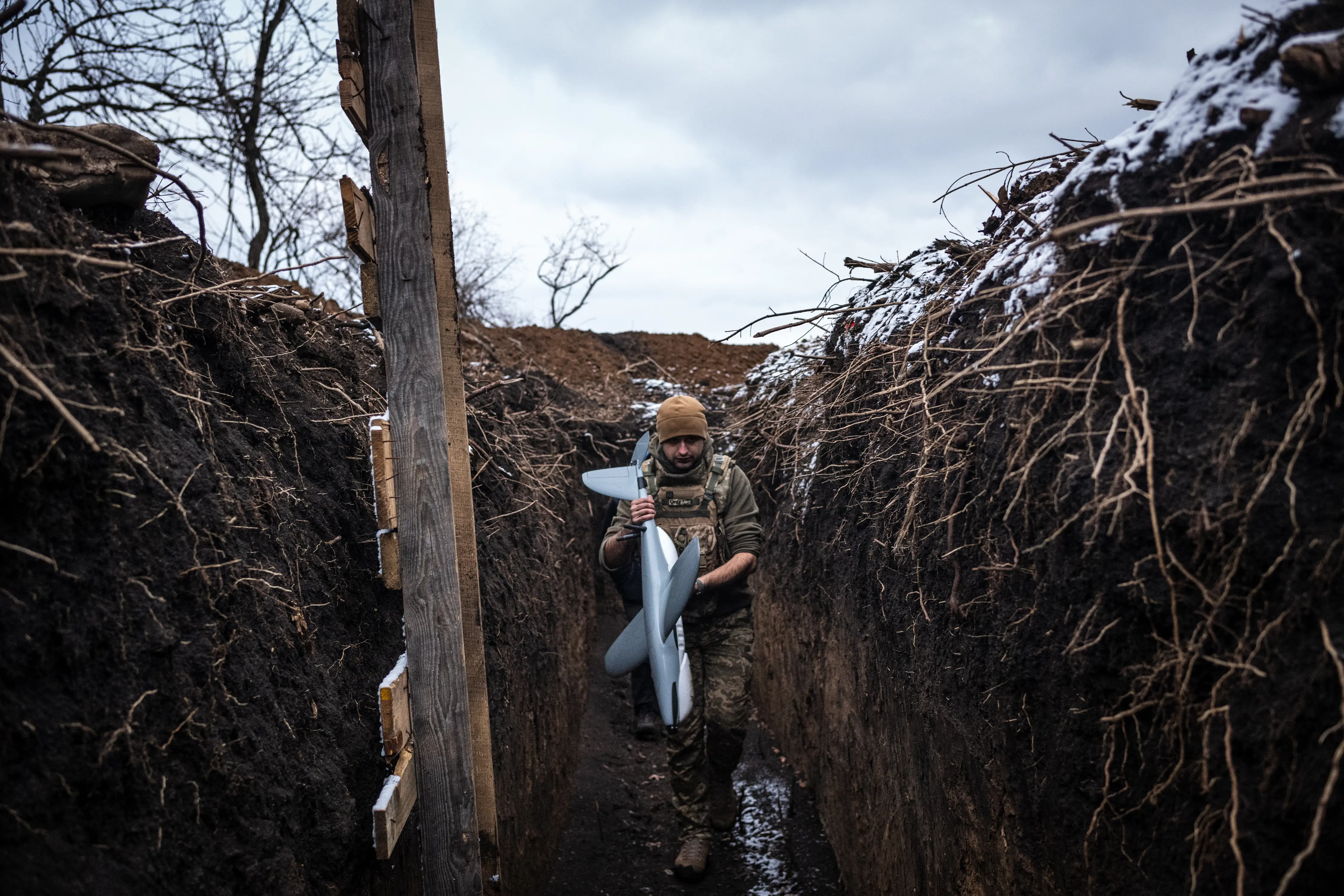
Ukraine’s drone operators aren’t necessarily spared from the horrors of war because they pilot remote systems, a senior official said. Many are in the fighting, and they’re often top targets for the enemy.
Taras Berezovets, head of the military cooperation department of Ukraine’s Territorial Defense Forces, a part of Ukraine’s armed forces, said that with drone operators, “they do just the same job” as other soldiers. “To say that they are doing their job in much safer conditions is completely wrong.”
“We should never forget that drone operators are the primary targets for Russian units,” he added, speaking at a recent drone summit in Latvia. “They are trying to kill them,” he said, just as Ukraine is trying to do to Russian drone pilots.
“Drone operators are first of all soldiers, and they are subject to the same psychological problems and traumas” as any other soldier, Berezovets said, explaining that he would never consider operators differently.
Dmytro “Liber” Zhluktenko, a former drone operator who is now a lessons-learned analyst with Ukraine’s 413th Unmanned Systems Regiment “RAID,” told Business Insider that operators don’t feel they are in any less danger because they have a remote-controlled weapon. “It’s not like that,” he said, rejecting the idea that the role is safer. “It’s very dangerous.”
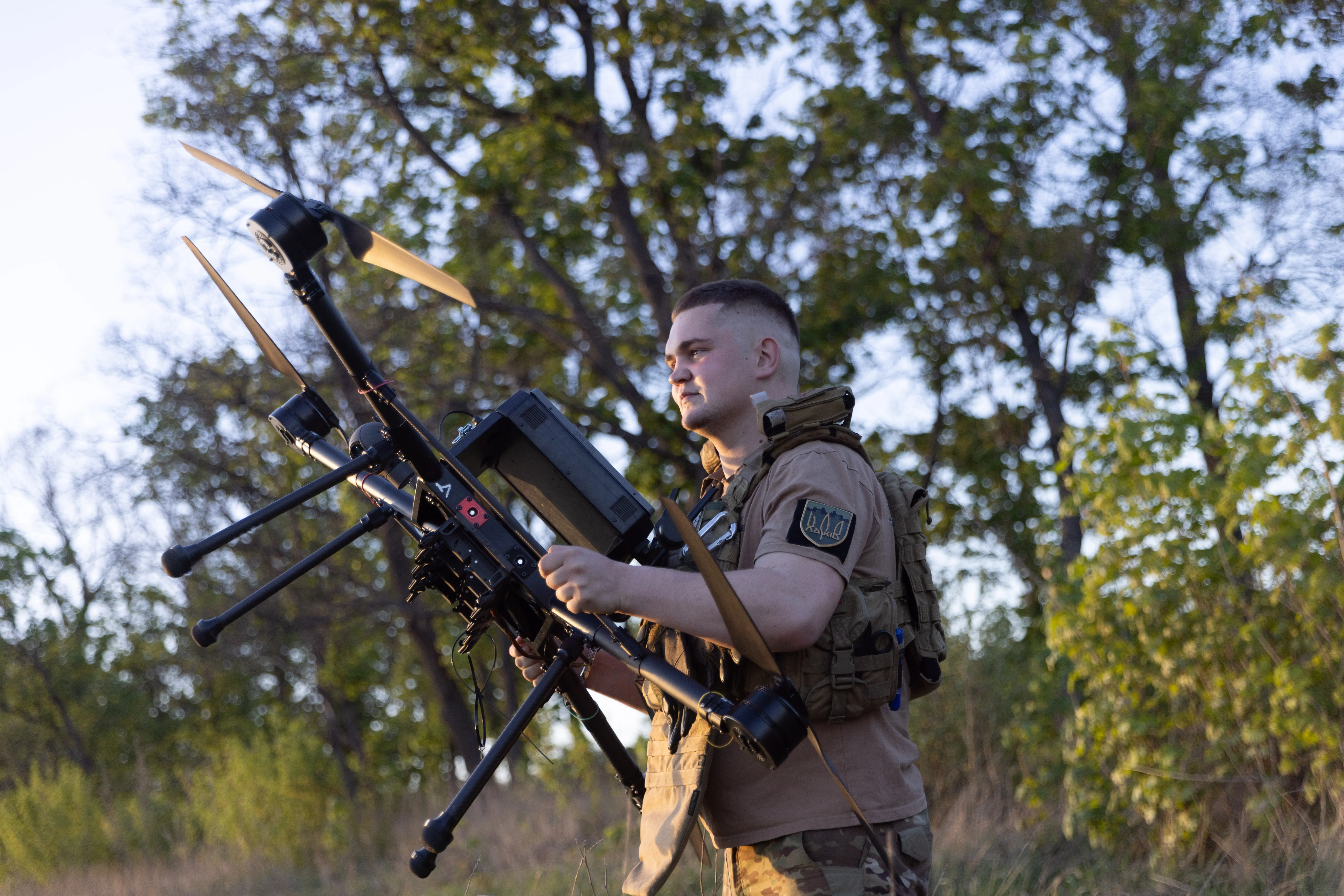
“In some of the cases, we have our drone operators engage in small arms combat like infantry,” he said, “So it’s basically infantry with the drones.” It means getting close to a fight, as soldiers with other weapons do.
Drones are a crucial weapon for both Ukraine and Russia in this war, filling shortages of both weapons and manpower. Ukraine says that drones are now causing 90% of Russia’s front-line losses as usage expands.
Drone operators are also force multipliers. One pilot can launch countless drones over a deployment to scout and gather intelligence on enemy movements and targets or to launch cheap attacks on soldiers and weapon systems, including expensive gear.
That makes them priority targets.
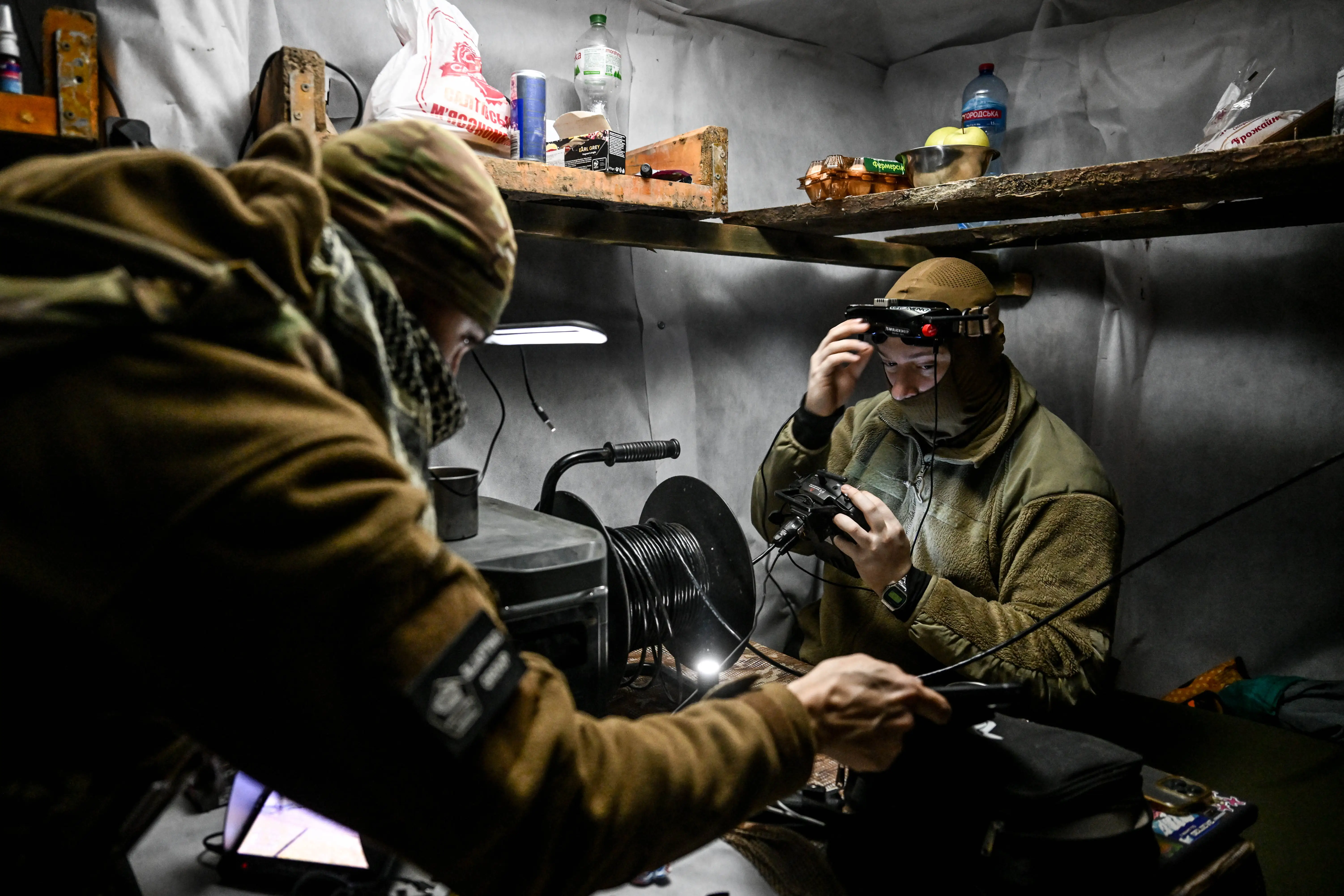
The operators that control Ukraine’s spy and strike drones often have to get close to the front lines to preserve the connection with their drones and to work effectively with regular infantry. It means they have to move, hide, and survive just like other soldiers.
Soldiers and drone operators have told Business Insider that Russia treats drone pilots as high-value targets because of the damage they can do on the battlefield. They said Russian forces have intensified attacks with missiles, bombs, and other weapons to hunt those operators, while Western analysts have noted rising casualties among Ukraine’s drone pilots.
One drone operator, who spoke to Business Insider on the condition of anonymity to discuss sensitive military issues, said “when the enemy spots a drone operator somewhere, it uses every single thing at its disposal — every type of weaponry” — to eliminate them. And Ukraine is targeting Russian pilots, too.
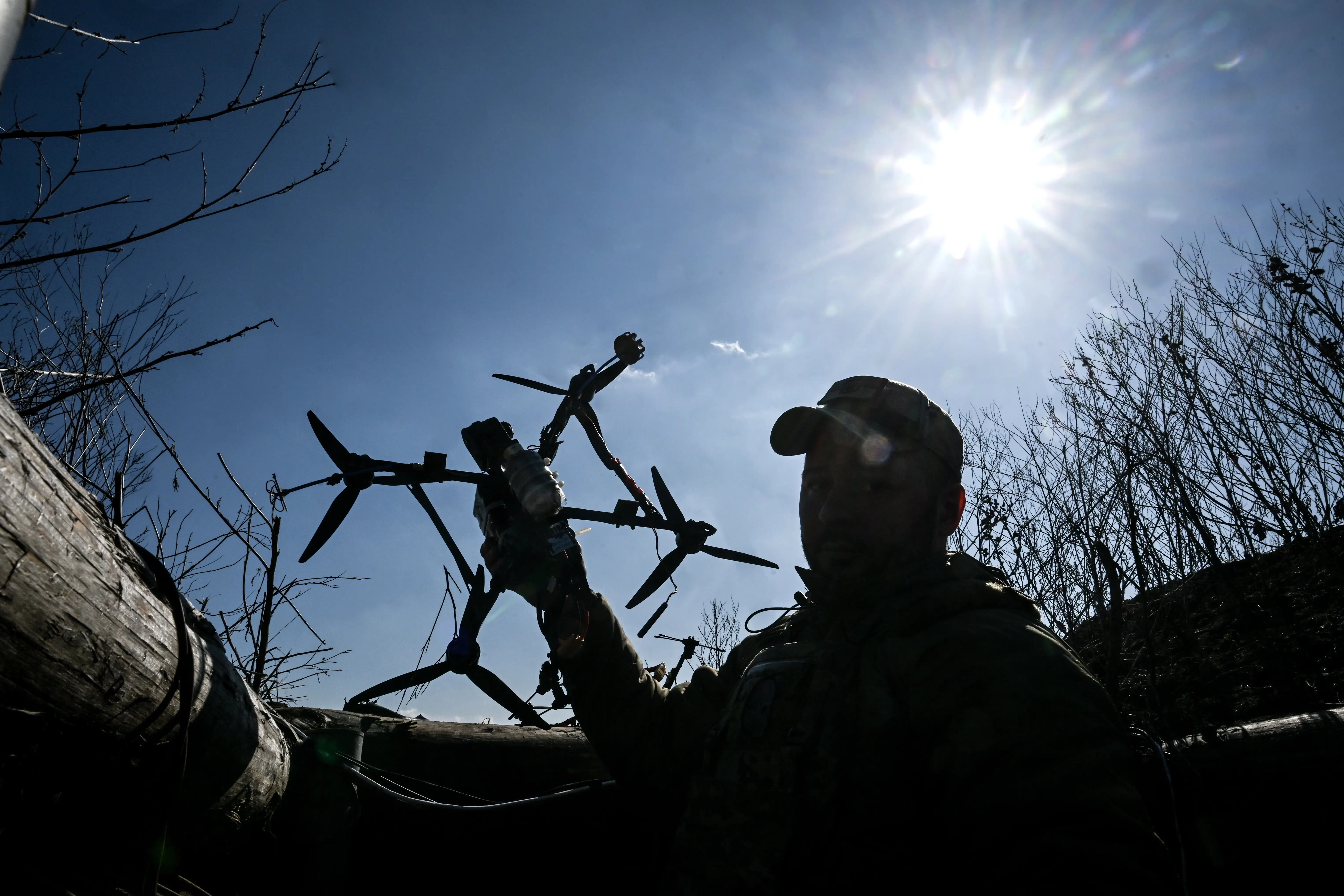
Ukraine is working to develop solutions to protect its drone operators by keeping them farther from the fighting to decrease the risk. For instance, there is new remote-control technology that allows interceptor drone pilots to control their drones from hundreds of miles away from the launch point. But many drone types still require operators staying much closer.
Zhluktenko said that Ukraine wants to have fewer people at risk on the battlefield, but that’s not always possible.
Sometimes they move operators farther back for their safety, “even if it comes at the expense of our capabilities, because these are our people and we value them so much.” He described it as “a very tough balance.”
“We want to keep them extremely safe, but at the same time, there is some work to be done,” he said.
Ukraine is heavily pushing autonomy so drones and robots can operate with less human control, keeping soldiers farther from the fight. It’s part of a broader effort to move troops out of the most dangerous areas, including by scaling ground robots that could eventually handle front-line logistics.
Mykyta Rozhkov, chief business development officer at Ukrainian drone and weapons maker Frontline Robotics, told Business Insider that “the general trend is to get the pilots as far as possible” from the front line, with the absolute bare minimum of soldiers used in dangerous areas when drones and robots can’t handle it alone.
But, for now, drone operators and other soldiers remain at risk.
“Russians are right now prioritizing hitting not the assault troops or soldiers;” instead, they are aiming at drone and ground robot operators, he said.
Western militaries watching the war are also aware of how at-risk drone pilots can be. The US Army course designed to catch the force up on drone warfare is teaching soldiers what it feels like to be hunted.
Maj. Rachel Martin, the course director, previously told Business Insider that the instructors deliberately use drones against students to help them understand “what it’s like to be hunted by another operator from an adversary force: what it sounds like, what it feels like, how often they need to displace in order to survive or not be observed.”
That matters because “the minute you’re observed, you need to move,” she said. “What follows that is usually fires of some capacity,” such as artillery.
She said that the goal is to simulate an enemy force actively searching for them and to test their reactions “so they get used to one being hunted by the enemy.” The US is used to having control of the air in its conflicts, where anything in the air above them is likely friendly, but that may not be the case in future fights.
Berezovets said Western militaries should study Ukraine’s experience, including how heavily Russia targets drone units and command centers. He said Ukraine has to keep moving them because “this war, especially in terms of the drone war, is like a cat-and-mouse game. The Russians are always searching for the locations of our drone units.”
He said allies ought to consider building drone command centers “deeper underground,” like Ukraine does when it can, even though it’s expensive work. He said that “they should be as deep as possible.”
Read the original article on Business Insider
The post Drone operators aren’t spared from the horrors of war, and they’re top targets appeared first on Business Insider.