This is an edition of The Atlantic Daily, a newsletter that guides you through the biggest stories of the day, helps you discover new ideas, and recommends the best in culture. Sign up for it here.
It was one of those days when everything happens. On the morning of Friday, June 19, 1936, more than 50,000 Black visitors descended on Fair Park, in Dallas. They came on chartered trains and buses for a special Juneteenth program at the Texas Centennial Exposition, a world’s fair that had opened that month, where they were treated to performances by Cab Calloway’s Cotton Club Orchestra, artworks by the famous painter Aaron Douglas, and speeches by Black dignitaries. And then, at 8 p.m., thousands packed into the General Motors auditorium, where they would be treated to a radio broadcast of the biggest boxing match of the year.
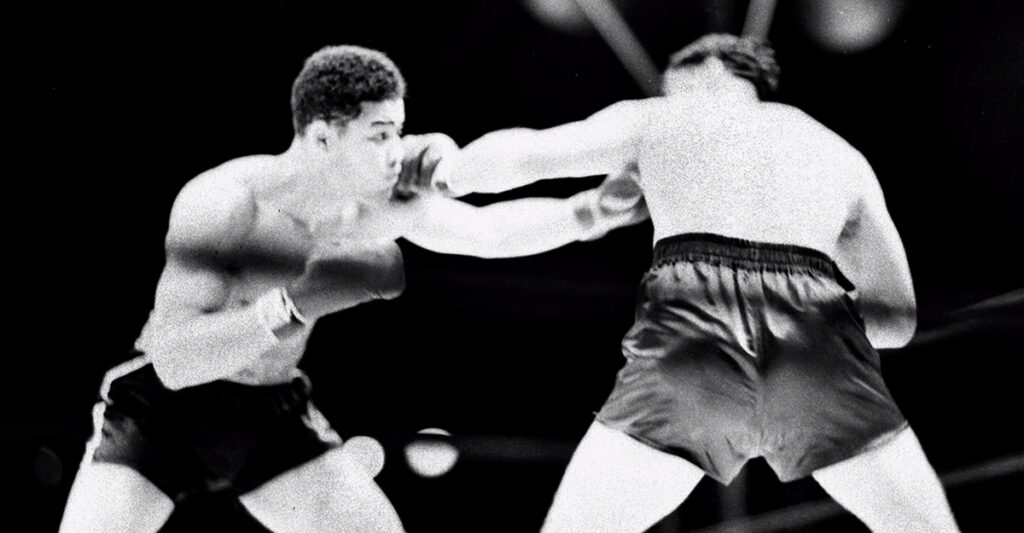
In one corner at Yankee Stadium, more than 1,000 miles away, stood Joe Louis, 22 years old and at the height of his boxing prowess. Detroit’s “Brown Bomber” was acknowledged at the time as perhaps the most important sporting figure in history among Black fans. A year before, as fascist Italy prepared to invade Ethiopia under explicitly racist rationales, Louis had made a symbolic statement by beating Primo Carnera, a giant Italian boxer who was beloved by Benito Mussolini and who’d worn the infamous Blackshirt regalia under his robes before fights. Despite Louis’s growing popularity, not all boxing officials and commentators wanted another Black heavyweight champion, so he’d been forced to barnstorm, taking on a whopping 12 fights (with 12 victories) in 1935 and 1936 as he sought to prove himself.
In the other corner stood Max Schmeling, a 30-year-old German hailed by Nazi propagandists as Adolf Hitler’s ideal Aryan fighter (though he was never a member of the Nazi Party). In 1933, the year Hitler consolidated power, Schmeling suffered public humiliation at the hands of Max Baer, a boxer from the American heartland whose father was Jewish. At Yankee Stadium, Schmeling looked the part of the washed-up brawler, having lost three of his previous eight matches. Black analysts and fans, and Louis himself, expected the fight to be a walkover, a mere speed bump on the way to the heavyweight championship.
The world was on edge that summer. The global economy was still caught in the vise of the Great Depression, civil war was brewing in Spain, and the League of Nations was breathing its last breaths. The Nazis, three years in power, had begun operating Germany’s first concentration camps. Word about Hitler’s belief in Aryan superiority had spread far, and many observers warned of its genocidal, war-bringing ramifications. A smaller sliver of observers, among them many Black Americans, understood how Hitler’s worldview implicated America’s own homegrown Herrenvolk democracy. All the way in Dallas, and in parlors and theaters across the country, Black spectators felt that the outcome of the Juneteenth fight had something to do with their humanity, their relationship to this country and to the world. To put it plainly, they needed Louis to whoop Schmeling, as a rebuke both to the storm troopers overseas and the Klansmen on their doorsteps.
But Schmeling didn’t get the memo, apparently. He had trained extensively in Germany, discovering from film that the younger boxer routinely dropped his left hand after throwing jabs. And Louis, perhaps exhausted from his spree of bouts, but also perhaps looking past Schmeling, hadn’t trained much. After the bell rang, the two traded jabs, and Louis’s punches soon began to swell Schmeling’s left eye. But whenever Louis’s hand dipped, Schmeling sneaked in a lightning-quick right cross. The simple but devastating combo kept finding home, dealing punishment to Louis’s chin. In the fourth round, Schmeling landed a right to the jaw that knocked Louis down for the first time in his career. In the 12th, a combo of sledgehammer rights sent Louis to the canvas for good, his first time being knocked out.
The mood in Black communities was apoplectic. In Dallas, bands struck up tunes to try to cheer the glum listeners on their way home. The New York Amsterdam News wrote that across the country, a dozen or so people purportedly died from shock or heart attacks after the fight. In Harlem, dismay turned to unrest, and violence broke out on the streets. But many white communities were galvanized by Schmeling’s win. Cab Calloway’s Cotton Club Orchestra was playing a gig for a white audience that night, and the crowd cheered when the news came. Sessions in both chambers of Congress were temporarily halted by raucous legislators celebrating the German victory, according to the journalist David Margolick’s book on the Louis-Schmeling rivalry. Grantland Rice, perhaps America’s most famous sportswriter at the time, wrote that Louis’s “jungle cunning” could not overcome Schmeling’s intellect. In Texas, the Lubbock Avalanche-Journal gloated over the defeat of the “Black boy,” and the fact that the loss came on Emancipation Day.
But the first fight between Louis and Schmeling is not the one that most Americans remember. In 1938, the year before the Nazis invaded Poland, Louis, having secured the heavyweight title, faced Schmeling in a rematch. Before the bout, President Franklin D. Roosevelt invited Louis to the White House, where he reportedly squeezed the boxer’s bicep and remarked, “We need muscles like yours to beat Germany.” This time in the ring, Louis was supported by white and Black Americans alike, who were more unified against German aggression as World War II loomed. When he knocked out Schmeling in the first round, he became a symbol of American triumph on the world stage.
And yet, the fight on Juneteenth was perhaps a more truthful reminder of the way things were, and how contingent the promises of American freedom could be. Months after Louis and Schmeling’s first match, the Summer Olympics in Berlin offered another telling indictment of America’s hypocrisy, when Jesse Owens won four golds. Owens was begrudgingly congratulated by Hitler, but neither he nor the other Black medalists were ever even acknowledged by Roosevelt, who had also refused to endorse a boycott of the Games—an effort led by Black and Jewish organizations that opposed both Nazism and American segregation. The brewing war would only confirm the limits of Black citizenship, as men who were asked to die for their country would also face lynchings at home for trying to vote.
What Black fans understood in 1936 and 1938—what caused so much grief for them—was that both reactions to Louis were predictable in their own way. Louis fought wrapped in the veil of W. E. B. Du Bois’s double consciousness: His success would be resented when it challenged America’s internal hierarchies but feted when it supported American supremacy. Every generation of Black Americans must learn this lesson. Even now, the Trump administration is stripping Black military officers of promotions and trying to erase their history in the armed services. That’s perhaps a fitting takeaway for Juneteenth, a holiday that commemorates the total restoration of the Union and a more tenuous victory for emancipation. To be Black and fight for America is to know that America may not fight for you.
Related:
Essay
Why Shorts Might Be Coming to an Office Near You
By Gilad Edelman
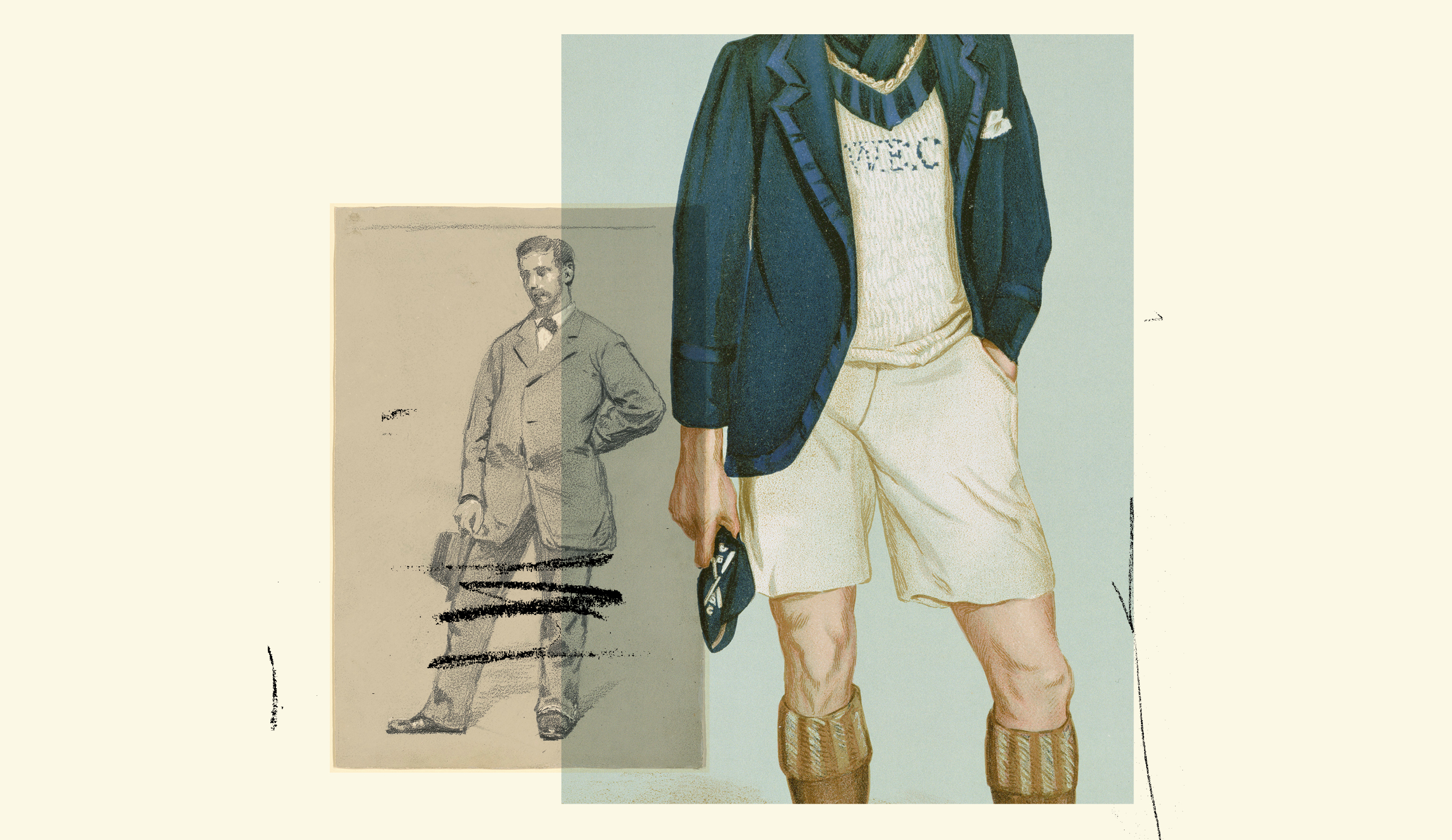
American dress codes seem to grow more lenient by the day. Jeans, sneakers, and T-shirts are ubiquitous among so-called white-collar workers. The taboo against shorts in professional settings, however, has endured. Here in Washington, D.C., the hot, humid summer air feels like a dog’s breath in your face. But legions of male office workers are expected to keep their legs bundled up, even as their female co-workers shiver in the air-conditioned chill. When I exposed my knees at the office recently—I’d biked to work and hadn’t had a chance to change, I swear—I triggered a lively discussion on Slack. I was made to understand that shorts were for children.
Why does the no-shorts rule cling so stubbornly to life, like trousers stuck to sweaty thighs in June? No one has a satisfying answer. It might be the most illogical fashion convention still standing. That means its days are probably numbered, and the glorious era of leg liberation is nigh.
Culture Break
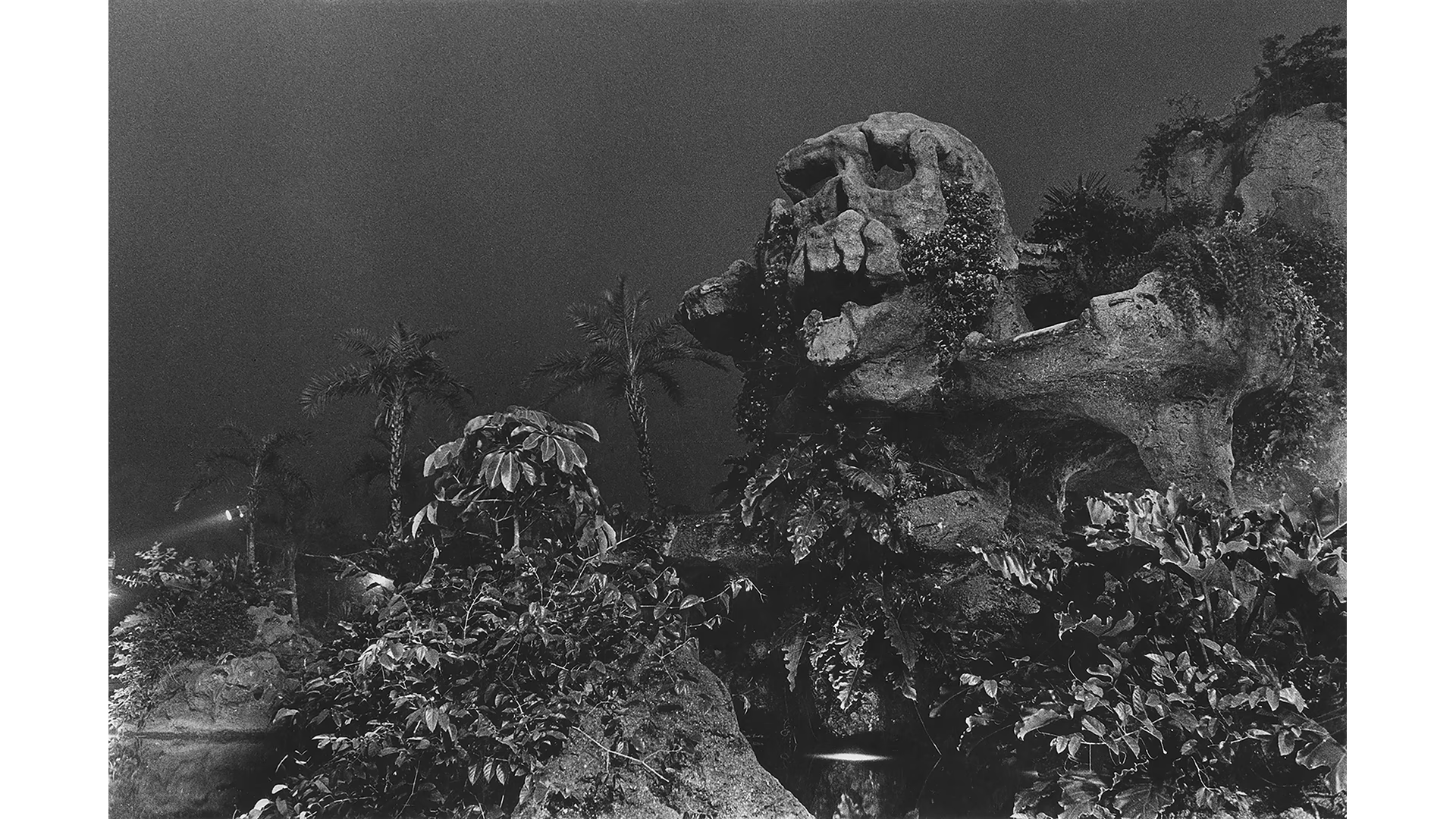
Reminisce. The actor Steve Martin explores the familiar magic of Diane Arbus’s photos capturing a Disneyland with no people.
Observe. Barack Obama’s and Donald Trump’s presidential centers have one thing in common, Kelsey Ables writes.
Stephanie Bai contributed to this newsletter.
When you buy a book using a link in this newsletter, we receive a commission. Thank you for supporting The Atlantic.
The post What a Juneteenth Boxing Match Revealed About America appeared first on The Atlantic.