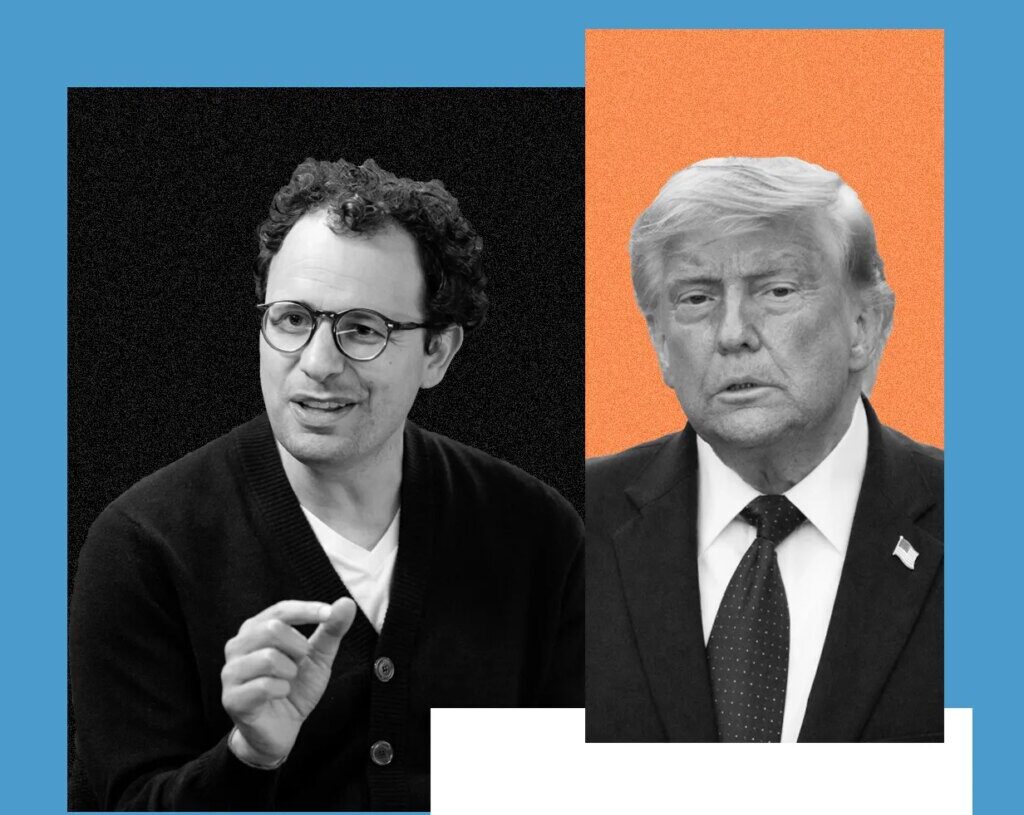
It’s been nearly a week since the Trump administration sent an export control directive to Anthropic, forcing one of the world’s leading AI labs to pull its most advanced models offline. After days of negotiations between Anthropic and the White House, the two still remain at odds about how to bring Claude Mythos and Fable 5 back. Why? Well, it depends whom you ask.
Throughout this entire debacle, Anthropic doesn’t believe it violated any concrete procedures or rules laid out by the Trump administration, according to a person close to the company. But the White House contends that Anthropic behaved recklessly, demonstrating that it can’t be trusted to safely roll out frontier technology.
This saga proved to me that we’re now officially in the Wild West era of American AI regulation. While there are few laws on the books governing frontier AI development, that doesn’t mean companies won’t end up in trouble with Trump’s White House when they cross unspoken lines.
“The problem here is that the White House has been in this extreme anti-regulatory posture, and they’re now faced with the real AI capabilities that people have been predicting for many years,” says a former White House technology official, who asked to remain anonymous to avoid jeopardizing their professional relationships. “There should have been preparation and policies to systematically deal with this, managing the benefits and risks, but instead it’s just this slap-dash approach that puts the AI industry in a real quandary.”
The Trump administration has repeatedly blocked efforts to impose guardrails on the AI industry, often arguing the rules could hamper US innovation and lead the country to fall behind rivals like China. Since he returned to the White House, President Trump has signed executive orders that reversed a Biden-era effort to create a national AI framework and created a federal task force to challenge state laws that could be deemed onerous.
While WIRED and other publications have made details of the negotiations between Anthropic and the White House public over the last week, the dispute is still defined by its opaqueness. At no point has the US government clearly stated what Anthropic did wrong—the best we have is a post on X outlining the general situation from White House technology adviser David Sacks.
Ironically, the White House’s actions have likely hampered the very kind of innovation it wants to protect. The Trump administration demanded that Anthropic prohibit all foreign nationals from accessing Mythos and Fable 5, preventing many of the AI lab’s own employees from accessing its most cutting-edge models, which the company says have sped up its research and development in recent months. All of Anthropic’s customers are locked out, too, including Apple, Meta, and much of the Fortune 500.
The White House may have had legitimate reasons to be concerned about Anthropic’s models. As my colleagues and I reported on Wednesday, US officials grew concerned when they learned earlier this month that Anthropic shared Mythos with SK Telecom, a South Korean telecom giant they allege has ties to China. Separately, Amazon CEO Andy Jassy raised concerns to US Treasury secretary Scott Bessent that some of the guardrails on Claude Fable 5, a safeguarded version of Mythos, could be circumvented.
Even if these worries are legitimate, that doesn’t mean the White House handled them adequately. In the first case, Anthropic says it coordinated with the US government on the rollout of Mythos, suggesting there may have been a chance for officials to raise alarm about SK Telecom ahead of time. Anthropic has also been working with the Korean company for years, and the arrangement seemingly never caused it to run into national security problems before. And when the White House raised concerns about SK Telecom to Anthropic, it revoked access to the model immediately, we reported.
In the second case, WIRED and other outlets have written at length about how every large language model can be jailbroken to varying extents. Anthropic and independent cybersecurity researchers argue that solving jailbreaks is not an easy or isolated issue. Because AI models are probabilistic, not deterministic, tech companies can’t guarantee what exactly they will generate in response to a given prompt. If the White House won’t let Anthropic release Claude Fable 5 until the jailbreaking problem is solved, I wouldn’t hold my breath.
But ultimately, the problem here is not that the US government is trying to ensure that advanced AI models have proper safeguards or stay out of the hands of America’s foes. It’s that the Trump administration is now in a position where it has to make these regulatory decisions in real time.
I can assure you that other AI labs like OpenAI, Google, and Meta have been watching Anthropic’s misfortune with bated breath. I’ve been asking AI executives the same question all week: How can you avoid a fate similar to Anthropic’s?
So far, many AI leaders are coming to the same conclusion: They believe they will need to give the White House early access to their latest AI models. Additionally, they say, they need to be extremely proactive about sharing information with the Trump administration about upcoming model launches—the risk of catching officials off guard is simply too great.
“Advance notice, advance access. I think those are the primary asks that we’ve heard, not just from the US, but others around the world,” Aidan Gomez, CEO of the Canadian AI lab Cohere, said in an interview earlier this week. “I think those are good things in many respects. It shows strong engagement and consideration by authorities on a super important technology.”
President Trump signed an executive order last month that created a “voluntary” system for AI labs to submit models to the government for early testing. It included a carve-out explicitly stating that this would not become a mandatory licensing regime, a major concern raised by the tech industry that had held up the executive order in the first place. But after what happened with Anthropic, it seems like the Trump administration has effectively created an ad hoc version of such a regime. “The Trump administration, frankly, should not have said that this was a voluntary regime,” says the former White House technology official. “It seems very clear that what they are now doing is a licensing regime.”
This is an edition of Maxwell Zeff’s Model Behavior newsletter. Read previous newsletters here.
The post The White House Is Making Up Its Rules for AI in Real Time appeared first on Wired.