As floodwaters rose last July at Camp Mystic in central Texas, the frantic evacuation fell to just three men — the camp’s owner, his son and a security guard — who rushed to get scores of girls to safety.
At least 39 adults, in addition to counselors, were also nearby and could have helped, but they were given no instructions by anyone in the camp’s leadership, a failure of emergency planning highlighted by state legislative investigators on Thursday. The flood killed 25 campers, two counselors and the camp’s owner.
The adults — including camp employees who received no emergency training — were unprepared to act and remained unaware of the unfolding tragedy, investigators said as they described the results of their monthslong inquiry to lawmakers.
While it had been known that other adults were at the camp, the investigators’ testimony on Thursday was the first official account of the sheer number of people who could have taken part in the evacuation, but did not.
Investigators said the finding, part of a growing case against the camp’s leadership, underscored their conclusion that the camp had failed to provide adequate emergency plans and did not evacuate in advance of the storm “despite ample opportunity to do so.”
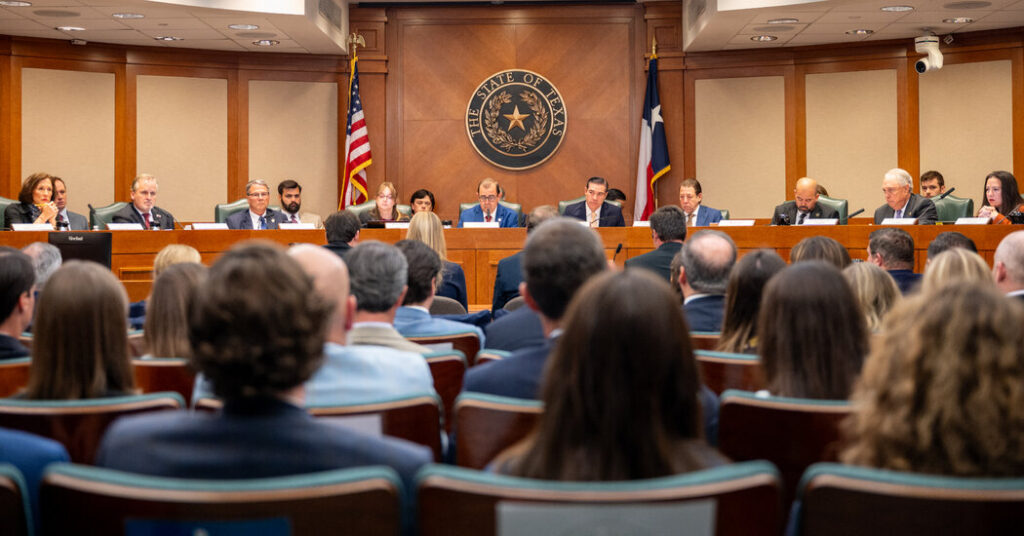
The 115-page report to a special joint committee of the Texas Legislature provided the first official conclusions about what occurred at Camp Mystic during the flood, on July 4.
And it suggested that a parallel criminal investigation by the State Police could reach similar conclusions, though it was not clear whether any charges would result from that inquiry.
The 39 adults were “not engaged in assisting the evacuation of campers,” one of the investigators, Michael Massengale, told lawmakers at Thursday’s hearing, even though there were “no barriers during the flood to being physically available to assist.”
Instead, it was the three men — Dick Eastland, who owned the camp, his son Edward Eastland and a night security guard, Glenn Juenke — who rushed to evacuate hundreds of campers on their own.
The investigators did not blame the other adults, who included members of the grounds crew, seasonal workers from Poland and other members of the Eastland family, for not trying to help campers and, in some cases, evacuating themselves to higher ground. Instead, Mr. Massengale said, the lack of planning meant that they had no explicit roles in emergency response and “generally were unaware of the horrors experienced by the campers” during the flood.
Another investigator, Casey Garrett, said that it was “a tragic disservice to these people that they were starved of information” during the flood. “They now live with acute survivor’s guilt and acute trauma,” she said. “Nobody had any instruction about what to do in an emergency.”
The investigator’s report, released by the committee nearly a year after the flooding, reached four broad conclusions about the camp’s handling of the flood and its aftermath. Its investigators, at the hearing on Thursday, summarized details that were also discussed at a hearing this spring and in reporting in The New York Times last fall.
Camp Mystic, situated along the Guadalupe River in the Texas Hill Country, did not have written emergency plans for a flood, the report concluded, did not adequately prepare for the July storm and did not begin its evacuation quickly enough. The investigators also found that after the waters receded, the camp’s efforts to help families reunite with their surviving children and inform those whose children had died were “chaotic, with traumatic effects for these families.”
A spokesman for the camp did not immediately respond to a request for comment. Members of the Eastland family, who have owned the camp for decades and lived through past floods, have said the river had never risen as high before. They have said they were overwhelmed by the scale and speed of the flooding, which hit in the dark early morning hours of July 4.
The report, mainly focused on actions at the camp and not on those of state or local officials, included a short section on the state’s annual inspection, which was conducted on July 2 — just before the flood.
An inspector from the Department of State Health Services, familiar with the camp from previous inspections, signed off on Camp Mystic’s emergency plan. The report said that the inspector had erred and “incorrectly affirmed Camp Mystic’s compliance with the requirements.”
The Eastlands had planned to partially reopen Camp Mystic this summer in an area that did not flood last year, but they faced hurdles. A state agency said in April that it might deny them a license to open, citing shortcomings in their emergency plans. Soon after, under pressure from the victims’ families and from state lawmakers, the camp said it would remain closed.
The post Report Tallies 39 Adults Who Could Have Helped Save Girls at Camp Mystic appeared first on New York Times.