There’s a lot to unpack with the massive success of “Backrooms” and “Obsession”: how these two low-budget movies both soared past $100 million at the box office; the YouTube-to-cinema pipeline; and what these films say about the anxieties of a younger generation. Alissa Wilkinson, a Times movie critic, and Jason Zinoman, a Times critic at large and author of “Shock Value: How a Few Eccentric Outsiders Gave Us Nightmares, Conquered Hollywood and Invented Modern Horror,” tackled these topics and more.
ALISSA WILKINSON For a long time, certain statements have been repeated so often by people in suits — movie executives, various prognosticators on the Future of Movies — that I almost started to believe them myself. They said that movie theaters are an “outdated concept,” that young people raised on phone-sized entertainment had busted their attention spans so thoroughly that they’d never be interested in watching big-screen cinema, let alone making it.
I haven’t ever really believed it. Here’s the thing: People like movies! They like going to the movies! And while audiences, chiefly older ones, complain about the cost, the crowds, the trailers, whatever — when you get right down to it, going to the movie theater is still just about the cheapest, most fun thing you can do outside the house with your friends on a random Tuesday night.
That brings us to the latest moviegoing phenomenon, the double whammy of two horror films, Kane Parsons’s “Backrooms” and Curry Barker’s “Obsession.” Both directors are Gen Z; both got their start on YouTube; both worked with exceptionally low budgets and made a ton; and both have been wildly successful in ways that studio filmmakers can only dream of.
The very creepy “Backrooms” is based on a 4chan meme that turned into a series of viral YouTube videos. It’s now A24’s biggest opening ever, tripling the studio’s previous best. It made over $80 million in North America on its opening weekend on a budget of just under $10 million. And, to boggle the mind even more, Parsons is turning 21 this month.
Barker, known for his sketch comedy, shot his film for under $1 million, and when it opened in May, it did better than expected, but then it did something crazy: It kept snowballing. Usually we measure the success of a movie by how much it drops in its second weekend — a small drop means it’s doing well — but the word of mouth on this film is so good that it’s been growing each weekend. It’s already made well over $100 million in North America, the white whale number for any movie, and who knows how much it will make by the time this is all over.
And the audiences for these films have been very young. I’m 42, and when I went to see both of these movies (on a Monday and Tuesday night, in sold-out crowds), I was definitely the elder in the room.
I have some hunches about what this all means, and what lessons the success of these two movies should teach Hollywood. I also suspect I know what lessons Hollywood will take from this. But first, Jason, you’re the expert on this genre. What do you think of these two films as horror films?
JASON ZINOMAN Horror’s primary obligation is, of course, to terrify — and “Obsession” did the job for me with savvy, slick misdirection and a willingness to go for the jugular. It has five or six truly unsettling scares, most thanks to a remarkable herky-jerky performance by Inde Navarrette. It’s an Oscar-worthy turn that has pieces of Mia Goth from “Pearl” and Betty Gabriel in “Get Out” while remaining all her own.
Her character is often bathed in shadow, lit ominously as if she’s the monster, but this is one of several of the tricks being played on the viewer. The reason this movie has become catnip for the discourse is not just the shocks, but the deft way Barker sets up and exploits commonplace anxieties about dating, consent, a nerdy male strain of narcissistic insecurity, clingy partners and, most effectively, that vulnerable moment when you are alone with someone you have a crush on and are nervously considering telling them how you feel.
“Backrooms” is more abstract, cerebral and cruder: A haunted house movie leaning hard on eerie vibes. Whereas “Obsessed” roots its Monkey’s Paw premise in persuasive realism, the padded-out script of “Backrooms,” whose dialogue lacks the mystery and subtext of its images, fritters away some of the power of the creepy maze referred to in the title. I thought the original nine-minute video the movie is adapted from was scarier. What do you think and do these movies share qualities outside of young directors, shoestring budgets and booming box offices?
WILKINSON “Obsession” gripped me much more, and not just because it’s funnier (though they’re both funny, in their own way). It uses some classic horror imagery while also tapping into the often horrifying feelings that come with trying to date someone! But I also just kept laughing.
In that way, it reminded me of the films of another young(ish) breakout horror director, Zach Cregger, whose movies “Barbarian” and “Weapons” have been hits and also bear the marks of his background as a sketch comedy guy. Cregger, who is older than Barker or Parsons, came up by performing with his troupe and then getting picked up for a TV series. Thinking about them in the same vein got me ruminating. Barker and Parsons are hardly unique. Earlier this year, for instance, the action film “Iron Lung” did well; it’s based on a video game, but was directed by Mark Edward Fischbach, better known as “Markiplier” on YouTube, where he had previously played the game for his viewers and directed several shorts.
Then there’s “Talk to Me,” a 2022 A24 hit directed by the brothers Danny and Michael Philippou, who were known first for their YouTube horror shorts. And have we forgotten Bo Burnham, one of the earliest YouTube stars, who went on to direct the terrific 2018 feature “Eighth Grade” and made one of the best, weirdest works of pandemic art in 2021, “Inside”? (Technically neither of these are horror, though you might make the argument!)
What do all of these have in common? Yes, they were made by young directors — young, mostly white men, in fact. But I think the real story is in how they became successes. In each case, they brought an audience, built from the grass roots, along with them to the big screen. That audience didn’t really come because they saw a trailer and thought, I want to see a movie about that. They came because they’d already bought into these creators’ work.
This is true of big directors too: “The Odyssey” is going to be one of the biggest films of the summer not because the people are crying out for Homer, but because Christopher Nolan directed it. So there’s a lesson here about building audience, and importantly, building a younger audience. Hollywood has always survived by appealing to the youth segment. It’s just that executives often are hopelessly out of touch with what young people actually want, how they experience media, what they’re looking for.
What do you think?
ZINOMAN When it comes to your point on audience building, I was thinking about YouTube comedians. As the power of gatekeepers wane, comics who already have followers have gotten the opportunities, and this shift can be a double-edged sword. It incentivizes artists to be good on social media before the stage or the big screen. And we must say that “Backrooms” is incredibly well-known intellectual property for young people. It means more to my kids than “Friday the 13th” or “Dracula.” So, its success is in some ways comes from the same place as that of a Marvel movie, but for a crowd raised on YouTube.
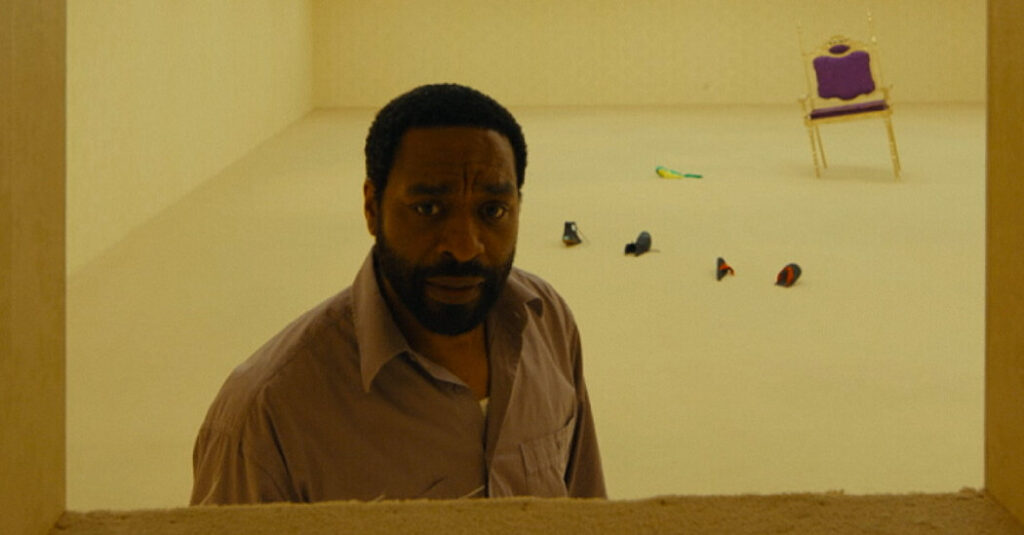
That said, what’s interesting to me about these movies is not what’s new about them — horror is always popular — but how they rediscover some essentials from the past. There’s been much talk of liminal horror in the “Backrooms” conversation, but the in between has always been a focus of scary movies. You could say Michael Myers is a liminal space. Not human, but not exactly supernatural either. And his costume and mask give him the same blankness as these underdecorated, yellowing rooms. And their lack of definition gives us space to read into him. This is a movie that is fun to mull over because it grasps (for the most part) the most important insight in the history of horror: The scariest thing is the unknown. There is a refreshing lack of lore in both of these movies.
I think the success of “Obsession” also has more to do with toying with older horror tropes in new ways. I confess I was inclined to dislike Barker when he said the original “Texas Chain Saw Massacre” was “really good for its time,” but the masters of horror of the 1970s had their own healthy disrespect for the genre predecessors. As with Bo Burnham, you can see that growing up on the internet has given Barker different tools than older generations of artists. I like how he doesn’t rely too much on jump scares and how much he does with a close-up. The frown. The smile. These are great memes and a kind of cringe horror that seems like a relation to Tim Robinson. I’m curious what you think of the meaning of “Backrooms.” It’s set in the 1990s, before the filmmaker was born. Is this some early proto-Internet?
WILKINSON It does sort of remind me of what it felt like to be on the internet around, like, 1997? You clicked and you poked around and you never knew what weird Angelfire or GeoCities site you’d stumble upon.
But even more, I think it captures that feeling of all the rules just being … off, somehow. The walls don’t make sense. The hallway is too small, or cockeyed. There’s a half of a wall in the incorrect place. I’m not the first person to notice this, but the wrongness of the liminal space in “Backrooms” seems like an externalization of what young people (and not just Gen Z!) talk about feeling a lot: that the old rules no longer apply, that you can do everything correctly, major in the right things in college, say all the right things, and yet the results aren’t what you were told they would be. If horror tends to show us what we’re anxious about right now, it’s not hard to see what “Backrooms” — and “Obsession,” too — are actually saying.
I have two main takeaways overall, though. One: “Obsession” in particular is a hit because people are talking about it. But for a movie like this to make this much money requires time, and that means keeping the movie in theaters longer. So don’t send movies straight to streaming, and don’t go there too fast, either. Back in our day, movies stayed in theaters for months; note that “Sinners” became one of last year’s biggest success stories because people wanted to keep seeing it in a theater even after it was playing on their TV. Rethinking what the cinema experience means to the moviegoers is the big story here.
Which is why I think the best lesson executives could take away from this phenomenon is not to throw a zillion dollars at more movies that look just like these two. It would be to find more creators like these two, which is to say that they’ve built audiences in an organic way in the places that younger audiences congregate, and to give them creative freedom to explore what feels right to them. And to remember that not everything will hit like these two movies.
Alissa Wilkinson is a Times movie critic. She’s been writing about movies since 2005.
The post The $100 Million Horror Hits: Two Critics on the Gen Z Breakouts appeared first on New York Times.