This interview contains spoilers for the Season 2 finale of “Your Friends & Neighbors.”
It isn’t easy, it seems, being middle-aged and single in Westchester County, where many of New York’s richest and most powerful people settle to build outwardly ideal suburban lives.
You might wind up moving back to the city, as the writer Jonathan Tropper eventually did once his commitments as a divorced Westchester dad allowed. You might even draw from that experience in creating a successful TV show, as Tropper did with “Your Friends & Neighbors,” on Apple TV.
Or if you’re like his characters, you might wind up robbing houses or disposing of a dead body. Worse, you might wind up the dead body.
The Season 2 finale of “Your Friends & Neighbors,” which debuted Friday morning, added the latest such body. This one belonged to the ultrawealthy widower Owen Ashe (James Marsden), the main foil this season to Andrew Cooper, the former investment banker turned divorced-dad burglar played by Jon Hamm. (Hamm is also an executive producer.)
For most of Season 2, Cooper was being blackmailed into working for Ashe, an alpha male among alpha males, with the biggest house, the flashiest cars and the attention of every straight woman in the fictional town of Westmont Village. That threat of blackmail, at least, may be over: When last we see Ashe, he is sitting in a Cadillac Escalade at the bottom of a lake.
But apparently Ashe hasn’t finished with Cooper just yet. “We’re going to find out that Owen had some secrets we didn’t know about,” Tropper said of Season 3, which is already filming in Westchester. “We’re going to learn that Coop’s in more trouble than he thinks he’s in.”
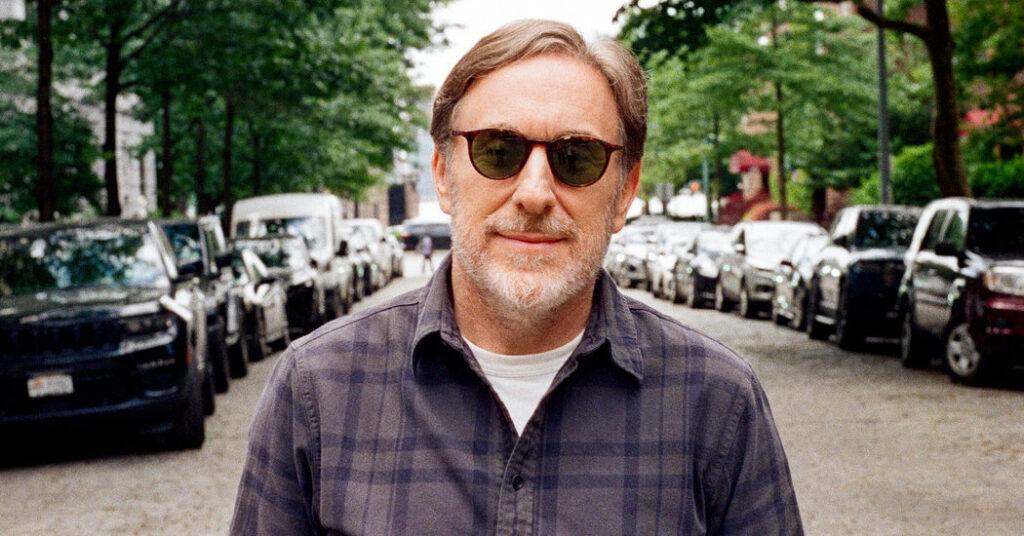
In an interview at his Manhattan offices last month, Tropper — who has remarried — spoke more about Cooper’s evolution this season and why rich suburbanites have to be extra forgiving. These are edited excerpts from the conversation.
The setting of “Your Friends & Neighbors” could in some ways be any rich enclave anywhere. In what ways is it specific to Westchester?
To me, if you put this show in Brentwood [in Los Angeles], it’s a different show because the backdrop is much more the entertainment industry. But in Westchester, the backdrop is largely finance. For about 15 years, I was a novelist living in Westchester surrounded by finance guys. And that’s kind of where the show came from.
How did you find yourself in Westchester as a novelist?
I was definitely pushing the limits of my income. But I grew up in Riverdale [in the Bronx]. My aesthetic is that East Coast suburban setting. I got married, and we lived in an apartment in the city. And then we needed space, so we went to Westchester.
What is Cooper’s predominant motivation at this point? It seems clearer from Season 2 that it isn’t strictly money.
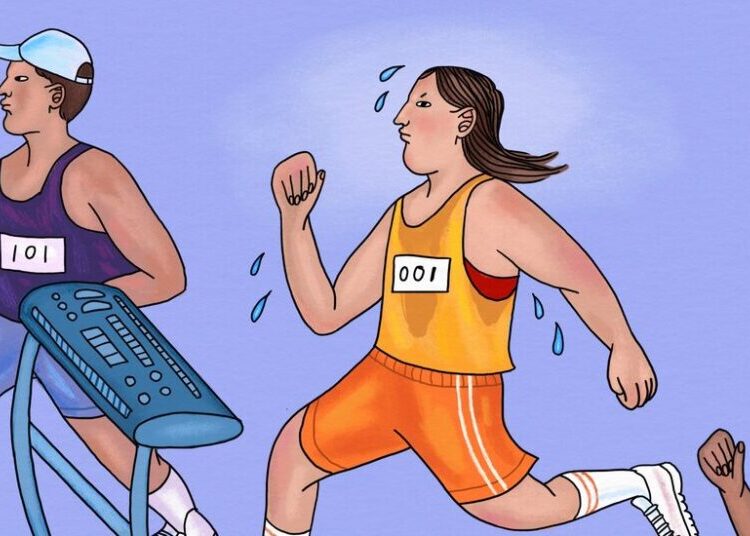
The way I envisioned the show was it was a gradual liberation from the value system he embraced his whole life. What I’d want to see, whenever we end this show, is him having freed himself from the bougie yoke of suburbia and the financial treadmill — and for that to have enabled him to become more focused on himself and his family.
The idea of survival has gotten very confusing to him. He doesn’t want to surrender the creature comforts. He doesn’t want to surrender his status. Whether he’s doing that for his family or himself is unclear to him. Events have gotten so twisted that he has lost sight of his original objective. I think he has to get in a little more trouble. He has to get a little darker before he realizes what’s actually important to him.
It seems that whether this ends as a comedy or a tragedy will also depend on whether he stops stealing people’s watches or dies trying.
Hamm and I have always believed the conceit of robbing your neighbors is not sustainable for a longer series. At first it was simply a backstop measure until he figured out his next move, but it was also in some ways lashing out at the system that rejected him. At the same time, it’s also a little bit of aspiration, still, for these items. And the ease of it was intoxicating. But he’s lost sight of what he needs to do to move forward.
I think it’s a show about middle age. In middle age, we’re all trying to figure out what’s the next chapter and how do I move forward? He’s treading water because psychologically or emotionally, he isn’t ready to face the real work he has to do.
This season the show seems to have become more about relationships and aging — and about fatherhood in particular. Was this a conscious choice?
We never wanted it to be the robbery of the week. Also, one of the first things Jon and I talked about is how sparing we have to be with [the crime caper aspect] after the first season, because it will get old really fast. He can get a little better at it, but he’s not Walter White who’s going to become some kind of kingpin.
What did the introduction of Marsden’s character provide in terms of developing Cooper?
In Season 1, Coop evolves by becoming a disrupter. So in Season 2, we wanted somebody to disrupt him — somebody who makes what he’s doing look like amateur hour. Somebody who in a sense is already liberated, but he’s also liberated from any moral compass. Somebody who is the apotheosis of what Coop was trying to be, but it has twisted him.
How do you make sure you stay on the self-aware side of the satire?
It’s not choosing a side. We are skewering a value system, but at the same time, we’re making the show aspirational. We’re still showing you the cars and the houses and the watches. I think what keeps viewers engaged is that tension within all of us of, like, we know this is not a sustainable model for humanity. The wealth divide is tearing this country apart. But at the same time it’s like, ‘Cool, that’s a Porsche Spyder.’ We have an angel and a devil on each shoulder. That’s [Cooper’s] struggle, and that’s our struggle.
Forgiveness comes relatively easy in Westmont Village. Is that a function of this same value system?
I think it’s an ecosystem, and the ecosystem relies on either purging or assimilating. And nobody wants to go to functions, parties, country clubs and coffee shops when there’s sort of a cancer in the midst, or when there’s something that makes everybody uncomfortable.
It’s a little like “Stepford Wives,” right? We have a line toward the end of Season 2 about how fast this whole community can metabolize tragedy. It’s because if we don’t metabolize this quickly, we’re not going to be able to go to the July Fourth barbecue. We’re not going to be able to go to the Hamptons.
Austin Considine is an editor and writer covering television for the Culture section of The Times.
The post ‘Your Friends & Neighbors’ Wants to Have Its Porsche and Judge It Too appeared first on New York Times.