While nearly a dozen U.S. cities put the finishing touches on preparations for the 2026 FIFA World Cup ahead of next week’s kickoff, some of the country’s most sport-frenzied communities are settling in to watch from home. Based on the economics of major sporting events, it might prove a savvy decision in retrospect.
The soccer fever due to grip the U.S. until July 19 will be most vivid in the country’s 11 host cities, where 78 games will be played in stadiums servicing sports meccas such as Boston, Los Angeles, Dallas, and Atlanta. That’s most of the 104 games total for the tournament shared between the U.S., Mexico, and Canada.
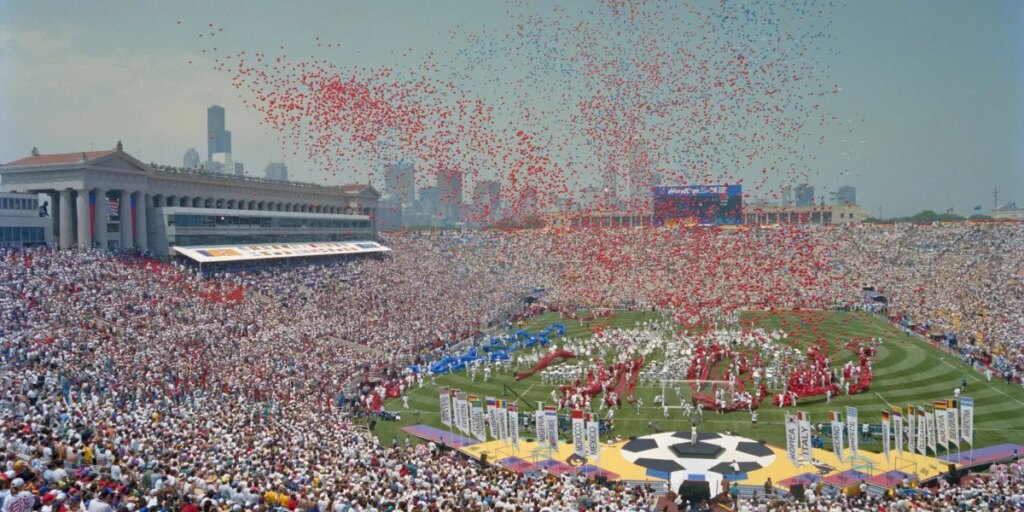
Notably absent from that list, however, are the cities home to some of America’s most passionate sports fanbases—a few of which have even hosted World Cup games before. Phoenix, which holds the world’s largest concentration of sports venues in a single metropolitan area, will see no gametime. It’s the same for fans in Detroit, where four major league teams all play within walking distance of each other in the city’s downtown. Chicago won’t host any games either, despite being the third-largest U.S. city, and having thrown the opening ceremony and game the last time the World Cup came to the country, in 1994.
The 2026 World Cup’s host cities were announced in 2022 after a competitive bidding process. But many cities that declined to be considered for participation at the marquee event made their reservations clear years earlier, often citing financial reasons and cumbersome requirements set by FIFA, the tournament’s governing body. For many of America’s most sports-crazed cities missing out on this year’s World Cup, the appeal of hosting mega-events just wasn’t enough to justify the costs.
“FIFA was not able to provide specific details on major unknowns that could result in a major financial burden to our cities,” Tom Sadler, president of the Arizona Sports & Tourism Association, said in a 2018 statement explaining a dropped host city bid for Glendale, a Phoenix suburb.
Chicago backed out for similar reasons, with then-Mayor Rahm Emanuel accusing FIFA of making excessive demands and lacking transparency on issues that “put our city and taxpayers at risk.”
“The guys from international soccer wanted us to underwrite their sporting event,” Emanuel told local broadcasters in 2018. “While I am always eager to boost tourism, I am not going to write a company a blank check that can fleece the taxpayers.”
FIFA did not immediately reply to Fortune’s request for comment.
Jilted by FIFA
To be considered eligible as a host, cities had to comply with a long list of requirements set by FIFA. Cities had to ensure stadiums met specific standards, commit to waiving taxes on items like ticket purchases, and shoulder the bulk of costs related to security and logistics. FIFA also demanded rights to amend its agreements with cities at any time, and for no indemnity clauses that would shield host cities and their taxpayers from financial risks.
To be sure, being a host for a globally televised event—one of the most widely followed anywhere—has its appeal for cities. In Chicago’s absence, Kansas City has emerged as the only Midwestern representative at the tournament, a fact often touted by local officials.
“The world deserves to see the beauty, hospitality, and strength of the American Midwest,” Rep. Mark Alford (R-Mo.) wrote last year in an open letter to President Donald Trump, after Trump floated the idea of pulling hosting rights from Democrat-run cities.
“Unlike many coastal host cities, Kansas City stands alone as the only host city in the geographic heart of the United States,” Alford continued.
But the costs of taking on hosting duties can leave long-lasting scars. While national economic impacts from hosting mega-events like the World Cup can be in the green, due to tourism and spillover effects, individual cities often have a harder time breaking even. Spending on infrastructure can quickly end up as a sunk cost, as centerpieces like stadiums lie idle and drain public funds for years after the intended event—as was the case following the 2010 and 2014 World Cups in South Africa and Brazil, respectively.
Something similar already happened in the U.S. After the 1994 World Cup, the nine host cities posted cumulative losses between $5.5 billion and $9.3 billion, according to a 2004 study, well below the $4 billion gain forecast for cities before the tournament. Losses were due to infrastructure spending as well as high security and operating costs. The study also found World Cup-related economic impact tended to crowd out spending from locals that likely would have happened anyway, but didn’t as more residents opted to avoid highly trafficked areas.
Infrastructure expenses for this World Cup are small compared to previous editions of the tournament, in part because the U.S. hasn’t had to build any new stadiums. And several host cities have invested in projects that could have a longer economic tail, such as public transit and more urban green spaces.
But even for those cities swayed by the global prestige that comes with hosting rights in a World Cup, the bills are already piling up, and officials are being forced to choose between FIFA and their taxpayers. In New Jersey, a highly publicized war of words between the government and FIFA over transport surcharges for fans attending the state’s eight games recently culminated in fare reductions from $150 to around $100 with the help of external sponsors. New Jersey’s fares are still among the highest across U.S. host cities this summer.
The post Some of the biggest U.S. sporting towns decided not to host any World Cup games, fearing a ‘major financial burden to our cities’ appeared first on Fortune.