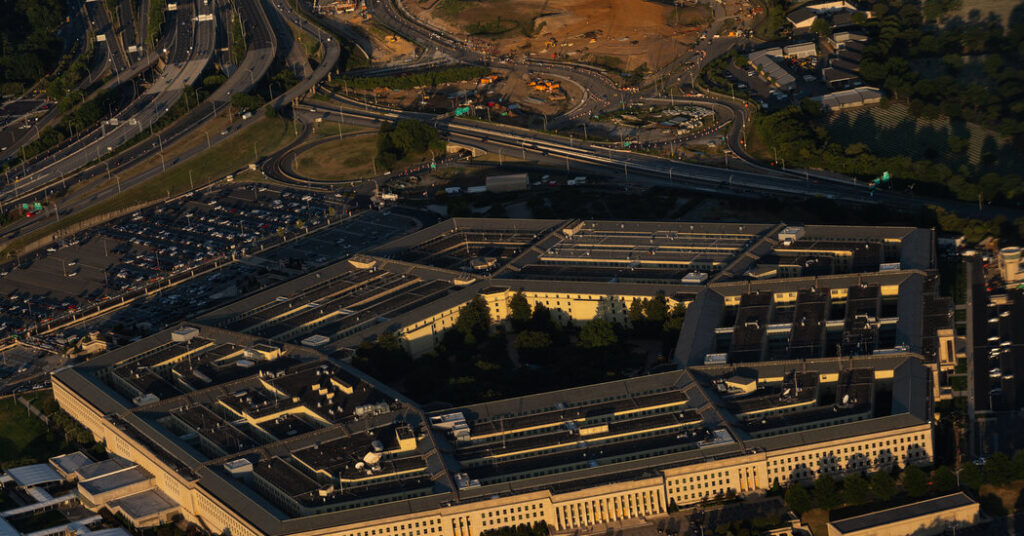
The Defense Department has designated its press office as a classified space, off limits to journalists, further restricting interactions between its public-facing representatives and the reporters assigned to cover the military.
The move, confirmed by the department’s acting press secretary, follows a change in policy from earlier this year that required journalists to have an official escort at all times when visiting the Pentagon.
The New York Times sued the Defense Department last month in Federal District Court in Washington over the escort requirements, accusing the Pentagon of violating the First Amendment.
For decades, reporters assigned to cover the Pentagon were granted press passes that gave them wide access to the building’s corridors and its press offices and enabled them to interact daily with the department’s spokespeople.
Pete Hegseth, the defense secretary, has repeatedly curtailed journalists’ access within the Pentagon. He initially imposed an escort requirement for certain Pentagon corridors before expanding it to the entire building.
The move to designate the press office a classified space followed a decision by the Pentagon’s leadership to move speechwriters into the area, said Joel Valdez, the acting press secretary. The new Pentagon policy was reported earlier by The Washington Post.
“These speechwriters routinely handle classified material,” Mr. Valdez said in a statement. “Access to the office of the assistant to the secretary of war for public affairs and to the press secretary remains available by appointment only.” The Department of War is the Trump administration’s preferred name for the Defense Department, whose name can be officially changed only by Congress.
In October, the department imposed a comprehensive set of restrictions that let it designate journalists as “security risks” and revoke their press passes.
Late last year, The Times sued the Pentagon on the grounds that the policy violated the First and Fifth Amendment rights of its journalists. In March a federal judge ruled in favor of The Times, tossing out the October policy.
The Pentagon responded with a new “interim” policy that mandated escorts inside the building and closed the work space, known as Correspondents’ Corridor, where reporters from major news organizations long had designated desks.
In April, a divided three-judge panel for the U.S. Court of Appeals for the District of Columbia Circuit allowed the escort requirement to remain in place while the Trump administration appealed the earlier ruling.
In its latest lawsuit, filed in May, The Times said that the interim policy was “patently retaliatory” and that the escort requirement rendered the press passes of Times journalists “essentially worthless.”
The new policy, restricting access to the press office by declaring it a classified space, further limits the ability of reporters to talk to the civilians and officers whom the Pentagon has assigned to interact with the news media.
Greg Jaffe covers the Pentagon and the U.S. military for The Times.
The post Pentagon Bars Reporters From Its Press Office appeared first on New York Times.