Memorial Day weekend marks the unofficial start of summer, a season of beach reads and salt water, a dip in a lake, a peaceful hike or BBQ. But summer 2026 offers something else: democracy in action.
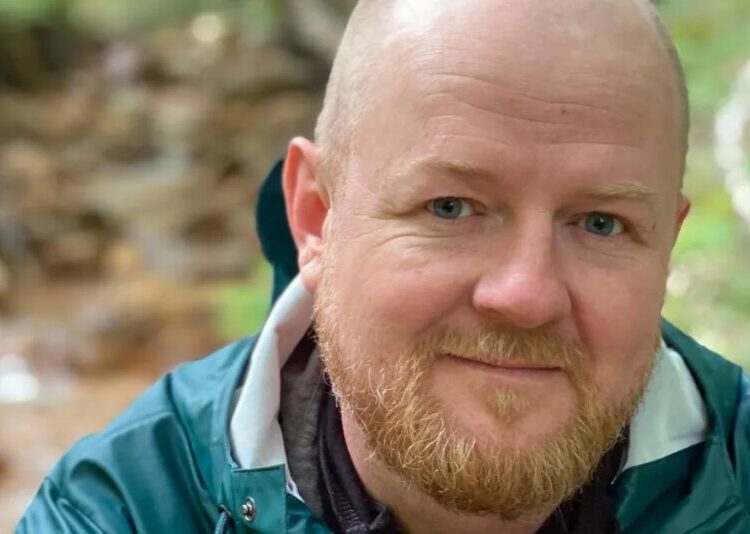
As campaigns across the country kick into gear, Dan Pfeiffer — a co-host of Pod Save America, author of the newsletter Message Box and a former senior adviser to Barack Obama — assessed the candidates and races in a written conversation with John Guida, an editor in Times Opinion. It has been edited for length and clarity.
John Guida: Let’s start our tour — following a map roughly defined by the Senate primary calendar — in Texas, which holds a runoff next week between the state’s attorney general, Ken Paxton, and the incumbent Senator John Cornyn. This week, President Trump endorsed Paxton, and polling suggests he will prevail. What did you think of Trump’s endorsement?
Dan Pfeiffer: Even by Trumpian standards, it’s a truly asinine decision. The polling is not decisive at this point, but there are some Republicans and Republican-leading independents who will vote for Talarico over Paxton. If Paxton wins the primary, the National Republican Senatorial Committee and the G.O.P. super PACs will be forced to spend gobs of money to protect a state Trump won by double digits in 2024.
Guida: You wrote earlier this week that “Trump’s revenge tour is a big problem for the G.O.P. moving forward.” Why is that?
Pfeiffer: In 2022, Trump cost the G.O.P. the Senate by backing a series of unelectable candidates and propelling them to the Republican nomination. Since then, he has been somewhat smarter about picking better candidates in primaries in key states. Paxton is a giant gaping exception to that recent pattern.
But the choice to endorse Paxton shows that he puts a much higher priority on exacting revenge than maintaining the G.O.P. majorities. On Wednesday, Trump went after Representative Brian Fitzpatrick of Pennsylvania, one of the most vulnerable Republicans in the country, for occasionally voting against him (last week, he joined a majority of Democrats on a resolution to require the president to get congressional approval to extend military operations in Iran). The Republicans operatives trying to hold the majority must be pulling their hair out.
Guida: Emerging from the 2024 election, Trump appeared to have assembled a formidable coalition of Latino and Black voters as well as younger voters. That coalition has crumbled. In the way he has governed and in his political interventions, has he given Democrats — like Talarico in Texas — a big opportunity to start to rebuild their own coalition?
Pfeiffer: After the 2024 election, there was all of this talk about a semi-permanent Republican majority. A party that dominated with white working-class voters, held their own with Latinos and was growing with young voters is basically unstoppable, given how the Senate and Electoral College maps play out. Those days are long gone.
In the New York Times/Siena poll this week, Trump has a -51 points net approval rating with Hispanic voters, a -57 net approval rating with young voters ages 18 to 29 and is barely above water with white voters who didn’t go to college. With numbers like those, Democrats have very real shots in some pretty red states like Texas.
Guida: Your old boss, Barack Obama, recently campaigned there with Talarico. On Thursday, CNN released an incomplete version of the Democratic National Committee’s 2024 autopsy — an audit of why Democrats lost the last presidential election. It says that since Obama’s 2008 win, the party has “vacillated between stagnation and retrogression.” And it notes that Democrats have lost lots of ground since Obama’s success. What can Democrats learn from Obama to put themselves on a better trajectory?
Pfeiffer: I could not be more biased here; there is a lot to learn from Obama (and from the campaigns, which I was fortunate enough to be a part of). Having said that, I do want to stipulate that politics has changed dramatically since 2008. The ways in which voters get their information could not be more different. The tactics that worked for us then would be absurdly archaic now.
There are three big takeaways that I think still apply. First, recognize that people want change and are looking for candidates who will upend a political and economic system that they see as broken and corrupt. Second, be willing to build the broadest coalition possible and work hard to persuade people who may disagree with you on some issues that we Democrats hold pretty sacred. Finally, run on a message of hope and unity. The American people are better than our politics have been. Offer them a brighter future.
Guida: The autopsy also notes that “Democrats operate in an ecosystem defined by reason even in cycles when the electorate is defined by rage.” Do you see a distinction between “reason” and a message of hope and unity? Is it possible to both recognize rage while also providing hope?
Pfeiffer: Let me just say, the autopsy CNN released is a joke. It’s incomplete, poorly done and avoids most of the key issues. The fact that Ken Martin kept it private for months is disqualifying, and he should probably step down.
But to your actual question: You have hit on one of the real challenges of communicating in an era where algorithms are the primary distribution mechanism for political information. The algorithms reward outrage. So the most successful attention merchants are outraged all the time. This is basically the secret to Trump’s success over the years.
Democrats need to find a way to be outraged on behalf of the American people while pointing to something better. Bernie Sanders has done a great job of this. Graham Platner is doing it in Maine. Alexandria Ocasio-Cortez does it. Jon Ossoff does, too. It can’t just be outrage for outrage’s sake.
Guida: Let’s move on to California. The gubernatorial primary is June 2. What do you make of the Democratic candidates?
Pfeiffer: I’m a California resident, so people ask me about this all of the time — at school pickup, in the grocery line. There are no great answers. Most people are pretty dissatisfied with their choices and deeply afraid of a scenario where Republicans finish in the top two spots. On paper, many of the candidates are interesting and qualified, but collectively they have failed to excite most of the state. The whole race feels like drudgery.
As we sit here, Xavier Becerra is the front-runner, but no one really knows why. He jumped to the top of the polls when Eric Swalwell dropped out, in part because he wasn’t Katie Porter or Tom Steyer. Becerra is now under withering assault from the other candidates, and it’s an open question whether his support can last. If it collapses, we could be back in a world where Republicans could lock out Democrats — although I think that’s a low probability.
Guida: Next up, the state that Josh Turek, a state legislator and a former Paralympic gold medalist on the U.S. men’s wheelchair basketball team running for the Senate, said is going to be “the center of the political universe this year”: Iowa (also on June 2). He is in a primary race against Zach Wahls, an Iowa state senator. Any thoughts about Turek vs. Wahls, and do you see Iowa as a realistic Senate pickup for Democrats?
Pfeiffer: The Iowa Democratic primary is pretty interesting. First, the question of electability, which I expect will dominate the 2028 Democratic primaries, hangs over the entire race. Turek’s main argument is that he is more likely to win than Wahls. I see the case for that on paper, but Iowa has been a graveyard for theoretically electable Democrats.
Second, Turek has the tacit support of Chuck Schumer, and allies of Schumer and others have spent millions to boost Turek. Wahls has said that Schumer should step down as leader. I think it’s really interesting how much of an issue Schumer has been in Democratic primaries. It speaks to the base’s anger at the party leadership.
Of the four pretty red states with hotly contested Senate elections this fall — Iowa, Alaska, Ohio and Texas — Iowa is probably the most difficult. It’s very rural, older, and very, very white. But given Trump’s numbers and what he has done to the farm economy, it’s most certainly in play.
Guida: On states with a sizable farm economy, I assume that you are skeptical that a Democrat — or an independent like Dan Osborn — can win states like Iowa or even Nebraska or Kansas?
Pfeiffer: I want Democrats to compete everywhere. If Democrats want a sustainable governing majority, states like Iowa, Texas, Nebraska and even Kansas must be winnable in the right conditions.
I also want to be realistic about what is achievable. There are very interesting independent candidates in Nebraska and Montana. Those candidates have better chances than a Democrat, given the party’s brand. I am kind of taking a wait-and-see attitude toward those races. This might end up being the most favorable political environment for the opposition party in modern history, so all kinds of things may be on the table this year.
Guida: Let’s move on to Georgia, where two Republicans — Mike Collins and Derek Dooley — are heading to a runoff on June 16 to decide who will face Senator Jon Ossoff this fall. Ossoff has received heaps of praise for his sharp messaging on corruption and the Trump administration. Do you see Ossoff holding that seat, and do you agree that his messaging has been particularly effective?
Pfeiffer: Ossoff is the Senate’s most vulnerable Democratic incumbent, and while I don’t want to count any unhatched chickens, he is incredibly well-positioned to win re-election. What is really notable about Ossoff is that most candidates facing a potentially tough re-election in tossup states tend to sand down their edges while running for re-election.
Ossoff has done the opposite. He has been bolder and more aggressive in his rhetoric against Trump. It shows an understanding of how politics works these days and a willingness to buck the conventional wisdom of the consulting industrial complex. Ossoff is pretty impressive, and if he wins by a decent margin, he could be a force to reckon with for the 2028 Democratic presidential nomination.
Guida: In Michigan (primary on Aug. 4), we have what has been a messy Democratic primary among three Senate candidates — Mallory McMorrow, Abdul El-Sayed and Haley Stevens. Can you make any sense of what’s going on there?
Pfeiffer: Just want to lay my cards on the table: I know McMorrow and hosted a fund-raiser for her. I also know and really like El-Sayed; his podcast, like Pod Save America, was produced by Crooked Media.
Michigan is probably the only seat that Republicans have any chance of flipping. The primary is messy, and Mike Rogers barely lost to Elissa Slotkin in 2024. He starts with a high name ID and has the distinction of not being the Trumpiest candidate on the planet.
At this point, El-Sayed seems to have consolidated the progressive wing of the party and jumped out to lead, while McMorrow and Stevens are fighting for everyone else. There’s also a fairly large chunk of undecided voters. This race has all the flash points that animate the divisions in the party — electability, Chuck Schumer, Hasan Piker and AIPAC funding. I suspect it’s going to be a long, messy summer in Michigan.
Guida: Alaska holds its primary on Aug. 18, and many Democrats have identified Mary Peltola as a strong Senate candidate for that state. They have said similar things about Sherrod Brown in Ohio. Those two states round out the foursome you mentioned earlier as critical for Democrats. How do you see those candidates and races?
Pfeiffer: Those are two really strong Democrats with deep relationships with their states and strong brands independent of the national party, and they’re running against two pretty, weak, largely anonymous generic Republicans. Chuck Schumer has gotten a lot of criticism for a lot of things. Some of it is deserved, but recruiting Brown and Peltola was a major coup. Those states are very winnable and probably the two most winnable of the four.
Guida: Any other candidate or race that you will follow closely this summer — for what it means not just for the midterms, but also perhaps for 2028?
Pfeiffer: We touched on Platner, but whether or not he beats Collins is going to have huge implications for the party. Obviously, Democrats aren’t getting the majority without winning a blue state like Maine. But if Platner wins, it will widen the aperture for the kinds of candidates Democrats are open to and may change how risk-adverse we should be when looking at potential 2028 nominees. Will we play it safe with a traditional politician or be willing to embrace an outsider than can upend the traditional political calculus?
This is one of the many reasons that I am rooting for Graham Platner to win. Democrats should be willing to go big … like we did in 2008.
Dan Pfeiffer is a co-host of Pod Save America, the author of the Message Box newsletter and a former communications director for Barack Obama. John Guida is a Times Opinion editor.
The Times is committed to publishing a diversity of letters to the editor. We’d like to hear what you think about this or any of our articles. Here are some tips. And here’s our email: [email protected].
Follow the New York Times Opinion section on Facebook, Instagram, TikTok, Bluesky, WhatsApp and Threads.
The post The Democrats Who Could Upend American Politics in the Years Ahead appeared first on New York Times.