The USS Arizona is a tomb. That should have been enough.
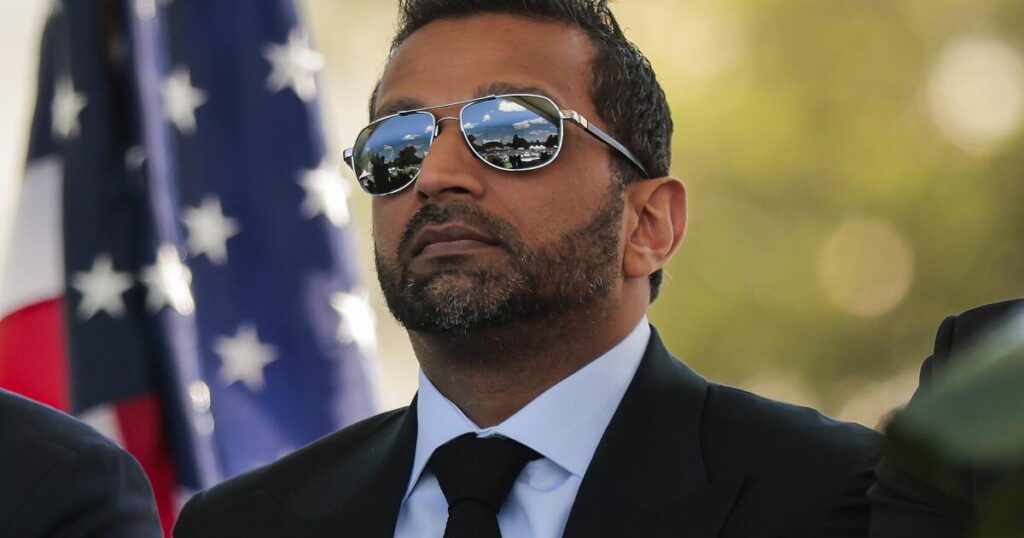
FBI Director Kash Patel took part in what a Defense Department email obtained by the Associated Press called a “V.I.P. Snorkel” near the sunken battleship at Pearl Harbor last summer. To accommodate that event, U.S. Navy SEALs reportedly transported and escorted Patel and his party by boat to the site, where Patel spent roughly 30 minutes in the water near the wreck.
On Dec. 7, 1941, a Japanese bomb pierced the Arizona’s deck and detonated the ship’s forward magazines. The explosion ripped the Arizona apart, sinking the ship in minutes. More than 1,100 members of her crew were killed, and more than 900 of them remain inside the hull at the bottom of Pearl Harbor.
Anyone who has stood at the Arizona Memorial understands that it is not simply a historic site. It is a place of solemn reverence. The silence feels different there.
Sailors know this. Navy ships entering and leaving Pearl Harbor still render honors as they pass Arizona. For a service whose dead often rest at sea, Arizona carries a weight few places can. It is a shipwreck, a grave and a shrine. The Navy has taught generations of sailors to treat that place as sacred.
Much of the attention will focus on Patel, and understandably so. A senior public official who accepts that level of special treatment near one of the military’s most sacred grave sites deserves contempt. Public office is not a VIP pass, and a swim around a war grave should not be a perk.
But this story is about more than Patel’s entitlement. It is about the Navy’s accommodation. Someone authorized the use of the boats. SEALs provided the escort. The Navy’s authority was used to enable a recreational swim around the resting place of American war dead.
The Pearl Harbor National Memorial is managed by the National Park Service. The broader site involves both Park Service and Navy responsibilities, but the moral issue is not complicated regardless of who runs the site. Navy boats, Navy personnel and Navy authority were used to support Patel’s swim near Arizona. The Navy owns this disgrace.
I spent 30 years in the Navy. I served on senior staffs. I have seen how these things work. A powerful person wants something. Maybe he asks directly. Maybe a high-ranking staff member asks on his behalf. Maybe everyone simply understands what he wants. Calls get made. An obvious boundary becomes a coordinated effort.
But military professionalism requires more than sheer efficiency. It requires standards and judgment. It requires someone in the chain of command to know when to stop the machinery and say no. At Pearl Harbor last summer, someone should have stopped it.
The answer should have been simple: No, sir. The Navy will not help you do that.
And that is the deeper shame. Patel participated in something he should have refused, but the institution entrusted with the memory of those sailors and marines manufactured a way to say yes. The Navy helped turn one of the few places where its dead still rest in view of the living into a recreation stop.
Somewhere along the way, too many people treated this as a task to complete rather than a standard to uphold. The staff work succeeded. The principle failed. No one stopped an idea that should never have gotten past the first conversation.
The military is not a concierge service for the powerful. It cannot allow sacred places, elite units or public resources to be repackaged as private experiences for those with enough rank or political access to believe they deserve it.
The Navy should be able to tell the difference between honoring a visitor and dishonoring the dead. It should be able to tell the difference between official courtesy and moral surrender. It should be able to look at a request like this and understand, instantly, that some things must not be done.
This was one of them.
Jon Duffy is a retired Navy captain. He writes about leadership and democracy.
The post The Navy’s inexcusable accommodation of Kash Patel appeared first on Los Angeles Times.