This feature is from the spring 2026 issue of VICE magazine, THE NOT THE PHOTO ISSUE. Buy it now—or get 4 issues each year sent straight to your door, by subscribing.
“Beginning modestly in unknown corners of the internet, they enjoy a brief moment of explosive growth and total domination of the ‘information environment’ before fizzling out”
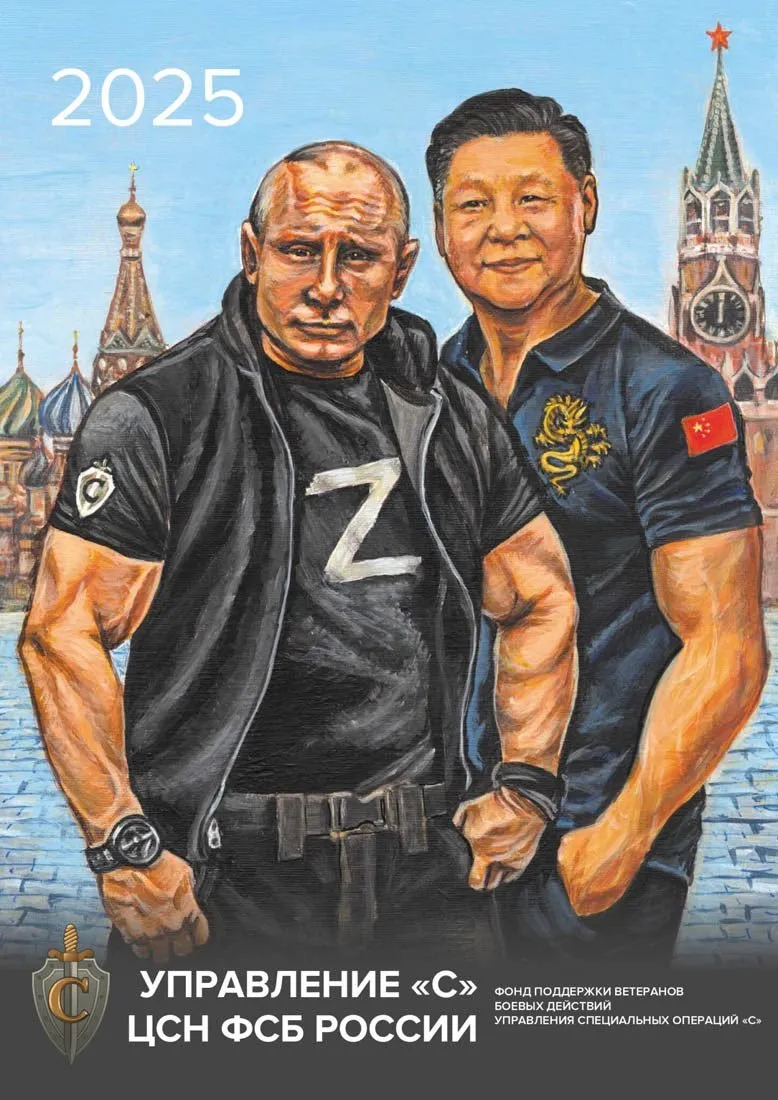
This image comes from a calendar issued by the FSB, Russia’s Federal Security Service, to support a charity set up to support former Russian Special Operations soldiers. The cover of the 2025 calendar shows a muscular Vladimir Putin flexing alongside a similarly brawny Xi Jinping. The former wears a T-shirt emblazoned with the letter “Z,” which was painted on Russian vehicles during the 2022 invasion of Ukraine and has since become a symbol of pro-Russian sentiment. The calendar also included an illustration of a Russian knight slaying a character representing the West (who was clad in a rainbow flag) and others of soldiers on the frontline, in prayer, and embracing smiling children (Credit: Tatyana Kazantseva)
The propagandist has never had it so easy. In 2026, any moron with a thumb and a phone has the tools they need and millions of eyeballs at their disposal. Gone are the days of loading a Zeppelin full of leaflets to be dropped over freezing, corpse-ridden enemy frontlines: serious exercises in mass influence can be undertaken by a few determined posters in a group chat. Silly animations of colonial zombie armies being held back by brave mercs can be viewed by millions in just a few hours, while memes that begin in the farthest right corners of social media are making their way onto government feeds.
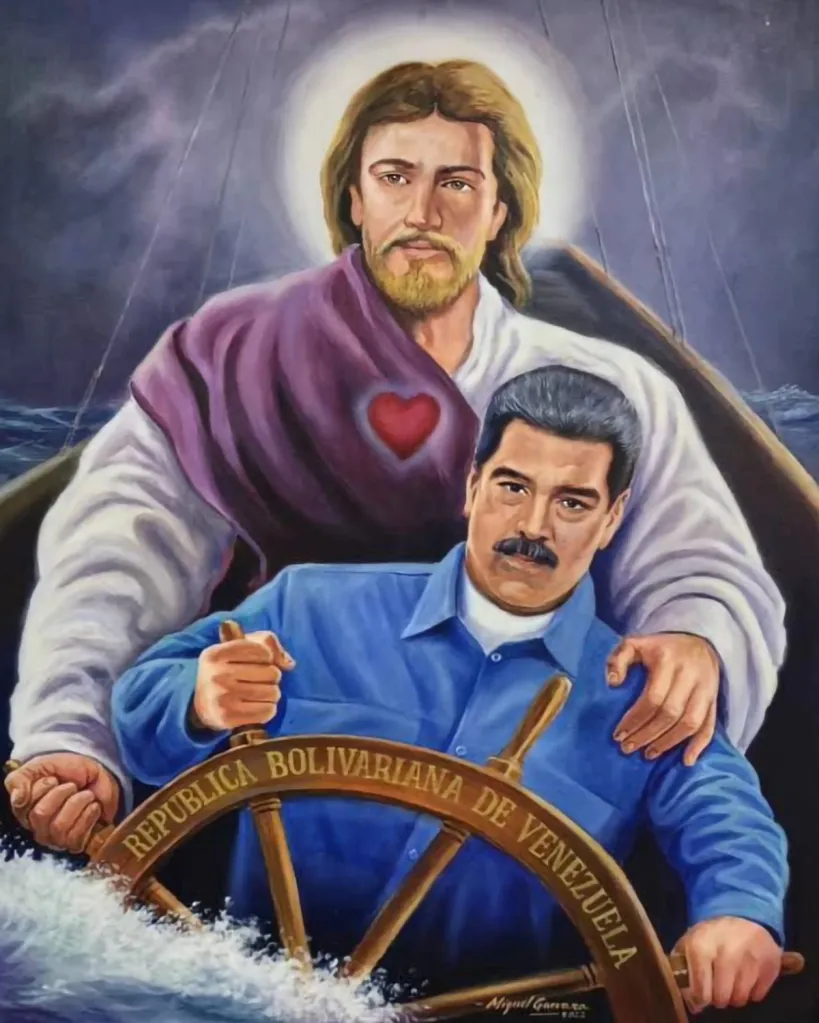
A Venezuelan painting from 2022 showing Jesus Christ and President Nicolás Maduro jointly steering the ship of the “Bolivarian Republic of Venezuela” through stormy waters. Maduro had the painting in his home, sharing a photo of it on Instagram and X in 2024 with the caption: “Look at this painting I was gifted … I’ve had it here at home since 2022 … Always with Christ the Redeemer … Let’s unite our prayers for Venezuela…” Jesus appears frequently in Chavista propaganda, with other notable examples including murals painted by pro-government militias or “colectivos.” (Credit: Verónica Gabriela V.M. for the Partido Socialista Unido de Venezuela (PSUV) bulletin)
This sudden democratization of propaganda means that any political event or conflict, anywhere in the world, will inevitably have its “discourse” bombarded with memes and misinformation, hype edits and fact-checkers, claims and counter-claims, within minutes. The quality of the material is debatable. The quantity is not.
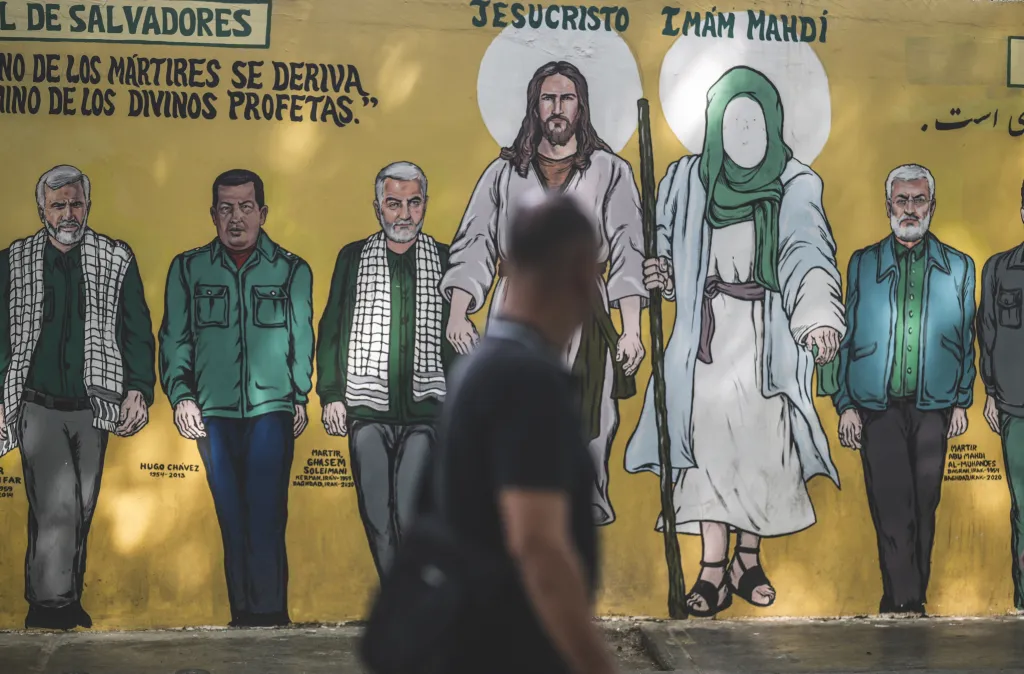
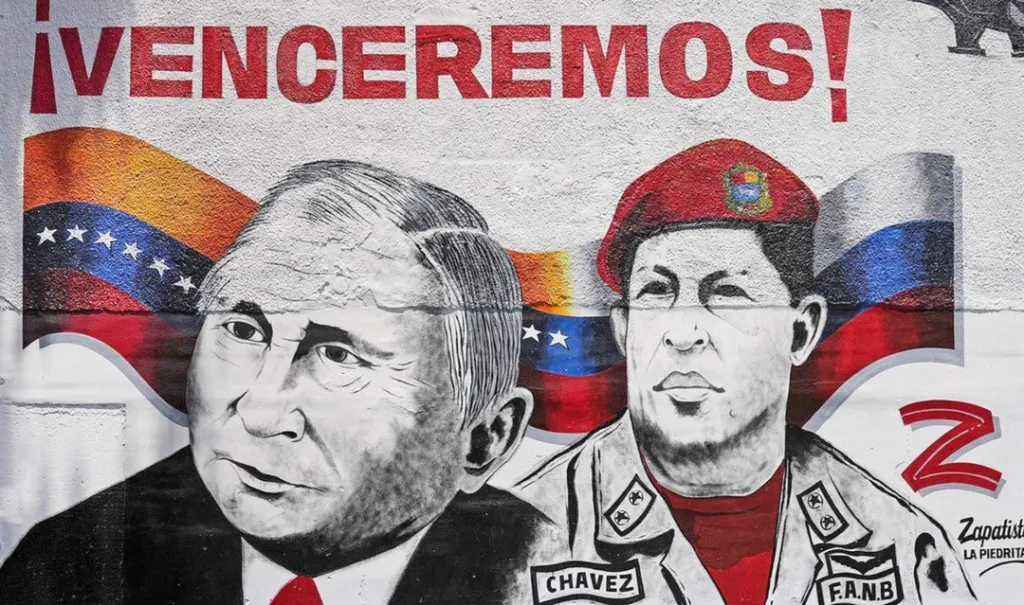
This Venezuelan mural, titled Mural of Saviors, depicts Jesus Christ, the prophesied end times Islamic messiah Imam Mahdi, and the late Venezuelan President Hugo Chavez walking with Iranian, Iraqi, and Lebanese military leaders. Unveiled in Caracas in January 2024, most of the figures are considered “martyrs” locally. (Credit: Photo by Juan Barreto / AFP)This Venezuelan mural showing Vladimir Putin with Hugo Chávez appeared in Caracas in April 2022 and shows the two leaders with their flags forming a continuous banner, along with a fighter jet (only partially visible here in the top right corner) and the Russian “Z.” The text reads “We will win!” The mural seems to have been painted jointly by artists from the La Piedrita colectivo paramilitary group. Russia’s ambassador to Venezuela Sergei Melik-Bagdasarov visited the mural in 2022, posting on X: “Thank you to the Venezuelan government and people for their solidarity.” (Credit: La Piedrita)
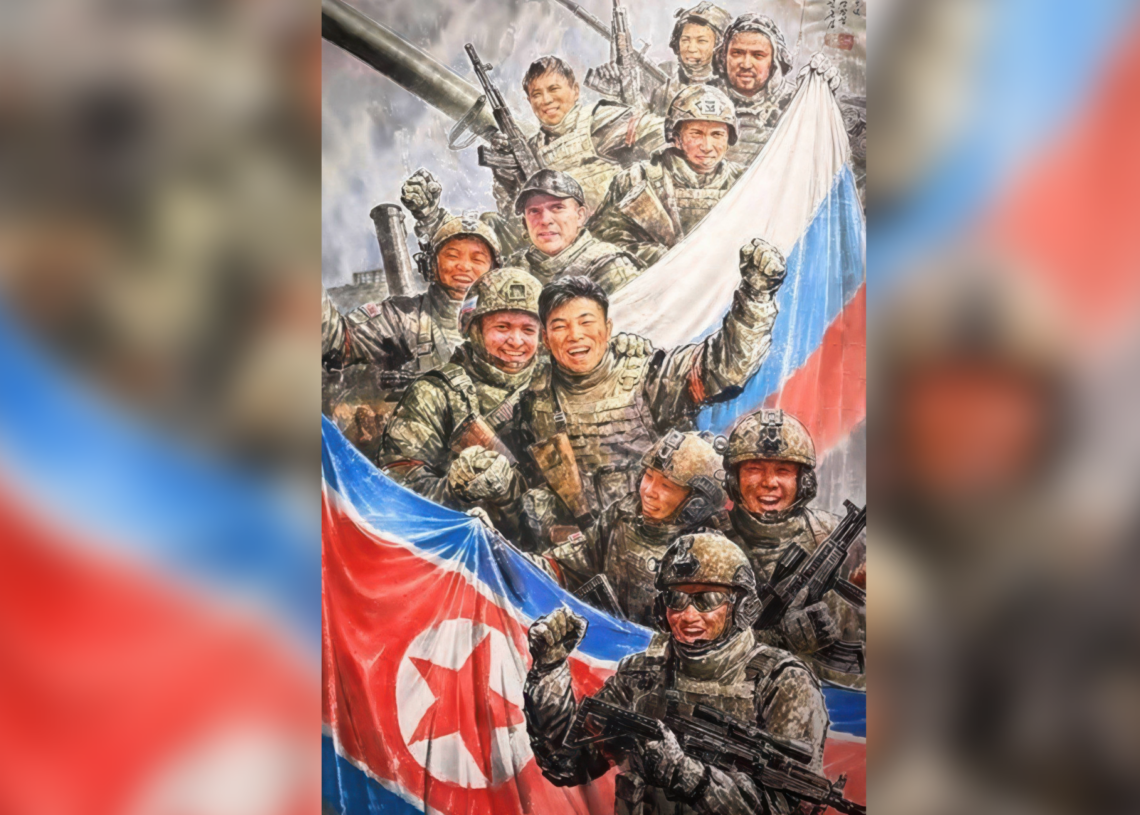
Alongside these sprawling networks of trolls and activist groups are the official departments and agencies using images to fight their corner. As well as those embracing up-to-the-minute meme culture by posting “based”-aesthetic deportation porn or throwing up sexy AI lions on main, Russia and North Korea recently presented a series of oil paintings celebrating their shared struggle on the battlefield, a heart-warming throwback to a time when people cared enough about political agendas to spend hours painstakingly honoring them on canvas, rather than just knocking up a quick image macro. (The global press coverage the exhibition received suggests it was time well spent.)
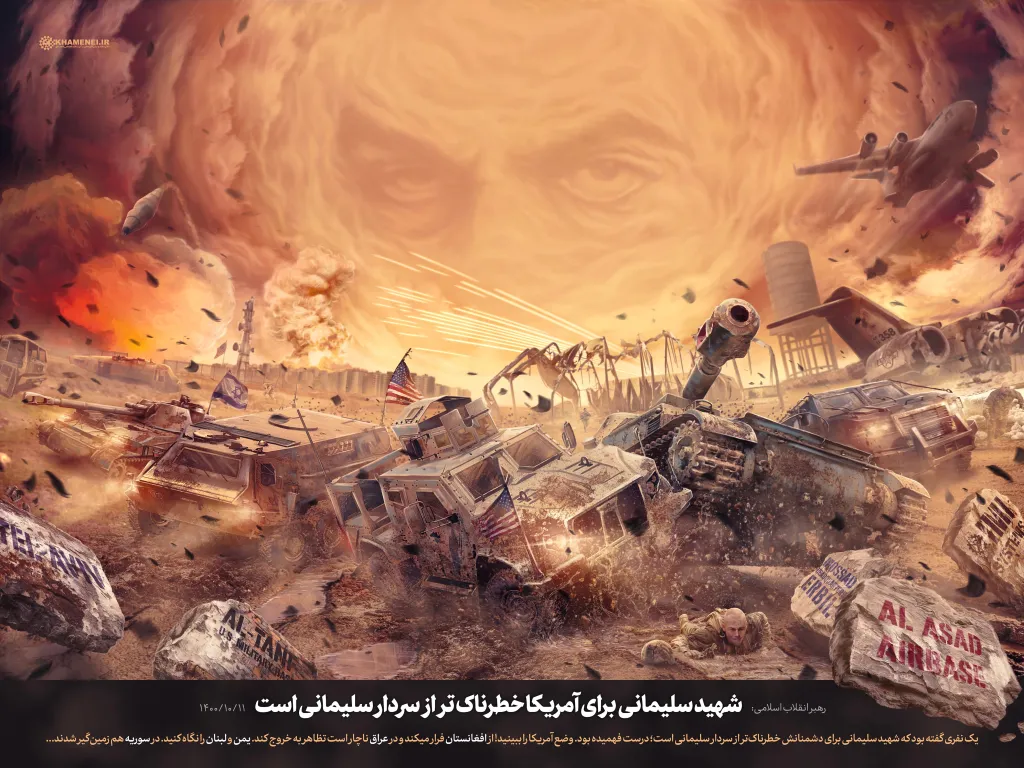
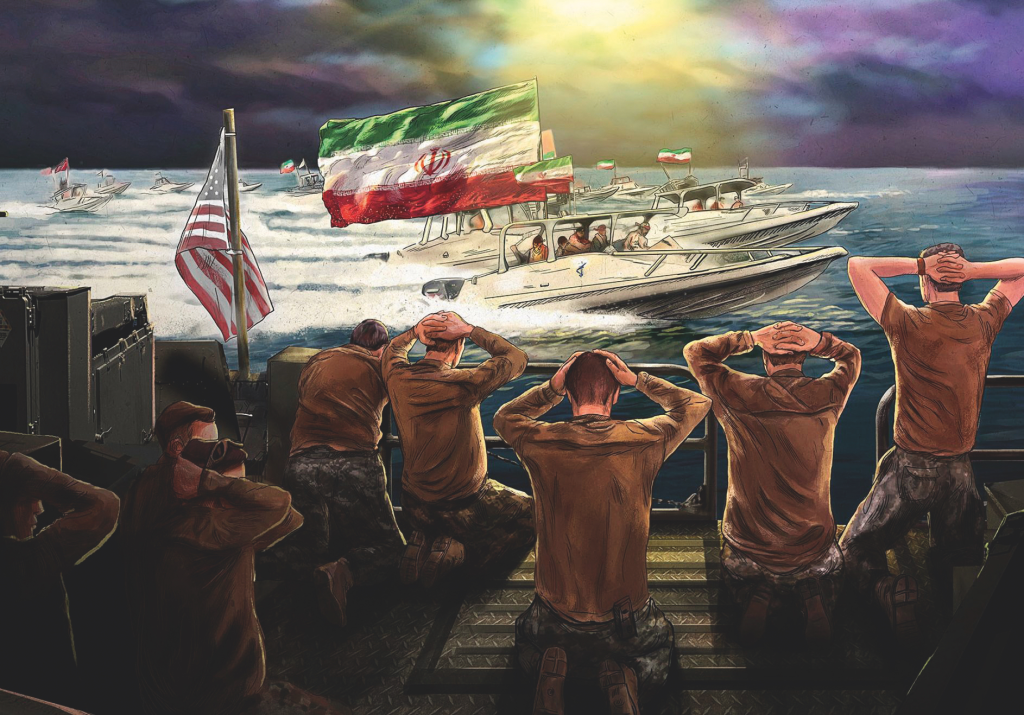
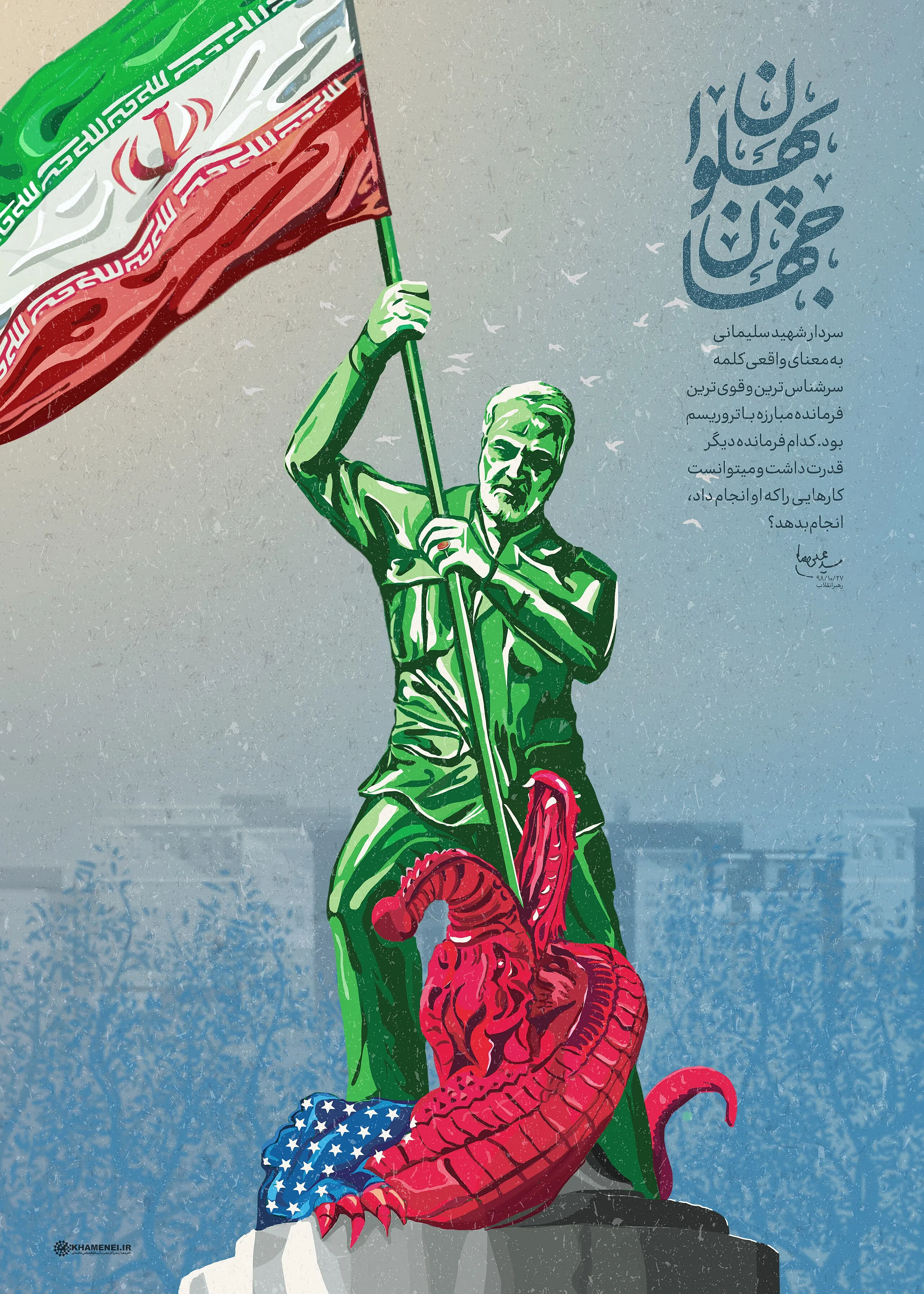
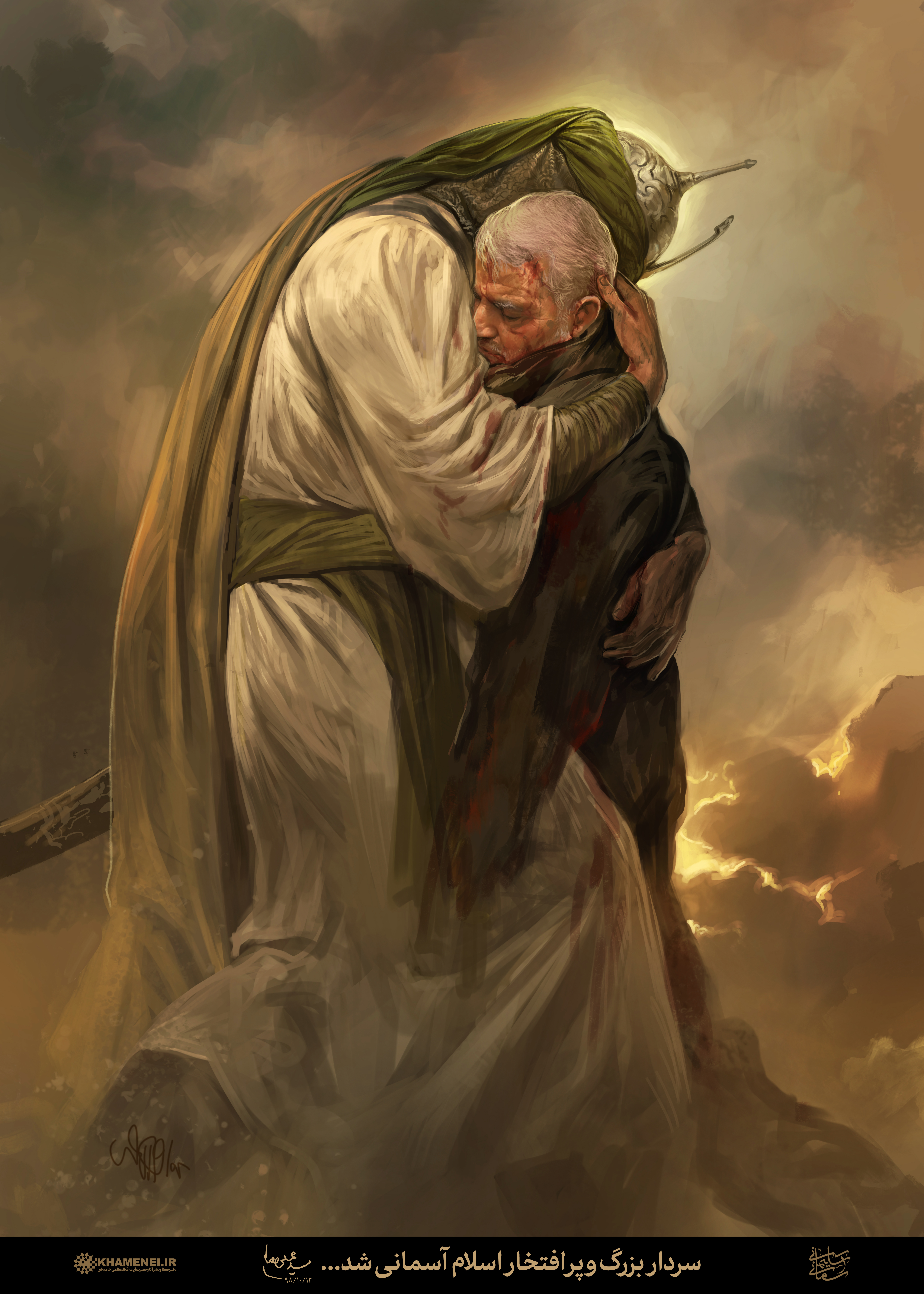
Iranian poster from 2022 showing the eyes of Qasem Soleimani in an apocalyptic storm above a U.S. military base. An Israeli tank appears to the left, as well as the names of various military bases, with Tel Aviv, “Mossad headquarters Erbil,” and “IMI Systems” written on the rubble. The larger text below reads: “‘Martyr’ Soleimani is more dangerous for his enemies than ‘General’ Soleimani.” The smaller text reads: “Look at the U.S. They fled from Afghanistan. In Iraq, they were forced to pretend to withdraw their forces. Look at the U.S. in Yemen and Lebanon. In Syria, too, the enemies are faced with a dead end.” (Credits: Khamenei.ir)Iranian propaganda from 2017 titled Superior Power, depicting the capture of American sailors in 2016. The image first appeared on the website of Iran’s Tasnim News Agency before being printed as a poster (one is displayed in Tehran’s Den of Espionage Museum, located in the former U.S. Embassy). The text reads: “Superior Power—indeed, Allah will help those who help Him.” (Credit: Tasnim News Agency)Iranian propaganda from 2020 showing Qasem Soleimani killing an American dragon. The image depicts Soleimani as Garshasp, a mythological Persian monster-slayer, with the design based on the Garshasp statue in Tehran. It was produced not long after Soleimani’s assassination by the U.S. and first posted on Ayatollah Khamenei’s website. The text, quoting Khamenei, reads: “Martyr General Soleimani was, in the truest sense, the most famous and powerful commander in the fight against terrorism. Which other commander had his power and could do the things he did?” (Credit: Khamenei.ir)Qasem Soleimani is embraced by Imam Hussein ibn Ali—the grandson of Muhammad and a religious and political leader in medieval Arabia—following his assassination in 2020. The image seems to have been posted first on Ayatollah Khamenei’s website. Imam Hussein has featured prominently in visual propaganda put out by the Islamic Republic since the Iran-Iraq war in the 1980s. (Credit: Khamenei.ir)
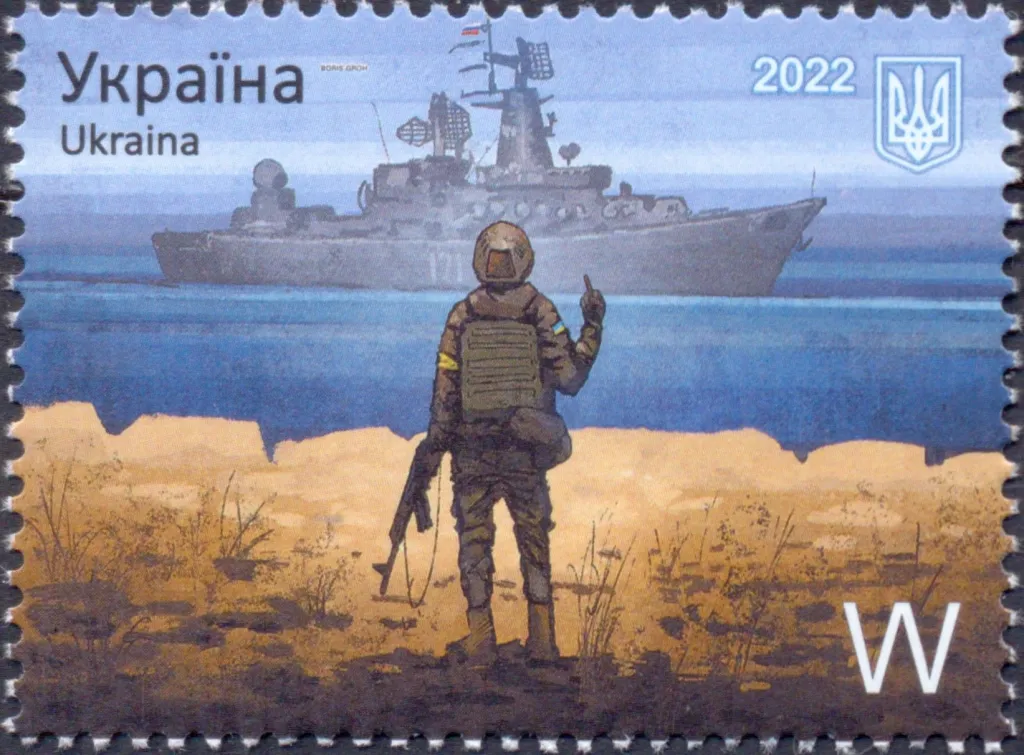
The fighting in Ukraine has been and continues to be a wellspring for propaganda images. In 2022, during the early days of the invasion, word spread on social media about “the Ghost of Kyiv,” a fighter ace who was apparently sweeping the skies clean of Russian jets. Stories of the Ghost’s exploits converged into breathless mainstream media mythology. Combined with other tales of heroism—like the Snake Island “Russian warship, go fuck yourself” saga (see figure 15)—this helped build international solidarity with Ukraine at a time when interest in the conflict was at its height.
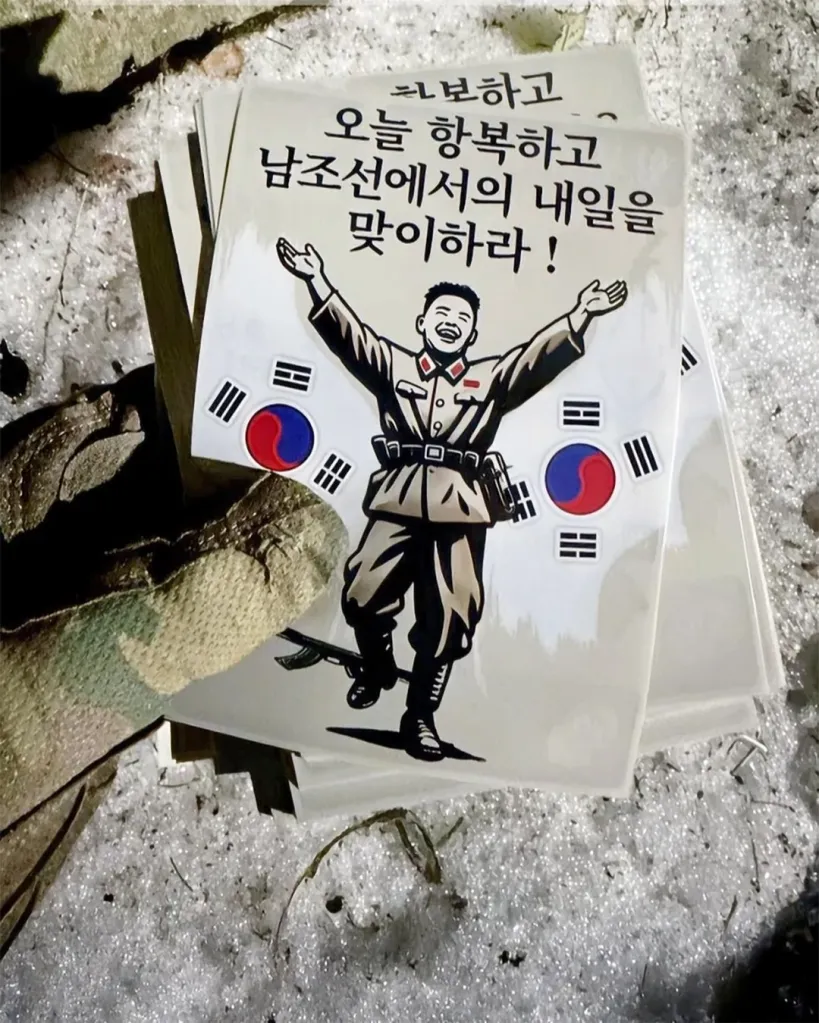
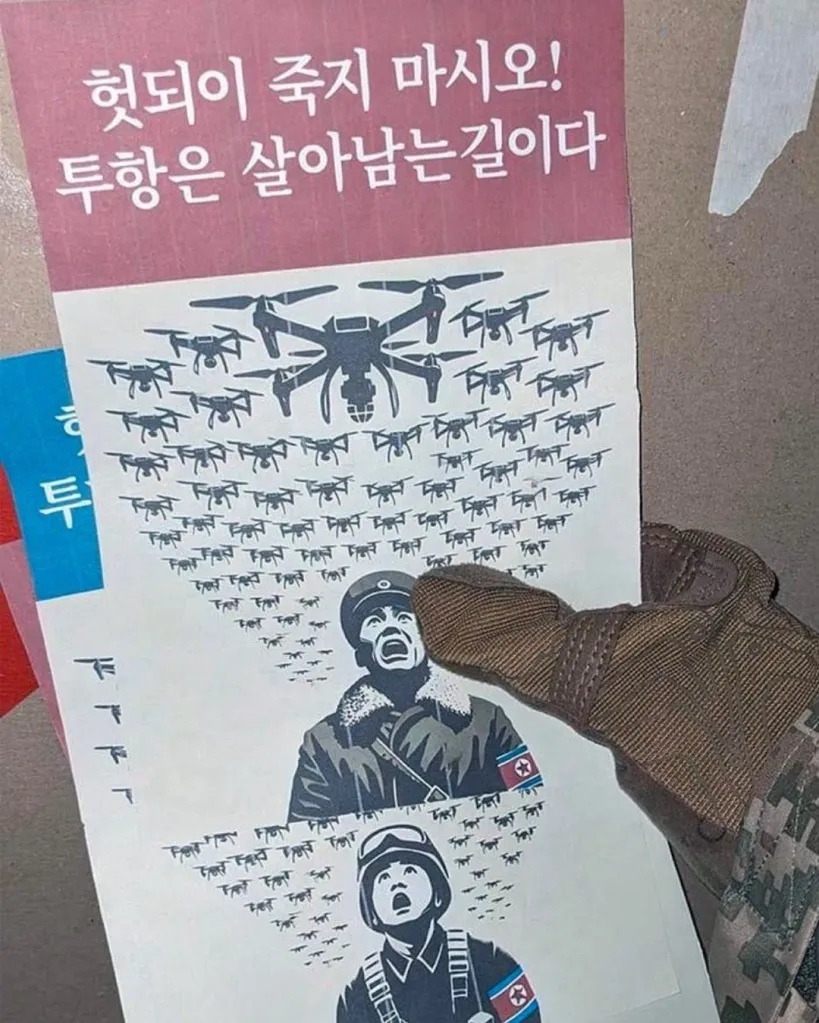
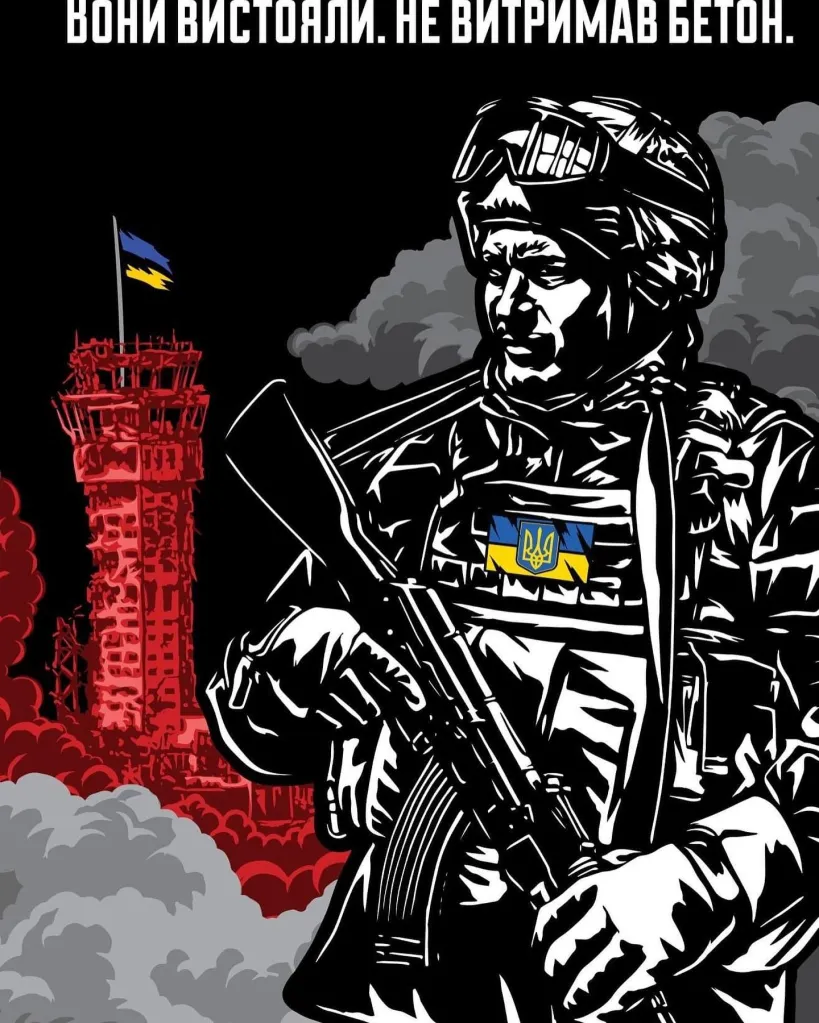
Ukrainian leaflets targeting North Korean troops fighting in Kursk, Russia. The leaflets here, apparently produced in December 2024, encourage North Korean soldiers fighting alongside Russians to surrender. The first design shows swarms of drones flying above North Korean soldiers, the text reading: “Don’t die in vain! Surrender is the way to survive.” The second shows a soldier celebrating between South Korean flags, the text reading: “Surrender today and embrace tomorrow in South Korea!” (Credit: Unknown)Stamp design issued by the Ukrainian Postal Service in 2020 to mark the anniversary of the Battle Of Donetsk Airport, fought across 2014–15 and resulting in Ukrainian defeat. The text reads: “They held out—the concrete didn’t!” The airport’s Ukrainian defenders became known as “Cyborgs,” an exercise in national myth-making that would accelerate following the 2022 Russian invasion. (Credit: Ukrposhta)Another official Ukrainian stamp, this one issued in March 2022 and showing a Ukrainian soldier giving the finger to a Russian warship. The stamp commemorates the Snake Island confrontation, when Ukrainian soldiers stationed on the remote island in the Black Sea rejected a Russian ship’s demands for surrender, adding “Russian warship, go fuck yourself!” The snub quickly became a propaganda slogan and an anti-Russian rallying cry for the wider war. (Credit: Borys Hroh)
There was, though, a problem: both the Ghost of Kyiv and the Snake Island heroes were later acknowledged to be semi or wholly made up. In May, the Ukraine Air Force Command said on Facebook that the Ghost was a “superhero-legend,” warning supporters not to “neglect the basic rules of information hygiene” online. The episode embodied how effective yet ephemeral many modern propaganda images are: beginning modestly in unknown corners of the internet, they enjoy a brief moment of explosive growth and domination of the “information environment” before their momentum fizzles out.
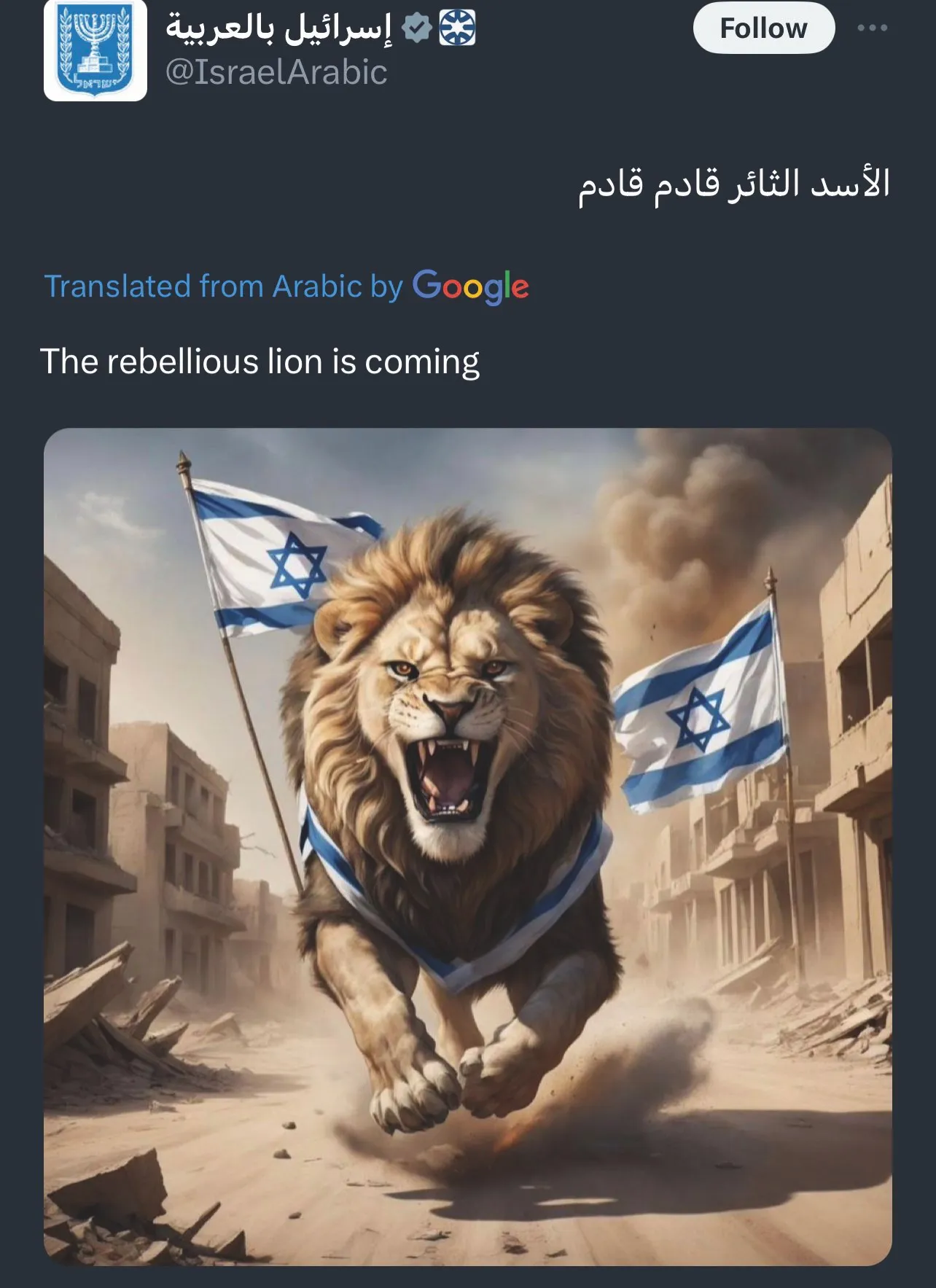
An AI-generated image posted by Israel’s official Arabic-language X account, November 2023. The image was produced not long after the October 7 attacks carried out by Hamas and shows the Israeli lion charging through devastated streets, the text reading in Arabic: “The rebellious lion is coming.” The image of a lion decorated with the Israeli flag has been a long-standing favorite among Israel enthusiasts. Official Israeli government accounts have been heavy users of AI image generators over the past two years. (Credit: @IsraelArabic on X)
The key to a successful modern propaganda campaign seems to be in constantly replicating this pattern, saturating feeds with punchy but short-lived images that shape minds through sheer persistence.
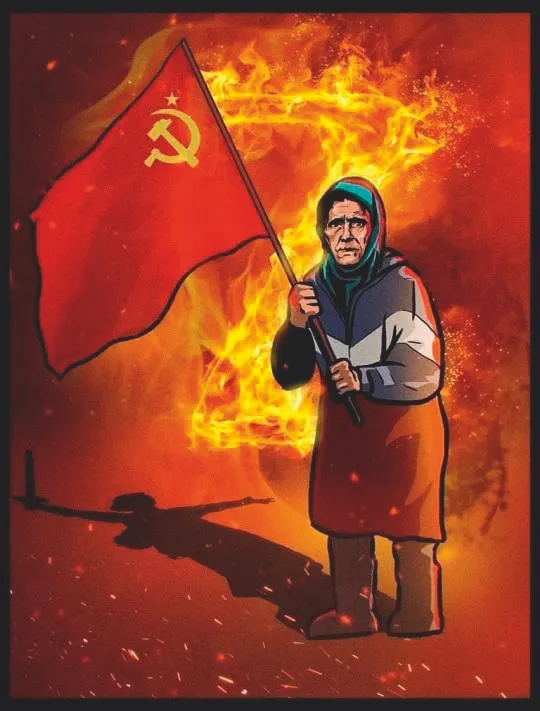
A pro-Russian graphic and mural from 2022 showing an elderly Ukrainian woman holding a Soviet flag, as she casts the shadow of Volgograd’s famous The Motherland Calls sculpture with the pro-Russian “Z” in the background aflame. The image emerged in response to an encounter between an elderly woman called Anna Ivanovna and Ukrainian soldiers in April 2022. Anna greets the soldiers with the Soviet flag, which the Ukrainian soldiers take from her and trample. Pro-Russian propagandists were quick to turn the image of “Babushka Z,” as she became known, into posters, memes, murals, stickers, and even statues. (Credit: Unknown)
This is where bot armies and troll farms can come in handy. In December last year, the University of Cambridge launched its Cambridge Online Trust and Safety Index (COTSI) to monitor the cost of purchasing the former, an important weapon in what the university calls the “online manipulation economy.” Western commentators often point to Russia as a particularly enthusiastic employer of troll farms, and a decade ago there was much hand-wringing about the “Internet Research Agency,” established in Saint Petersburg to spread pro-Russia propaganda around U.S. elections through images posted on fake social-media accounts and as Facebook ads.
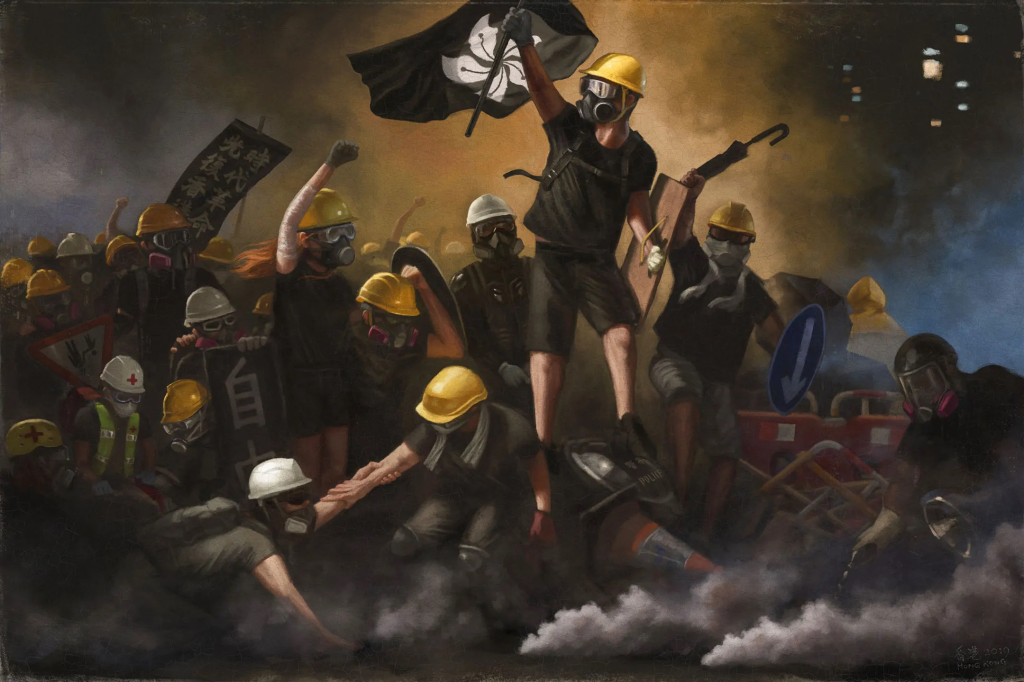
The protests that erupted in Hong Kong in 2019 precipitated a wave of anti-China art. The protests began in opposition to an extradition bill that would have allowed Hong Kongers to be deported to China. Independent artists began producing artwork depicting protesters as revolutionaries going into battle. One poster showed a protester standing defiantly against a Chinese dragon with a hammer and sickle on its snout. The text reads: “People of Hong Kong, add oil!” (“Add oil” here meaning “keep up the momentum.”) (Credit: Jake Hanrahan/Guo Jingxiong)
Alongside all of this, conventional propaganda perseveres. Posters, the backbone of 20th century propaganda in the popular imagination, continue to feature in every contemporary conflict, shared digitally (the trend for vertical social media content has helped here) and plastered in public places, officially and unofficially. Within days of the Russian invasion, Ukrainian artists like Hetman’s Brushes began remixing old World War II posters. Iran and North Korea, too, continue to produce physical visual propaganda, displayed in the squares of Tehran and Pyongyang. In Venezuela, murals have sprung up celebrating the legacy of Hugo Chavez and the Chavista militias, or “colectivos” (one such mural shows Jesus and the Virgin Mary, looking cool and toting Kalashnikovs).
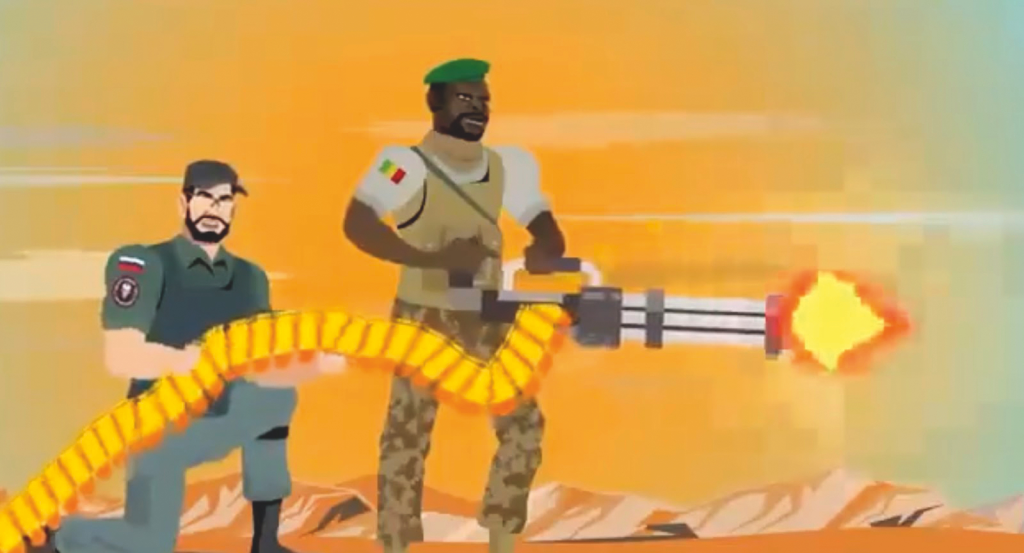
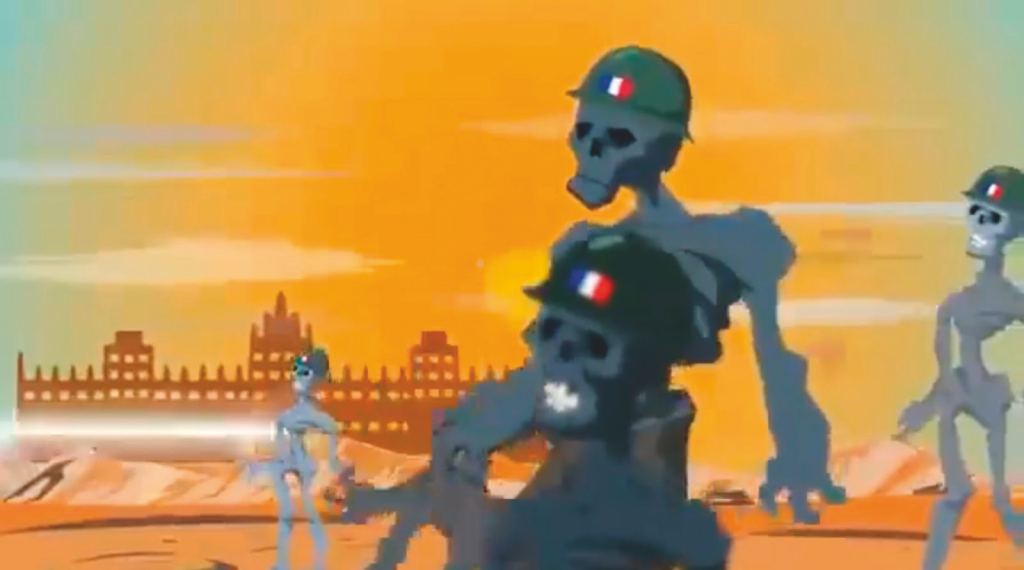
Stills from a pro-Wagner PMC, anti-French animated film showing a Wagner operative helping a Malian soldier to massacre French zombies. The film, which circulated on social media in January 2023, begins with French President Macron sending French zombies to Mali, where they are swiftly dispatched by Malian forces with the assistance of the Russian private military company. The zombies (and an armored tricolor cobra) are then sent to Burkina Faso and Ivory Coast, where they are again defeated thanks to Wagner firepower. The creator is unknown but the video is part of a wider anti-French, pro-Wagner propaganda campaign. (Credit: Unknown)
Propaganda as we understand it began in the 20th century, as the demands of modern conflict met new means of mass communication. Back then, it was made possible by the sort of financial backing that only a government or deep-pocketed individual could provide. Today, the story is different. Effective campaigns can be orchestrated with minimal expense and manpower. As old political alliances start to splinter and tech continues to evolve at breakneck pace—with AI image generators and LLM chatbots doing little to strengthen our grasp on reality—the propaganda wars are only going to get weirder.
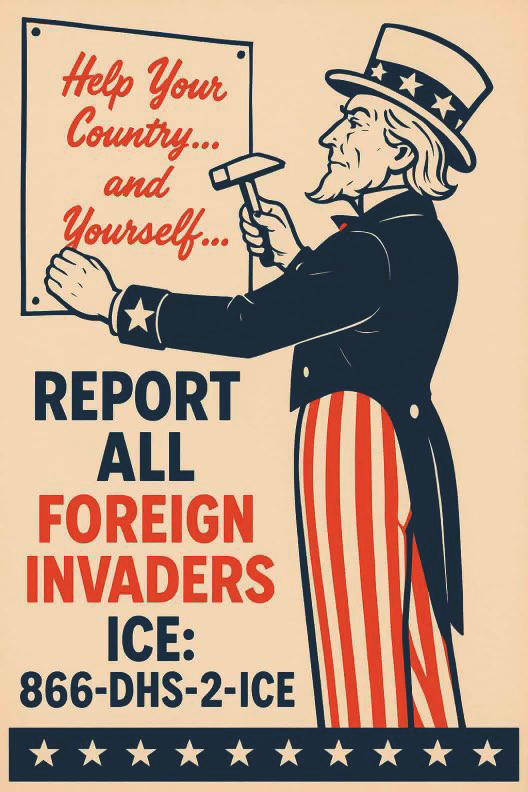
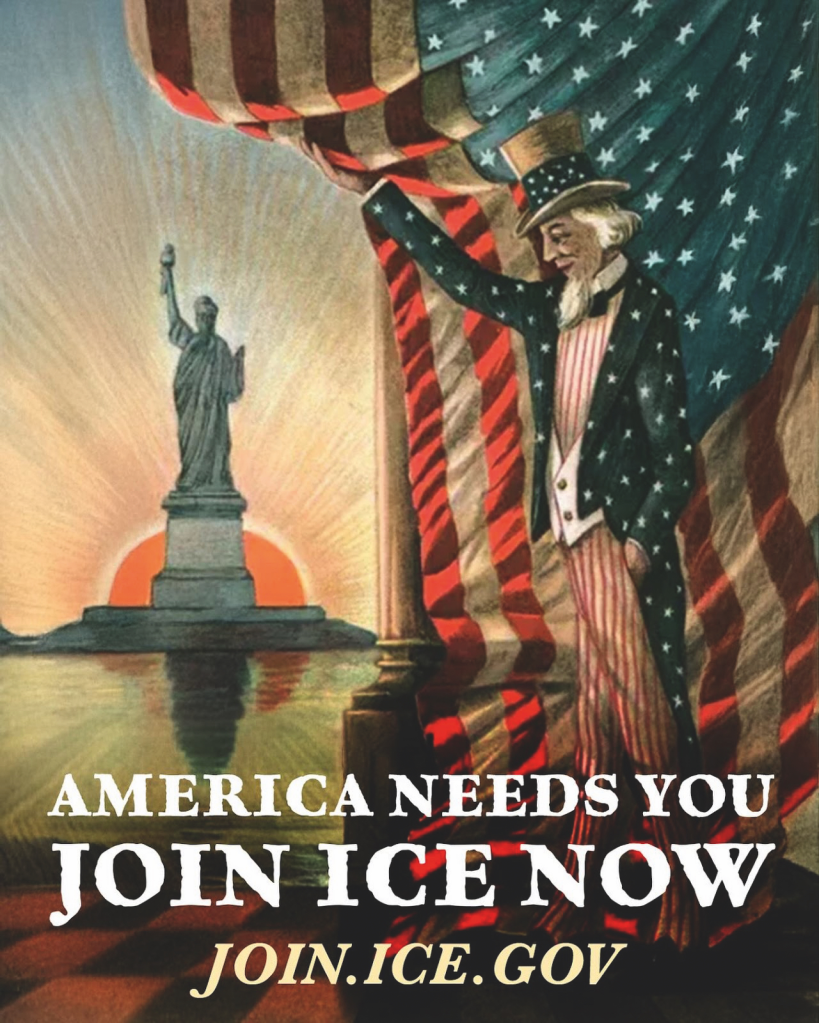
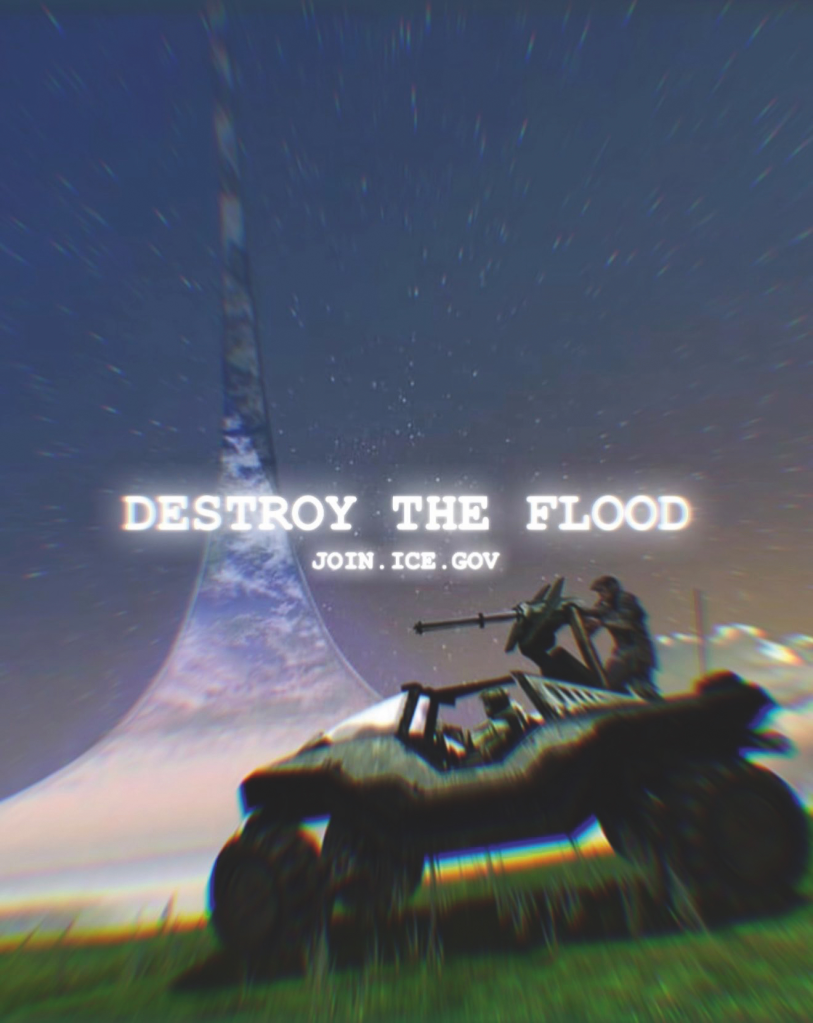
ICE adverts posted by the official U.S. Department of Homeland Security (DHS) account on social media in 2025. The DHS account has been a prolific publisher of similar propaganda throughout Trump’s second term, picking up tens of millions of views and sparking significant controversy. 1. An AI-generated poster showing Uncle Sam nailing up a notice imploring Americans to “report all foreign invaders.” The image was posted by DHS in June 2025. 2. An ICE recruitment advert posted in August 2025. The image is not AI produced and, like much of what DHS has been posting over the past year, comes from an old, authentic illustration—in this case a postcard from 1907. 3. An homage to the video game Halo, showing soldiers in a vehicle with text reading “Destroy the Flood” (“the Flood” refers to an invasive parasitic species that appears throughout the original Halo trilogy). (Credit: U.S. Department of Homeland Security)
This feature is from the spring 2026 issue of VICE magazine, THE NOT THE PHOTO ISSUE. Buy it now—or get 4 issues each year sent straight to your door, by subscribing.