When the United States, Canada, and Mexico bid for the 2026 World Cup back in 2017, they promised free public transportation for ticket holders—just as prior host nations had provided. In 2023, recognizing the financial challenges of hosting, FIFA conceded that transit could be priced to cover the cost of providing it. Even so, FIFA was surprised when New Jersey announced plans to charge World Cup attendees $150 for the round-trip train ticket from Midtown Manhattan to MetLife Stadium, in East Rutherford, which will host eight matches this summer, including the final. The 20-minute journey usually costs $13. Fans complained of price gouging, one more black mark for a competition already infamous for hotel, parking, and ticket prices so high that even President Trump says he wouldn’t pay to go.
The fare has since been lowered to $105, thanks to some unnamed corporate donors. But New Jersey isn’t poised to come out ahead when those tickets go on sale tomorrow. The unhappy truth of international soccer is that the World Cup generates lots of money—for FIFA. The Zurich-based group will take in $13 billion from the tickets, parking, merchandise, on-site concessions, sponsorships, and television rights. Meanwhile, the cities and states that host are responsible for the costs: stadium retrofits, security, transportation, administration, public “fan zones” for everyone who does not have a ticket. Not only does FIFA not share tournament revenue; local organizers say the federation’s infamously controlling contracts have left hosts with no plausible way to recoup expenses. Those hundred-dollar train tickets are not the product of a state looking to make a buck off of the World Cup, but of one trying to salvage an investment in a system that makes FIFA rich while taxpayers foot the bill.
New Jersey Governor Mikie Sherrill defended the decision on those grounds, saying on X that the agreement with FIFA “will cost NJ TRANSIT at least $48 million, while FIFA is positioned to make $11 billion during the World Cup. As I have said repeatedly, FIFA should cover the cost of transporting its fans. If it won’t, we will not be subsidizing World Cup ticket holders on the backs of New Jerseyans who rely on NJ TRANSIT every day.” FIFA was not pleased: “We are quite surprised by the NJ governor’s approach on fan transportation,” the organization said in a statement.
After two tournaments in autocratic countries (Russia and Qatar), where FIFA could order up stadiums à la carte, the coming 2026 iteration has required the messy work of dealmaking in democratic societies. The exchange has worked out splendidly for FIFA, which, as Governor Sherrill observed, has been crowing about the financial blockbuster of the expanded, 48-team competition. Managing a constellation of local partners across three nations, including dozens of cities, states, transportation agencies, stadium authorities, host committees, and satellite stadium towns such as Santa Clara, California, and Foxborough, Massachusetts, seems to have been a blessing in disguise for FIFA. If any host had complained about the terms, their games could have been relocated to a more compliant jurisdiction. (Some red-state hosts, such as Houston, Dallas, and Kansas City, are receiving tens of millions in public funding from state sports grants, and so have faced fewer funding challenges.)
[Franklin Foer: The quintessential Trumpian sport]
Professional-sports organizations always promise that events like these will generate billions in visitor spending and associated taxes. But a huge surge in economic activity rarely comes to pass, in part because of the substitution effect: Sporting tourists take the place of other visitors, and tend not to replicate their habits. A group of English soccer fans dropping thousands of dollars on World Cup tickets probably won’t be taking in a Broadway show or shopping at Bloomingdale’s.
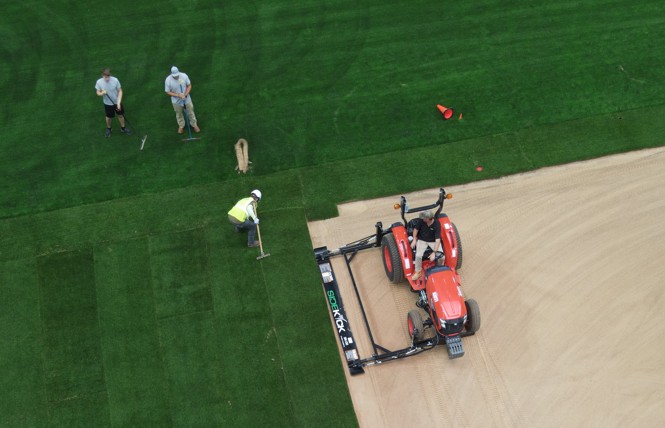
The benefits are speculative, but the costs are certain. Most of the American host cities spent the winter in a state of apprehension over $625 million in federal funding promised for local police but held up by a partially shut-down Department of Homeland Security. In March, New England Patriots owner Robert Kraft had to front $8 million for World Cup “security” measures including a new SWAT truck to persuade the town of Foxborough to issue FIFA’s permit. The federal money was finally disbursed later that month, but state and local governments are still spending tens of millions of their own cash to accommodate the tournament, all the way down to the grow lights nurturing fresh grass to FIFA’s specified root depth. Most U.S. cities had pegged the cost of hosting at around $200 million. North of the border, Toronto and Vancouver now say they will spend $380 million and $624 million Canadian dollars, respectively. NorthJersey.com estimates the state has spent more than $300 million. Figuring out who pays for what among the different local players has been like finishing a big meal at a bar: The bill comes, and everyone has to go to the bathroom.
FIFA’s bespoke preparations are only making things tougher for the hosts. American football stadiums deal with crowds this size all the time. But many of those fans have cars. FIFA has put a dent in each stadium’s parking supply by demanding extra-large security cordons around the stadiums, to create space for VIP tents, jersey sales, photo ops, and so forth. At MetLife, in New Jersey, there will be no general parking at all.
What parking remains is going to be a major moneymaker—again, for FIFA: Parking for the Democratic Republic of Congo match against Uzbekistan, in Atlanta, will cost $100; parking in Kansas City, to see Ecuador play Curaçao, will cost $125, which may be the highest parking fee ever recorded in that town. Dallas game parking also starts at $125, and it’s nearly a mile walk to the stadium. In Boston, parking to see Haiti versus Scotland is $175. All that cash is for FIFA. (FIFA does pay a rental fee for use of the stadiums.)
Those parking restrictions, plus the challenge of getting tens of thousands of beer-fueled foreigners into rental cars, have required special attention to mass transit. AT&T Stadium, in Arlington, Texas, is not served by the Dallas region’s train network, so the host committee is funding a shuttle system to make up for the four parking areas FIFA has repurposed. Kansas City’s host committee has hired hundreds of buses. In Boston, the regional transit authority MBTA says Gillette Stadium has lost 75 percent of its parking to FIFA’s “safety perimeter,” and MBTA has spent tens of millions rebuilding the local train station. To try to make up for that, it will charge $80 to the estimated 20,000 fans who planners believe will take the train to each game.
Providing those services carries opportunity costs, too. The MBTA in Boston will reduce service on other lines to add World Cup trains. NJ Transit plans to bar its own commuters from using Penn Station during the hours around games. The stadiums are also missing out: By FIFA decree, none have any other events scheduled from now until the July 19 final. In May, when the K-pop supergroup BTS comes to Silicon Valley, they will play at Stanford Stadium instead of the larger, newer Levi’s Stadium, in Santa Clara, which is closed until Qatar plays Switzerland on June 13. Thousands of public servants have been redirected from their usual responsibilities to World Cup duty. In at least three contracts, FIFA even restricts major “cultural events” such as concerts at other venues in the host cities around match days unless given prior FIFA approval. Those missed opportunities represent, in miniature, the situation for mega-event hosts at large, as sports tourism crowds out other economic activity.
“Current politicians are realizing what their predecessors agreed to a long time ago,” Robert Sroka, a sports-management professor at Towson University who has written about the hosting agreements, told me. “Those obligations have some costly implications in the present, and they’ll be receiving none of the revenues. Host cities are entitled to nothing.” Their peers that decided not to participate, such as Chicago and Montreal, have not regretted sitting out.
To help manage the logistics and cover the costs of this decentralized tournament, FIFA proposed a new system of local host committees. These groups were authorized to raise money from corporate sponsors to fund transportation, stadium retrofits, and viewing parties. But FIFA also placed extreme restrictions on their ability to do so. Local sponsors brought on by the host committee were limited in how they could market their association with the tournament. They did not get tickets or suites to games, unless the local host committee purchased them full freight from FIFA.
Additionally, the pool of potential new sponsors was small because FIFA prohibits host committees from forming partnerships with companies that compete with existing FIFA sponsors. Boston couldn’t work with Boston-based New Balance, because FIFA has a deal with Adidas. Seattle couldn’t hit up Seattle-based Starbucks, because the FIFA sponsor Coca-Cola owns a coffee brand in the United Kingdom. “It was ridiculous to think the categories left open would in any way, shape, or form generate the money,” one person who was part of these discussions but not authorized to speak to the press, told me. “Aftermarket auto parts. Prepackaged meat. Luggage.”
The assumption may have been that the tournament’s main commercial partners, such as Visa and McDonald’s, would also strike deals with local cities. But with a few exceptions (Airbnb is paying for some train service in Philadelphia), that did not materialize. A member of a different committee, who requested anonymity to speak freely, told me: “All those companies said, Why on earth would we pay again? We pay FIFA for this right—why are we double paying?” After $100 million for the main event, why drop another $48 million on 16 host cities?
As a result, local-sponsor lists have a bit of an outfield-wall quality to them, featuring law, real-estate, and health-care firms instead of recognizable consumer brands. Few local host committees have signed up the FIFA-approved maximum of 10 sponsors. With a month to go, Miami has engaged only three: Royal Caribbean, a host committee board member’s entertainment company, and the host committee’s outside legal counsel. No surprise that many committee budgets have come in way under expectations. Public officials resent having to pick up the slack.
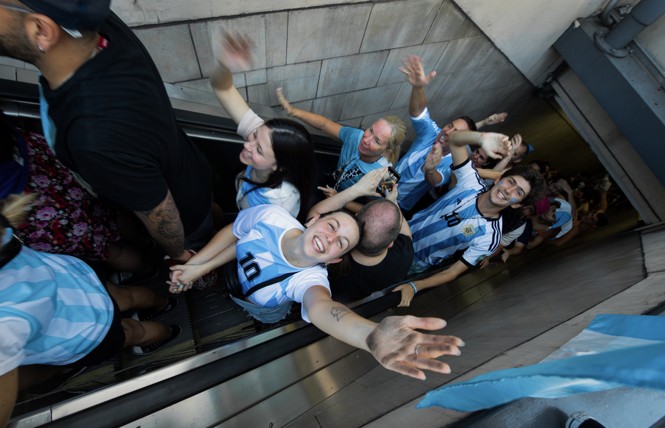
The most visible loss from these fundraising woes might be the “fan zones” that FIFA holds up as a democratic counterpoint to high ticket prices. FIFA wanted these spaces to show every match, free of charge, in partnership with FIFA sponsors, with room for at least 15,000 people. Many cities have had trouble hitting that bar, and FIFA eventually acquiesced to format changes. Boston’s City Hall fan zone will last only through the group stages. Los Angeles will have admission fees at many of its watch parties. The official New York–New Jersey zone, on Jersey City’s Hudson River waterfront, was canceled in February in favor of a network of smaller events; San Francisco and Seattle have opted for similar strategies. In February, FIFA partner McDonald’s decided they didn’t want to be the official food vendor at the events.
As bad as these deals are, local officials do want to be seen as stewards of a successful mega-event. Most of the ugliness happens under the radar. The contracts between FIFA and the host committees or cities are secret; the politicians who signed or supervised them are gone; the local pro-sports elite who populate the host committees and brought the games to town are behind the scenes. Today’s mayors and governors will not reap substantial political benefit from a seamless tournament. But they will be the ones humiliated if a match does not start on time or England fans tear down the lampposts.
In that spirit, two weeks after Sherrill called out FIFA, her counterpart across the Hudson, New York Governor Kathy Hochul, stepped in with $20 million in public money to make sure that New York’s fan zones—built around giant TV screens in each of the five boroughs—are free to enter this summer. To most local soccer fans, that probably seems only fair, given that the cheapest available tickets for the group-stage match between Senegal and France are north of $1,000 (not including that train fare). But though entrance to the fan zone will be free, New Yorkers will be paying one way or another.
The post No Matter Who Wins the World Cup, the Hosts Lose appeared first on The Atlantic.