“The Comeback” began on HBO in 2005 as a reality TV satire. It ended, three seasons and two decades later, spoofing a more mortal threat to Hollywood: the rise of artificial intelligence. The series concluded on Sunday, and James Poniewozik, the chief television critic for The Times, and Alissa Wilkinson, a Times movie critic, discussed what worked this season, what didn’t and what it all means.
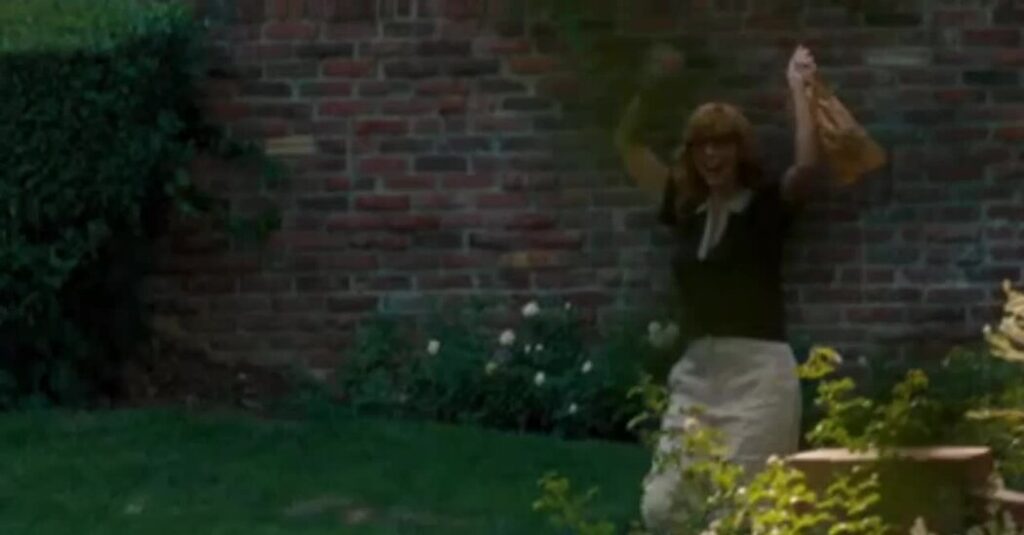
JAMES PONIEWOZIK In the sixth episode of the final season of “The Comeback,” the sitcom hits the fan: News leaks that Valerie Cherish (Lisa Kudrow) is in a show being written by artificial intelligence, and the blowback is fierce. Her manager turned producing partner, Billy (Dan Bucatinsky), frets, “This is just like ‘The Comeback’” — meaning the reality show that a desperate Valerie starred in during the first season. “It’s not,” says Jane (Laura Silverman), the documentarian once again shadowing Valerie this season. “This is not about you, Valerie.”
A funny thing to say to the protagonist of “The Comeback”! But she’s not wrong. The second season of “The Comeback” in 2014 brilliantly resolved Valerie’s story on a note of professional triumph. Season 3 seems more to be bringing Valerie’s character out of retirement to tackle an emergency: the threat of A.I. to every aspect of television, starting but not ending with the writers. So I think Jane’s comment is a good place to start: Who — or what — was Season 3 most about?
ALISSA WILKINSON This has always been one of my favorite TV series, but I often told friends it was a show about documentary ethics. (I mean, I would, wouldn’t I?) This season, I realized how much it’s also been about the anxieties that plague those who work in a very specific slice of Hollywood, the people who want to just keep working.
It’s sort of an accident that the three seasons of “The Comeback” span more than 20 years. But that gave the creators a rare opportunity to depict whatever was keeping them up at night in the moment each new season debuted, and now we can see how much that changed over time. As Paulie G. (Lance Barber) points out to Valerie, they thought reality TV was going to end everything, but this A.I. thing — well, that’s a real extinction-level event.
Add to that all the other things that have upended Hollywood in recent years — the fires, the strikes, the pandemic — and things are bad. So I guess I came to believe, by the end, that Season 3 was about the apocalypse, or at least something the writers of the show think is the apocalypse. And in the middle of all of it is Valerie, the survivor, in the manner of a very cheerful cockroach, always climbing out of the rubble of whatever tried to squash her flat. It’s why people seem to respect her, even if they don’t respect her work.
But I think we both found a few things to be a little janky in this season, right?
PONIEWOZIK Yes. I saw the full season and gave it a very positive review. It’s a daring move to have the heroine sign up to work with the great job-killing machine. But the show sometimes seems feels afraid of the premise it set up.
We, the audience, are thoroughly on Valerie’s side. We’ve seen her weather ageism and misogyny and snobbery and come out with a freaking Emmy. And now here she is, collaborating with A.I.
Yes, the network promises human supervision. Yes, we know that Valerie has a gift for seeing what she wants to see. But if there’s one thing she knows, it’s how sitcoms work. On some level, she has to know the deal.
To be clear — I love that idea! I don’t need a protagonist I like to be right all the time, especially on a dark comedy. (I loved the scene when the cast learns the secret and decides: You know what? Screw writers!) But it often felt as if the show didn’t trust the audience to accept this ethical complexity. It kept throwing set pieces at us in which people — Jane, Paulie G., Juna (Malin Akerman) — spell out for us, in so many words, that Valerie is decent, she’s caring, she’s not the villain.
Then again, for the characters in this A.I. story, none of them thinks they’re the villains, all the way up to the head of network. In the face of the relentless algorithm, everyone claims to be just a smol bean.
WILKINSON And of course, if this is a show about what’s scaring Hollywood, then it isn’t wrong to be about A.I. — but suggesting that writers and lead actors like Valerie are going to be the ones who break the dam might be a little wrong. I don’t work in the industry, but from everything I hear, it’s the folks who are below the line who are most likely to see their jobs disappear en masse: mostly postproduction and visual effects artists, as well as background actors and others like that. So it feels a little off, though I understand that might not make for the most pitchable show. (Valerie telling Andrew Scott’s studio executive that he will be replaced, though — that doesn’t seem wrong at all.)
I also would like to lodge my own complaint about this season, which is that they dropped the “raw footage” conceit that powered the last two seasons, in which what you’re watching is, essentially, unedited video that was shot by Jane for “The Comeback” and then later for Valerie’s “Showing Red” behind-the-scenes film. In the Season 2 finale, they dropped that form, to great effect, suggesting Valerie was finally starring in her own life. But here it doesn’t always make sense; sometimes the characters seem aware of cameras, and sometimes we’re watching in rooms the cameras couldn’t be in. Annoying!
PONIEWOZIK One thing I did very much like about the season was how sharp it is about power dynamics. (“The Comeback” always has been, though I never really thought of it as a show about labor until now.) If you’re secure enough, maybe you can think of A.I. as a new curiosity you can work with. If not … well, I hear Trader Joe’s is hiring.
When the secret spills about “How’s That?!,” there’s a mini-rebellion among the crew. But it quickly fizzles out. You can quit in protest, but there’s always someone else needy enough — even needier now, because of this very crisis — to swallow the qualms, take the job, sign the N.D.A. Maybe the most outspoken if cynical voices are Josh and Mary (John Early and Abbi Jacobson), the writers hired to miserably babysit the A.I., but by midseason they’ve cut their losses and left.
Can anyone stand against this? Well, unions might, as they tried to do in the 2023 writers’ and actors’ strikes that provide the jumping-off point for the season. But the postscript — in which “How’s That?!” eventually becomes digitally written and acted — doesn’t hold out a ton of hope.
WILKINSON I do think, if nothing else, the A.I. plot does a good job of showing us what humans are good at. One of my very favorite scenes in this season comes when Paulie G. is on set, diagnoses instantly what isn’t working about a scene in which a man berates Valerie — and in so doing, describes why we all hated Paulie G. in Season 1 — and goes to work fixing it. It’s like watching, well, an artist. He may hate sitcoms; he clearly hates sitcoms. But he knows just what to do to make a sitcom scene work, and it’s a pleasure to watch him do it, and even he has to admit he had fun.
That is what’s kind of great about “The Comeback”: It’s not clear that any of the television being made on this show, from “Room and Bored” to “Seeing Red” to “How’s That?!” to the very dreadful-sounding “Judge’s Table,” is any good. But there is some artistry going into it, some craft, and “Al” can only imitate it, at best. Even Valerie, whose interest in her TV career seems motivated primarily by a need to be seen and loved by people rather than lofty ideas about the craft of acting, is good at what she does; James Burrows, the great TV director who plays himself on the show and was a big part of Kudrow’s own start in television, tells her as much.
Then again, with the possible exception of “Seeing Red” (and, well, “Mrs. Hatt”?), all of the TV Valerie does is deeply derivative. And derivative work is just the kind of thing that A.I. will be able to rip off easily. “How’s That?!” is, after all, the consummate laundry-folding show.
PONIEWOZIK For a defense of the craft of TV (and for a rightfully acclaimed show itself), it’s odd how “The Comeback” struggles with showing what good TV looks like. Much of “Seeing Red” was left to our imaginations, and “Judge’s Table” sounds like a title created solely for a Netflix thumbnail. Partly a satire issue, I’m sure. Bad TV is funnier!
Yet “The Comeback” has real affection for TV and the people who make it — especially the stuff that doesn’t get showered with critical praise. What really turns Valerie against NuNet is hearing Brandon say that A.I. is fine for “How’s That?!” because the show doesn’t need to be good to succeed.
I’ve watched too many mediocre pilots to say he’s wrong. But one thing I also know as a critic is that even the worst sitcom on TV is the product of professionals busting their butts to give other people some yuks. It’s the denigration of that effort that finally drives Valerie to her most un-Valerie-like realization: that there’s something more important to her than keeping this gig.
TV that’s just tolerable may always be with us, and that may be A.I.’s calling. But as Valerie says, sitcoms can be great, and how small do we make our lives when we give up that kind of aspiration? There’s a little grace note that underscores this, when Valerie walks past a plaque that marks the set where “Friends” was shot. (Confirming that Lisa Kudrow and Valerie Cherish exist in the same fictional universe!) No one’s going to put up a plaque for “How’s That?!”
WILKINSON I had a tiny hope that Lisa and Valerie would meet, the way that the twin sisters Ursula and Phoebe Buffay, both played by Kudrow, did in the “Mad About You”-“Friends” crossover episodes. Oh well.
And yes: I think the affection for TV and the labor behind it is what makes all three seasons of “The Comeback” so endlessly watchable. It’s what redeems Valerie over and over, too. She can be really oblivious and un-self-aware, and she isn’t the kind of star who will anonymously pay off the car loan of a random crew member. But when we first met her, she already knew what it was to work her way up the ladder, after a fashion, and had some compassion for people who came behind her. Her connection to her younger co-stars always seemed genuine to me, and her attachment to certain traditions — like “first show” gifts — felt real.
In other words, I guess, Valerie has always loved the human side of making TV — how appropriate — and she’s always been a really human character, neither a villain nor a hero. The conventions of certain TV genres squash characters into boxes without much space to evolve. I think that’s why a lot of viewers didn’t know what to do with her at first; even Jane, in her final scene with Valerie, seems to realize that she never saw Valerie properly.
Val cheerfully tells her she might have been telling the wrong story. Maybe she’s right.
James Poniewozik is the chief TV critic for The Times. He writes reviews and essays with an emphasis on television as it reflects a changing culture and politics.
The post ‘The Comeback’ Knows What Scares Hollywood appeared first on New York Times.